
Short Answer
Definition of Atomic Size
Atomic size refers to the measure of an atom’s dimensions, typically expressed as the atomic radius. This radius is defined as the distance from the nucleus to the outermost boundary of the electron cloud surrounding it. Atomic size varies among elements due to differences in nuclear charge, electron configuration, and inter-electronic forces.
- Atomic Radius:
The distance from the nucleus to the outer edge of the electron cloud, often measured in picometers (pm). - Effective Nuclear Charge:
The net positive charge experienced by electrons, accounting for shielding effects from other electrons. - Electron Shells:
Energy levels where electrons reside, influencing the spatial extent of the atom.
Atomic Structures of Hydrogen and Helium
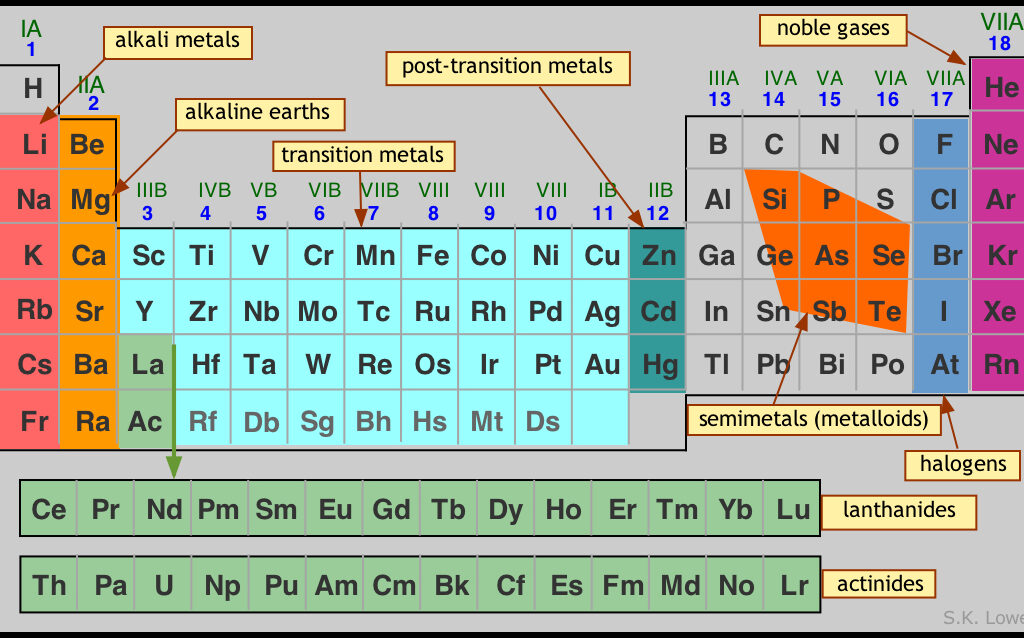
Hydrogen and helium, the first two elements in the periodic table, exhibit distinct atomic structures that influence their sizes.
- Hydrogen (H):
The simplest element, consisting of a single proton in its nucleus and one electron occupying the first energy level. - Helium (He):
A noble gas with a nucleus containing two protons and two neutrons, accompanied by two electrons filling the first energy shell.
These structural differences set the stage for understanding why their atomic sizes differ despite helium having more subatomic particles.
How Atomic Size is Determined
The size of an atom is influenced by the balance between the attractive forces of the nucleus and the repulsive forces among electrons, as well as the arrangement of electrons in energy levels.
- Nuclear Attraction:
Protons in the nucleus exert a positive charge that pulls electrons inward, reducing atomic size. - Electron-Electron Repulsion:
Electrons repel each other, which can increase atomic size by pushing electrons outward. - Electron Shielding:
Inner electrons can shield outer electrons from the full nuclear charge, affecting the effective nuclear charge felt by outer electrons.
Comparing Atomic Radii of Hydrogen and Helium
Contrary to what might be expected, helium has a smaller atomic radius than hydrogen, despite having more protons and electrons.
- Hydrogen’s Atomic Radius:
Approximately 53 picometers, with a single electron loosely held by one proton. - Helium’s Atomic Radius:
Roughly 31 picometers, where two protons exert a stronger pull on two electrons, drawing them closer.
This counterintuitive result arises from the stronger effective nuclear charge in helium, which overcomes electron-electron repulsion and compresses the electron cloud.
Quantum Mechanical Influence on Atomic Size
Quantum mechanics explains electron behavior in atoms, highlighting how electron energy levels and configurations affect atomic dimensions.
- Energy Levels:
Electrons occupy discrete shells; both hydrogen and helium electrons reside in the first shell, but helium’s filled shell leads to greater stability. - Electron Configuration Stability:
Helium’s complete outer shell configuration results in a compact and stable atom, discouraging electron addition and maintaining a small radius.
Real-World Implications of Atomic Size Differences
The disparity in atomic sizes between hydrogen and helium influences their chemical and physical properties, impacting their roles in nature and technology.
- Helium’s Inertness:
Its small size and full electron shell make helium chemically unreactive, useful in applications requiring non-reactive environments. - Hydrogen’s Reactivity:
Larger atomic radius and single electron enable hydrogen to participate actively in chemical reactions, essential for forming compounds and fueling stars.
Common Misconceptions About Atomic Size
Atomic size always increases with atomic mass.
Atomic size depends more on effective nuclear charge and electron configuration than on mass alone, as seen with helium being smaller than hydrogen.
More electrons always mean a larger atom.
Increased nuclear charge can pull electrons closer, reducing atomic size despite more electrons, exemplified by helium.
Significance of Understanding Atomic Size
Grasping the factors that determine atomic size is crucial for fields such as chemistry, physics, and materials science. It aids in predicting element behavior, bonding characteristics, and the design of new materials. The comparison between hydrogen and helium serves as a foundational example illustrating the complex interplay of forces shaping atomic dimensions and properties.
FAQ
Which atom is larger, hydrogen or helium?
Hydrogen has a larger atomic radius (approximately 53 picometers) compared to helium (roughly 31 picometers) despite helium having more protons and electrons due to its stronger effective nuclear charge.
What factors influence atomic size?
Atomic size is influenced by effective nuclear charge, electron configuration, and the balance between nuclear attraction and electron-electron repulsion.
Why is helium chemically unreactive?
Helium’s small size and full electron shell result in a stable configuration, making it chemically inert.





Leave a Reply