
Short Answer
Understanding the Large Hadron Collider
The Large Hadron Collider (LHC) at CERN represents a pinnacle of modern scientific exploration in the field of high-energy physics. Far beyond a simple particle accelerator, it serves as a sophisticated instrument designed to investigate the fundamental building blocks of matter by propelling particles to velocities nearing the speed of light. To truly comprehend the speeds achieved within the LHC, one must explore the principles of relativistic physics, the mechanics of particle acceleration, and the unique phenomena that arise at such extreme velocities.
Definition and Structure of the LHC
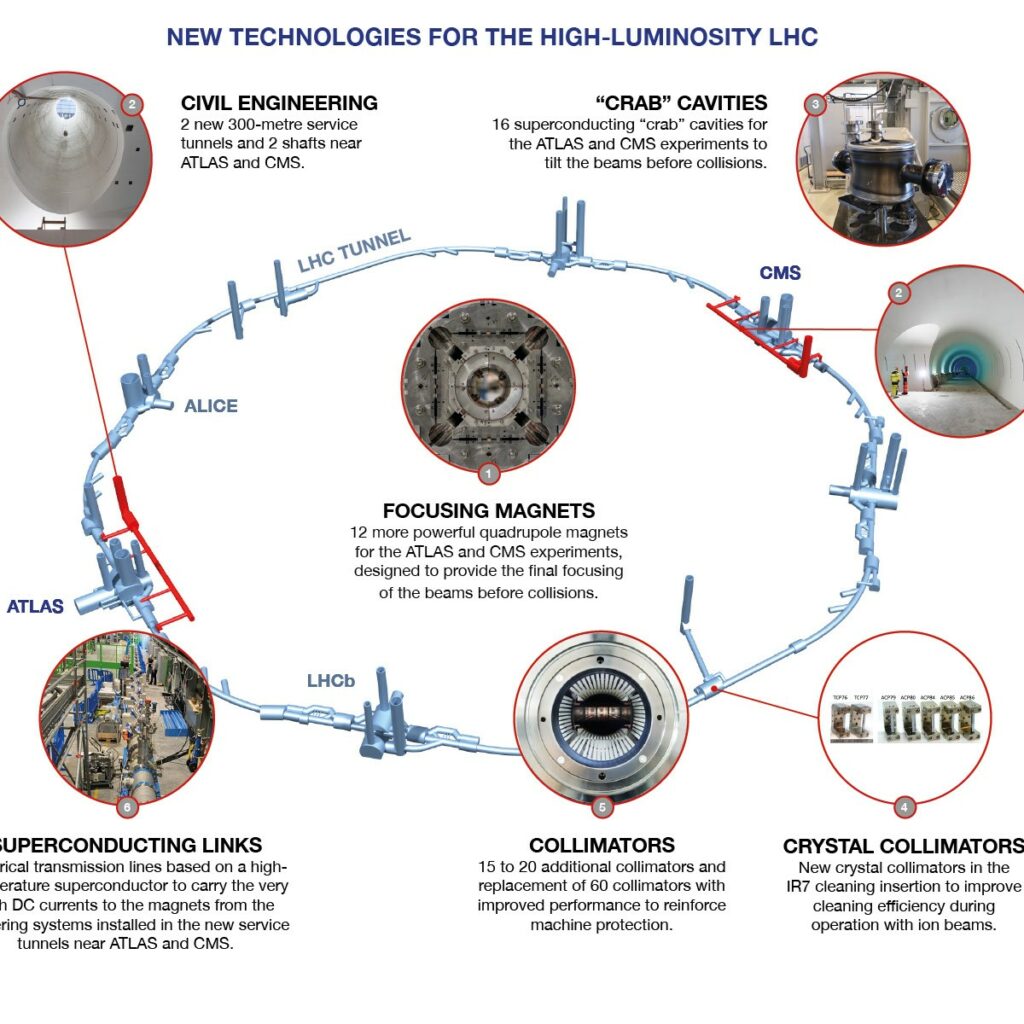
The LHC is a massive circular accelerator, approximately 27 kilometers in circumference, located underground on the border between France and Switzerland. It accelerates two beams of protons in opposite directions, guiding them through a complex system of superconducting magnets and radiofrequency cavities. These components work in unison to increase the particles’ energy and maintain their trajectory within the collider’s tunnel.
- Proton Beams:
Two streams of protons travel in opposite directions within the collider, each beam circulating at nearly the speed of light. - Acceleration Process:
Protons are initially extracted from hydrogen atoms, then accelerated through a series of smaller accelerators before entering the LHC’s main ring. - Magnetic Guidance:
Powerful superconducting magnets steer and focus the proton beams, ensuring precise collisions at designated points.
Relativistic Speeds and Their Implications
As protons accelerate within the LHC, they approach velocities extremely close to the speed of light-about 299,792,458 meters per second. According to Einstein’s theory of relativity, as particles near this ultimate speed limit, their effective mass increases, requiring exponentially more energy to continue accelerating. This phenomenon means that while the protons’ speed asymptotically approaches the speed of light, it never actually reaches or exceeds it.
- Relativistic Mass Increase:
The closer a proton gets to light speed, the more its relativistic mass grows, demanding greater energy input for further acceleration. - Time Dilation:
At these velocities, time experienced by the protons slows relative to an outside observer, illustrating the relativistic effects on temporal perception.
Mechanics of Particle Acceleration in the LHC
The acceleration of protons in the LHC is a multi-stage process. Initially, protons are stripped from hydrogen atoms and pre-accelerated using linear accelerators and smaller synchrotrons. Once injected into the LHC’s main ring, they are propelled by radiofrequency cavities that impart energy in pulses, while superconducting magnets maintain their circular path. This continuous energy input allows the protons to reach speeds of approximately 99.9999991% of the speed of light.
Mathematical Framework: Relativistic Velocity and Energy
The velocity of particles in the LHC can be described using relativistic equations that account for the increase in mass and energy as speed approaches light speed. The kinetic energy (KE) of a particle is given by:
KE = (gamma – 1) m c²
- m: Rest mass of the particle
- c: Speed of light in vacuum
- (gamma) (Lorentz factor): (gamma = frac{1}{sqrt{1 – frac{v^2}{c^2}}}), where (v) is the particle’s velocity
As (v) approaches (c), (gamma) increases dramatically, reflecting the relativistic effects on energy and momentum.
Scientific Significance of High-Speed Particle Collisions
The near-light-speed collisions of protons within the LHC generate energies on the order of trillions of electronvolts (TeV). These extreme energies enable physicists to probe the fundamental forces and particles that constitute the universe, including the search for the Higgs boson, supersymmetric particles, and potential dark matter candidates. The collisions recreate conditions similar to those just moments after the Big Bang, offering insights into the early universe’s properties.
Data Collection and Analysis
Each collision event produces an immense volume of data, captured by sophisticated detectors surrounding the collision points. These detectors track the trajectories and energies of resultant particles, allowing scientists to reconstruct the events and analyze the underlying physics. The complexity and scale of this data require advanced computational techniques and collaborative efforts across the global scientific community.
Common Misconceptions About Particle Speeds in the LHC
Protons in the LHC exceed the speed of light.
According to relativity, particles cannot surpass the speed of light; they only approach it asymptotically.
The speed of particles is the sole factor in collision energy.
Collision energy depends on both speed and relativistic mass increase, with kinetic energy playing a crucial role.
Broader Impact and Future Prospects
The achievements of the LHC extend beyond fundamental physics, influencing technological advancements in fields such as computing, materials science, and medical imaging. The accelerator’s development has driven innovations in superconducting magnet technology, data processing, and detector design. Looking forward, the knowledge gained from the LHC’s experiments may pave the way for new technologies and deepen our understanding of the universe’s fundamental laws.
Conclusion: The LHC as a Gateway to the Universe
The extraordinary speeds attained by particles in the Large Hadron Collider symbolize humanity’s relentless pursuit of knowledge. By pushing particles to velocities just shy of light speed, the LHC opens a window into the subatomic world and the origins of the cosmos. This fusion of theoretical physics and experimental precision continues to inspire scientific discovery, highlighting the profound connection between the smallest particles and the vast universe they compose.
FAQ
How fast do particles travel in the LHC?
Particles in the LHC travel at speeds very close to the speed of light, approximately 99.9999991% of it.
Why can't particles reach the speed of light exactly?
Due to relativistic effects, as particles get closer to the speed of light, their effective mass increases, requiring ever more energy to accelerate further, making it impossible to reach or exceed light speed.
What happens to time for particles moving at these speeds?
Particles experience time dilation, meaning from their perspective, time passes more slowly compared to an outside observer.
What is the purpose of accelerating particles to such high speeds?
Accelerating particles to near light speed allows scientists to investigate fundamental physics by creating high-energy collisions that reveal properties of subatomic particles and forces.






Leave a Reply