
Short Answer
Understanding Light and Its Speed
Light is an electromagnetic wave traditionally understood to travel at a constant speed in a vacuum, approximately 299,792,458 meters per second, symbolized as c. This speed is a fundamental constant in physics, underpinning many scientific principles. However, when light passes through different materials, such as those found in optical fibers, its effective speed changes due to interactions with the medium, leading to fascinating technological applications.
Structure and Function of Optical Fibers
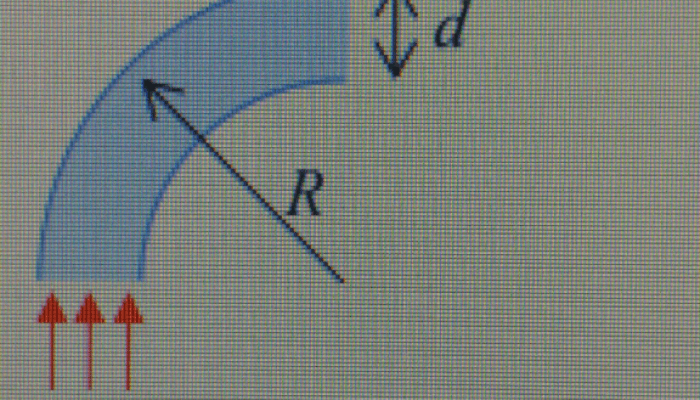
Optical fibers are composed of three main components: the core, cladding, and protective outer layers. The core, usually made from silica glass or plastic, is enveloped by cladding with a lower refractive index. This arrangement enables total internal reflection, a process that confines light within the core and allows it to travel long distances with minimal loss. The interplay between these materials and their geometric configuration is crucial for controlling how light propagates through the fiber.
Refractive Index and Light Propagation
The speed of light decreases when it moves through any medium other than a vacuum due to its interaction with the atoms and molecules in that material. This reduction is quantified by the refractive index (n), which measures how much slower light travels in a substance compared to its speed in a vacuum. The relationship is mathematically expressed as:
v = c / n
- v: Phase velocity of light in the medium
- c: Speed of light in a vacuum
- n: Refractive index of the medium
When light enters an optical fiber, its velocity is effectively reduced according to the fiber’s refractive index, enabling precise control over its propagation.
Applications in Telecommunications
One of the most significant benefits of manipulating light speed within optical fibers lies in telecommunications. Optical fibers are the backbone of modern data transmission, offering high bandwidth and low signal attenuation over vast distances. Light pulses, modulated to carry information, travel through these fibers at speeds determined by the refractive indices of the materials involved. By optimizing fiber design, engineers can enhance data transmission rates and extend communication ranges, revolutionizing global connectivity.
Advanced Fiber Technologies: Photonic Crystal Fibers
Recent innovations such as photonic crystal fibers (PCFs) have expanded the ability to control light at microscopic and nanoscopic scales. PCFs incorporate periodic microstructures that create photonic bandgaps, allowing selective manipulation of light propagation by engineering the refractive index landscape. This technology not only slows light but can also temporarily trap it, opening new possibilities in data processing, sensing, and quantum computing. Such precise control over light-matter interaction positions PCFs at the cutting edge of photonics research.
Environmental Influences on Light Speed in Fibers
External factors like temperature fluctuations and mechanical stress also affect light propagation within optical fibers. Adjusting these parameters can alter the effective refractive index, thereby modulating the speed of light. For example, temperature changes can cause expansion or contraction of the fiber material, influencing its optical properties. This dynamic control is valuable not only for telecommunications but also for developing sensitive environmental sensors that detect changes through variations in light speed.
Medical and Scientific Implications
Beyond communication, controlling light speed in optical fibers has profound implications in medicine and science. Techniques such as optical coherence tomography (OCT) utilize fiber optics to generate high-resolution images of biological tissues. Enhancing control over light speed can improve image clarity and resolution, facilitating earlier diagnosis of diseases. Additionally, fiber-optic endoscopy benefits from refined light manipulation, enabling more precise and less invasive surgical procedures.
Emerging Materials and Metasurfaces
Cutting-edge research into metasurfaces and engineered materials further enhances our ability to modulate light speed. These artificially structured surfaces manipulate electromagnetic waves at scales smaller than the wavelength of light, enabling novel optical phenomena. By integrating such materials with fiber optics, scientists aim to develop devices with unprecedented control over light propagation, impacting fields ranging from telecommunications to robotics and beyond.
Challenges in Controlling Light Speed
Despite remarkable progress, several obstacles remain in fully harnessing light speed modulation within fibers. Issues such as signal degradation, distortion, and scattering can impair data transmission quality. Ongoing research focuses on mitigating these effects to unlock the full potential of optical fibers across diverse applications, ensuring reliable and efficient performance.
Significance and Future Prospects
The ability to regulate the speed of light within optical fibers represents a remarkable convergence of physics, engineering, and technology. Understanding and manipulating light-matter interactions not only deepen our grasp of fundamental science but also pave the way for transformative advances in communication, healthcare, and information technology. As research continues to evolve, the control of light speed promises to be a cornerstone of next-generation innovations.
FAQ
What is the speed of light in a vacuum?
The speed of light in a vacuum is approximately 299,792,458 meters per second.
How do optical fibers control light speed?
Optical fibers control light speed through the refractive index of their materials, which reduces the effective speed of light as it travels through them.




Leave a Reply