
Short Answer
Definition of Rydberg Atoms
Rydberg atoms are a unique class of atoms characterized by having one or more electrons excited to very high principal quantum numbers. This results in electrons orbiting far from the nucleus, leading to exaggerated atomic properties such as large size, strong interactions, and heightened sensitivity to external fields. These distinctive features make Rydberg atoms a central subject in quantum physics research and applications.
- High Principal Quantum Number:
Electrons occupy energy levels far above the ground state, causing unusual atomic behavior. - Enhanced Interactions:
Due to their large size, Rydberg atoms interact strongly with each other and their environment.
Historical Background and Scientific Foundations
The concept of Rydberg atoms traces back to the late 19th century, rooted in the development of quantum mechanics. Johannes Rydberg, a Swedish physicist, formulated the Rydberg formula, which accurately predicted the wavelengths of spectral lines of many elements. This breakthrough laid the foundation for understanding atomic spectra and quantum states, marking a pivotal moment in the evolution of atomic physics.
- Johannes Rydberg’s Contribution:
Developed a formula that linked spectral lines to quantum numbers, advancing early quantum theory. - Quantum Mechanics Evolution:
Rydberg’s work influenced the broader development of quantum mechanics, shaping modern atomic physics.
Exploring Excited States in Rydberg Atoms
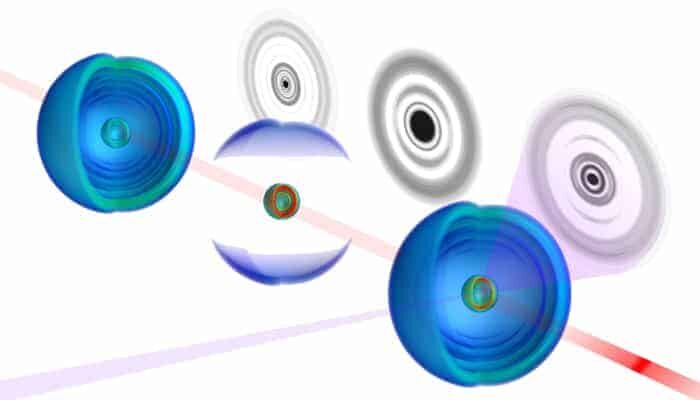
Excited states occur when electrons in an atom absorb energy and move to higher energy levels. In Rydberg atoms, these excited states are extreme, with electrons occupying very high orbits. This leads to fascinating phenomena such as ultracold plasmas and potential breakthroughs in quantum computing. Visualizations and scientific explanations help demystify these complex states, illustrating their significance in cutting-edge research.
- Excited Electron Orbits:
Electrons in Rydberg atoms can reach orbits much larger than typical atomic sizes. - Novel Phenomena:
These states enable the creation of ultracold plasmas and contribute to advancements in quantum technologies.
Collaboration Between Science and Art
“Rydberg: The Movie” exemplifies the synergy between scientific accuracy and artistic expression. Physicists and filmmakers work closely to ensure that the portrayal of Rydberg atoms is both factually precise and visually captivating. This collaboration balances the demands of scientific integrity with creative storytelling, resulting in a film that educates while engaging its audience.
- Scientific Consultation:
Experts guide the depiction of complex quantum phenomena to maintain authenticity. - Artistic Interpretation:
Creative elements enhance the narrative, making abstract concepts accessible and compelling.
Applications of Rydberg Atoms in Modern Science
Rydberg atoms play a vital role in various scientific fields, particularly quantum optics and quantum information science. Their unique properties facilitate advancements in laser technology, efficient energy transfer, and the development of quantum computers. Understanding these applications highlights why research into Rydberg atoms remains a dynamic and impactful area of study.
- Quantum Optics:
Rydberg atoms are integral to manipulating light and enhancing laser systems. - Quantum Information Science:
They offer promising pathways for building quantum bits and improving computational power.
Ethical Considerations in Quantum Research
Beyond scientific exploration, the film addresses the ethical questions arising from quantum research. As quantum technologies advance, scientists face moral responsibilities regarding the societal impact of their discoveries. The narrative encourages reflection on the ethical stewardship required when harnessing powerful quantum phenomena.
- Scientific Responsibility:
Researchers must consider the broader consequences of their work on society. - Philosophical Inquiry:
The film prompts viewers to contemplate the moral dimensions of emerging quantum technologies.
Audience Engagement and Educational Outreach
Designed to be more than a passive viewing experience, “Rydberg: The Movie” incorporates interactive elements to deepen audience understanding. Post-screening discussions led by physicists and educators, along with potential augmented reality features, invite viewers to actively engage with the material. This approach fosters a greater appreciation for the complexities of quantum physics and encourages ongoing learning.
- Interactive Discussions:
Facilitated conversations help audiences explore and question the scientific concepts presented. - Augmented Reality Experiences:
Innovative technologies may provide immersive learning opportunities beyond the film.
Anticipated Impact and Legacy of the Film
By combining rigorous science with imaginative storytelling, “Rydberg: The Movie” aims to inspire a diverse audience, including future scientists, filmmakers, and enthusiasts. Its interdisciplinary approach promises to expand public understanding of quantum physics and stimulate curiosity about the natural world. The film is poised to become a landmark in science communication, bridging the gap between complex research and popular culture.
- Inspiration for Future Generations:
Encourages new explorations in science and the arts. - Cross-Disciplinary Achievement:
Demonstrates the power of integrating scientific knowledge with creative media.
FAQ
What are Rydberg atoms?
Rydberg atoms are atoms with electrons in very high energy levels, exhibiting exaggerated properties useful in quantum physics research.
Why is the movie significant for science education?
It combines scientific rigor with artistic storytelling to make complex quantum physics concepts accessible and engaging to a wide audience.
Will the movie include interactive elements?
Yes, it aims to include interactive outreach such as post-screening discussions and augmented reality experiences to deepen understanding.





Leave a Reply