
Short Answer
Definition of Successor Space Telescopes
Successor space telescopes refer to the next generation of astronomical observatories designed to follow and surpass the capabilities of current instruments like the James Webb Space Telescope (JWST). These future telescopes aim to extend our observational reach deeper into the cosmos, employing advanced technologies to explore phenomena beyond the scope of existing missions.
- Purpose:
To enhance our understanding of the universe by observing celestial objects with greater sensitivity, resolution, and across broader spectral ranges. - Scope:
Successors are envisioned to investigate early galaxies, exoplanet atmospheres, dark energy, and other cosmic mysteries that remain elusive today.
Technological Advancements Driving Future Telescopes
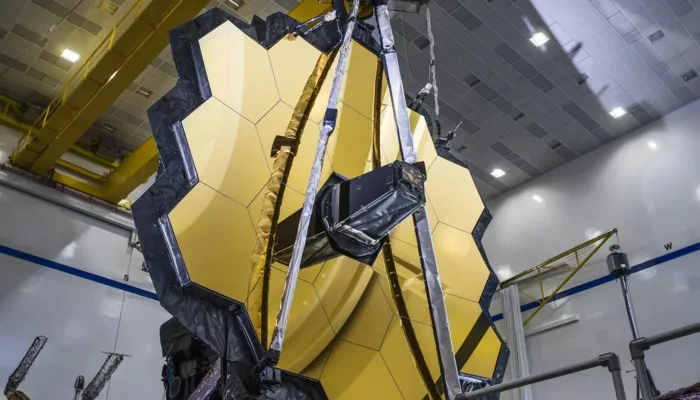
The evolution of space telescopes is propelled by continuous innovation in optics, detectors, and spacecraft engineering. While the JWST operates primarily in the infrared spectrum with a segmented mirror 6.5 meters in diameter, its successors are expected to incorporate larger apertures and novel technologies to push observational boundaries.
- Segmented Mirrors:
Future telescopes may feature deployable mirrors significantly larger than JWST’s, increasing light-gathering power and resolution. - Quantum Optics:
Emerging quantum technologies could improve sensitivity and enable new methods of detecting faint cosmic signals. - Multi- and Hyperspectral Imaging:
Integrating data across multiple wavelengths-from ultraviolet to X-rays-will provide a more comprehensive picture of astrophysical phenomena. - Starshade Technology:
Advanced starshades can block starlight more effectively, facilitating the direct imaging of exoplanets.
NASA’s Vision for Successor Missions
NASA is actively conceptualizing several ambitious projects intended to succeed the JWST, focusing on expanding observational capabilities and addressing key scientific questions.
- Large Ultraviolet Optical Infrared Surveyor (LUVOIR):
A proposed observatory with a mirror potentially up to 15 meters in diameter, designed for broad spectral coverage and detailed exoplanet characterization. - Habitable Exoplanet Observatory (HabEx):
A mission concept emphasizing the direct imaging of Earth-like exoplanets and the study of their atmospheres to assess habitability.
Operational Lifespan and Mission Planning
The JWST is engineered for a mission duration exceeding ten years, operating from the second Lagrange point (L2). However, all space telescopes face eventual limitations due to onboard system degradation and orbital constraints. Planning for successors is integral to maintaining continuous progress in space observation.
- Mission Duration:
Finite operational lifetimes necessitate the development of follow-up telescopes to sustain and advance scientific discovery. - Technological Legacy:
Successor missions build upon lessons learned from JWST and other predecessors, incorporating improvements in design and instrumentation.
Scientific Goals and Research Potential
Future space telescopes aim to unlock new frontiers in astrophysics by probing deeper into the universe’s history and complexity.
- Early Universe Exploration:
Detecting faint signals from the first galaxies formed over 13 billion years ago to understand cosmic origins. - Exoplanet Studies:
Detailed analysis of planetary atmospheres to identify biosignatures and assess habitability. - Dark Energy and Black Holes:
Investigating the nature of dark energy and the behavior of black holes to refine cosmological models.
Interdisciplinary and Collaborative Aspects
The development and operation of next-generation space telescopes involve multidisciplinary scientific approaches and international partnerships.
- Multi-Wavelength Astronomy:
Combining observations across radio, infrared, ultraviolet, and X-ray bands to gain a holistic understanding of cosmic phenomena. - Global Cooperation:
Sharing expertise, resources, and data among international space agencies and research institutions to overcome technical and financial challenges.
Philosophical and Cultural Significance
Beyond their scientific utility, successor telescopes embody humanity’s enduring curiosity and desire to comprehend our place in the cosmos.
- Expanding Perspectives:
Each new telescope reshapes our cosmic viewpoint, challenging anthropocentric assumptions and inspiring existential reflection. - Human Ingenuity:
These instruments stand as testaments to collective creativity and the relentless pursuit of knowledge.
Common Misconceptions About Successor Telescopes
The JWST is the final and ultimate space telescope.
JWST is a milestone, but ongoing advancements ensure future telescopes will surpass its capabilities.
Successor telescopes will only improve resolution.
Enhancements include broader spectral coverage, sensitivity, and new observational techniques beyond resolution alone.
Why Successor Space Telescopes Are Crucial
Continued development of advanced space telescopes is vital for sustaining momentum in astrophysical research and addressing fundamental questions about the universe’s origin, structure, and potential for life.
These observatories enable breakthroughs in technology, foster international scientific collaboration, and inspire generations by expanding the horizons of human knowledge.
Conclusion
The James Webb Space Telescope marks a transformative chapter in cosmic exploration, yet it is part of a larger continuum. NASA’s plans for successor telescopes reflect an unwavering commitment to pushing the boundaries of discovery. By harnessing cutting-edge technologies and global partnerships, future missions will deepen our understanding of the universe and our place within it, continuing humanity’s timeless quest to unveil the unknown.



Leave a Reply