
Short Answer
Definition of Black Holes
Black holes are extraordinary cosmic objects characterized by gravitational fields so intense that nothing, not even light, can escape once it crosses a critical boundary known as the event horizon. Commonly perceived as completely dark voids, black holes are far more complex entities that influence their surroundings in remarkable ways, revealing their presence indirectly through various astrophysical phenomena.
- Event Horizon:
The boundary around a black hole beyond which escape is impossible, marking the point where the escape velocity exceeds the speed of light. - Accretion Disk:
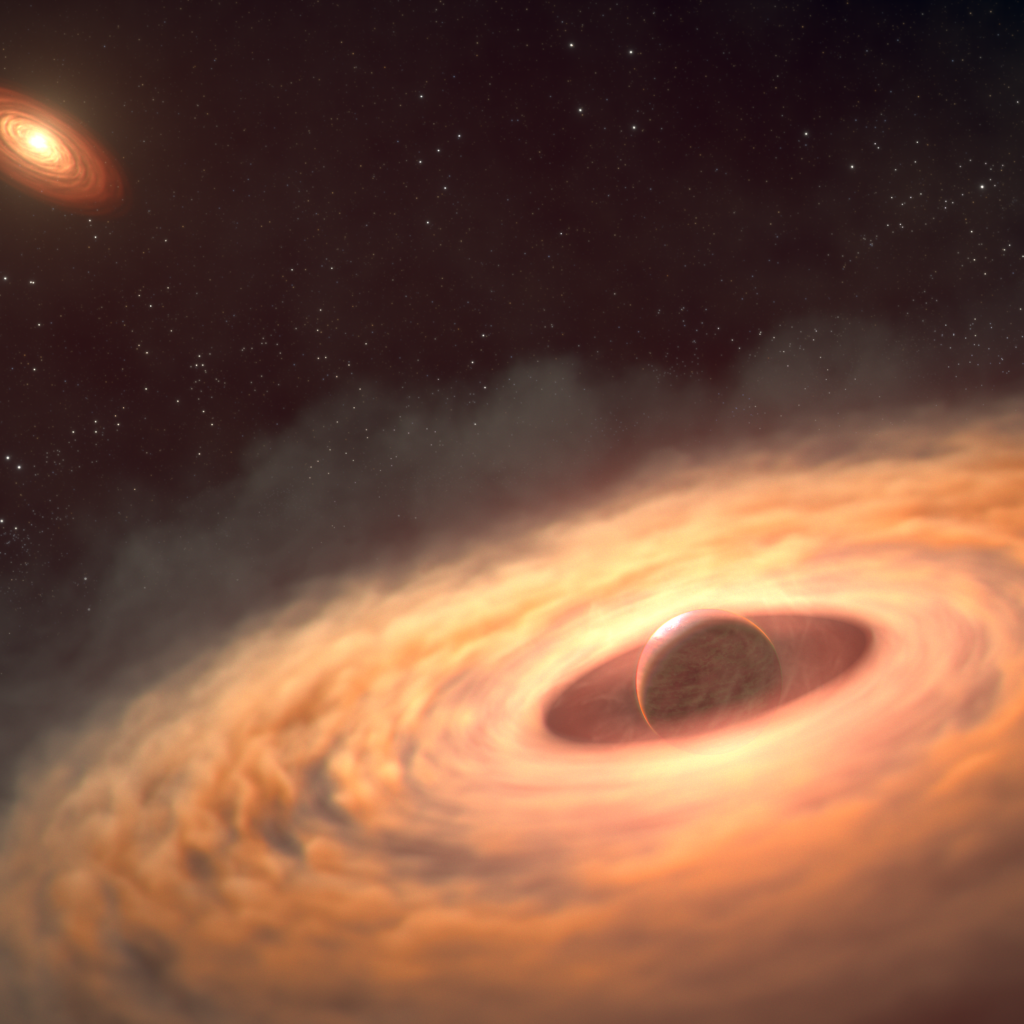
A swirling disk of gas, dust, and stellar debris heated to extreme temperatures as it spirals into the black hole, emitting intense radiation. - Gravitational Waves:
Ripples in spacetime produced by massive cosmic events involving black holes, detectable by specialized observatories. - Hawking Radiation:
A theoretical quantum effect suggesting black holes emit faint thermal radiation, implying they are not entirely black.
Understanding the Nature of Black Holes
At first glance, the term “black hole” suggests an object that is utterly dark and invisible, absorbing all light and matter without any emission. This interpretation stems from Einstein’s theory of general relativity, which predicts that the gravitational pull of a black hole is so strong that beyond the event horizon, no information or radiation can escape. However, this view oversimplifies the true nature of black holes, which are dynamic and influential cosmic phenomena rather than mere empty voids.
How Black Holes Reveal Themselves
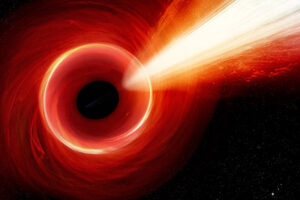
Although the event horizon itself is invisible, black holes manifest their existence through the effects they impose on their environment. Matter drawn toward a black hole forms an accretion disk, where friction and gravitational forces heat the material to millions of degrees, causing it to emit powerful radiation across the electromagnetic spectrum. Additionally, some black holes produce relativistic jets-streams of charged particles propelled at near-light speeds-that further illuminate their surroundings. These indirect signals provide astronomers with vital clues to detect and study black holes.
Observational Breakthroughs: Imaging and Detection
The advent of advanced observational techniques has revolutionized our ability to “see” black holes. The Event Horizon Telescope (EHT) collaboration achieved a historic milestone by capturing the first image of the supermassive black hole at the center of galaxy M87. This image did not show the black hole itself but revealed the glowing ring of superheated plasma encircling the dark silhouette of the event horizon, often referred to as the black hole’s “shadow.” Such observations confirm that black holes, while not directly visible, leave unmistakable imprints on their surroundings.
Beyond electromagnetic observations, gravitational wave detectors like LIGO and Virgo have opened a new window into black hole physics. These instruments detect spacetime ripples generated by cataclysmic mergers of black holes or neutron stars, providing compelling evidence of their existence and dynamic interactions. This form of “listening” to the cosmos complements traditional visual methods and enriches our understanding of black holes as active participants in the universe.
Quantum Perspectives: Hawking Radiation
Adding a quantum dimension to black hole physics, Stephen Hawking proposed that black holes emit a faint thermal radiation due to quantum effects near the event horizon. Although this Hawking radiation is extremely weak and has yet to be observed directly, it implies that black holes are not perfectly black and may gradually lose mass over astronomical timescales, eventually evaporating. This theoretical insight challenges the notion of black holes as eternal, unchanging voids and introduces a dynamic aspect to their lifecycle.
Common Misconceptions About Black Holes
Black holes are completely invisible and cannot be detected.
While the event horizon is invisible, black holes are detected through their interactions with nearby matter, emitted radiation, and gravitational waves.
Black holes are empty voids with no physical presence.
Black holes are regions of extremely warped spacetime with immense mass concentrated in a small volume, profoundly affecting their surroundings.
Black holes last forever without change.
Theoretical predictions of Hawking radiation suggest black holes can slowly evaporate over time.
Significance of Black Holes in Science and Astronomy
Black holes play a crucial role in advancing our understanding of fundamental physics, cosmology, and the behavior of matter under extreme conditions. They serve as natural laboratories for testing theories of gravity, quantum mechanics, and spacetime. Moreover, black holes influence galaxy formation and evolution through their gravitational effects and energetic emissions. The study of black holes also drives technological innovation in observational astronomy, including the development of high-resolution telescopes and gravitational wave detectors, expanding humanity’s capacity to explore the universe.
Conclusion: Beyond Darkness-The True Essence of Black Holes
Black holes transcend the simplistic image of absolute darkness and invisibility. They are complex, dynamic entities that reveal themselves through powerful gravitational forces, energetic emissions, and spacetime distortions. Far from being mere cosmic voids, black holes are vibrant actors shaping the universe’s structure and evolution. Their study challenges and enriches our concepts of visibility, existence, and the fundamental laws governing the cosmos, inviting us to explore the universe through ever more sophisticated and indirect means.
FAQ
What defines a black hole?
A black hole is defined by its gravitational field, which is so strong that nothing, not even light, can escape once it crosses the event horizon.
Can black holes be observed directly?
No, black holes cannot be observed directly, but their presence is inferred from their effects on nearby matter and the radiation emitted from their accretion disks.


Leave a Reply