

Short Answer
Understanding the Universe: An Overview
The universe, an immense and intricate expanse filled with countless mysteries, continues to captivate the curiosity of scientists and thinkers alike. Despite significant breakthroughs in astrophysics and cosmology over the last hundred years, many fundamental questions about the cosmos remain unanswered. This article explores eleven essential inquiries that highlight the cutting edge of scientific investigation and deepen our grasp of the universe’s complexities.
Definition of Key Cosmic Phenomena
- Dark Matter:
A mysterious form of matter that is believed to make up about 27% of the universe’s total mass-energy. It cannot be observed directly but is inferred from its gravitational effects on galaxies and cosmic background radiation. - Dark Energy:
An enigmatic energy component accounting for roughly 68% of the universe, responsible for the accelerated expansion of space, defying traditional gravitational forces. - Multiverse:
A theoretical concept suggesting that our universe might be one among many, each with distinct physical laws and constants.
The Enigma of Dark Matter
Dark matter remains one of the most baffling elements in cosmology. Although it constitutes a significant portion of the universe’s mass-energy budget, its exact nature is still unknown. Scientists detect its presence through gravitational influences on visible matter and radiation, yet direct observation or identification of its particles has not been achieved. Advancements in particle physics and astronomical techniques are crucial to uncovering the true identity of dark matter.
Deciphering Dark Energy and Cosmic Expansion
Dark energy is the driving force behind the universe’s accelerating expansion, a phenomenon that contradicts the expected slowing effect of gravity. Making up the majority of the cosmos, this mysterious energy challenges existing cosmological models. Understanding how dark energy operates is vital for predicting the universe’s long-term evolution and could revolutionize our comprehension of fundamental physics.
The Multiverse Hypothesis
The idea of multiple universes, or the multiverse, proposes that our cosmos is just one of countless others, each potentially governed by different physical laws. This hypothesis arises from theories like cosmic inflation but remains speculative due to the lack of empirical evidence. The multiverse concept bridges scientific theory and philosophical debate, pushing the boundaries of what can be tested and known.
Matter-Antimatter Imbalance
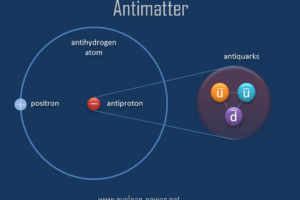
According to the Standard Model of particle physics, the Big Bang should have produced equal amounts of matter and antimatter. However, the observable universe is overwhelmingly composed of matter, indicating an unknown process that caused this asymmetry. Research at facilities such as the Large Hadron Collider aims to uncover mechanisms behind this imbalance, which could reveal new physics beyond current theories.
The Nature and Concept of Time
Time governs all physical phenomena and human experience, yet its fundamental essence remains elusive. Is time a linear progression or does it cycle? Einstein’s theory of relativity has reshaped our understanding by linking time with space, but questions persist, especially when considering quantum mechanics. A comprehensive theory of time that unites these perspectives is still a goal for physicists and philosophers alike.
Origins of Life in the Universe
The emergence of life from non-living matter is one of the most profound scientific puzzles. Theories such as abiogenesis suggest life began through natural chemical processes on Earth, while panspermia hypothesizes that life or its precursors arrived from elsewhere in space. Despite progress, the exact pathway from simple molecules to complex organisms remains unclear. Astrobiology continues to investigate the conditions that foster life both on our planet and beyond.
Exploring Beyond the Observable Universe
The observable universe is limited by the distance light has traveled since the Big Bang, approximately 13.8 billion years. Beyond this horizon lies an unknown expanse that may extend infinitely. The characteristics and structure of these unobservable regions pose significant questions for cosmology, influencing models of the universe’s size, shape, and overall architecture.
The Search for Extraterrestrial Life
Considering the vast number of stars and potentially habitable planets, the question of whether life exists elsewhere is a central topic in science. The Fermi Paradox highlights the contradiction between the high probability of extraterrestrial civilizations and the lack of contact or evidence. Initiatives like the Search for Extraterrestrial Intelligence (SETI) continue to scan the cosmos for signals, yet the silence remains a profound mystery.
Predicting the Universe’s Ultimate Destiny
The future of the cosmos is a subject of ongoing debate, with several scenarios proposed based on current understanding of dark energy and cosmic expansion. These include the Big Freeze, where the universe cools and expands indefinitely; the Big Crunch, a potential collapse back into a singularity; and the Big Rip, where expansion accelerates to the point of tearing apart all matter. Determining which fate awaits requires further observational data and theoretical refinement.
Black Holes and Their Influence on Space-Time
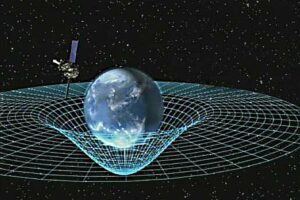
Black holes are regions where gravity is so intense that nothing, not even light, can escape. They provide unique environments to test the limits of general relativity and quantum mechanics. Studying how black holes interact with the fabric of space-time offers insights into gravity’s nature and may uncover new physical laws.
Consciousness: The Cosmic Connection
Consciousness, the state of awareness and subjective experience, remains one of the most profound mysteries intersecting neuroscience, physics, and philosophy. Understanding how consciousness arises and its relationship to the universe could illuminate the connection between human existence and the cosmos, potentially revealing new dimensions of reality.
Significance of These Cosmic Questions
These fundamental inquiries into the nature of the universe are not only central to scientific progress but also shape our philosophical understanding of existence. As research advances, the answers to these questions will influence technology, cosmology, and our place in the cosmos, driving humanity’s quest for knowledge and expanding the horizons of what is possible.
FAQ
What is dark matter?
Dark matter is an invisible substance that makes up about 27% of the universe's mass-energy content and influences the structure and behavior of galaxies through gravity.
What is dark energy?
Dark energy is a mysterious force responsible for the accelerated expansion of the universe, comprising roughly 68% of its total energy.
Is there evidence for other universes?
Currently, the idea of multiple universes is theoretical and lacks direct empirical evidence, making it a hypothesis in cosmology and philosophy.
Why does matter dominate over antimatter?
The matter-antimatter asymmetry remains unexplained, but ongoing particle physics experiments aim to uncover mechanisms behind this imbalance.
Will the universe expand forever?
Depending on the nature of dark energy, the universe may continue expanding indefinitely, collapse, or experience a catastrophic event like the Big Rip.


Leave a Reply