
Short Answer
Understanding Magnetism
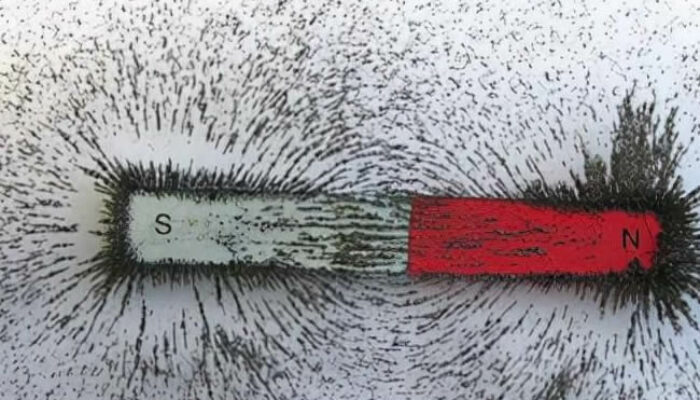
Magnets are fascinating objects capable of attracting and repelling materials without any visible interaction. Their behavior is often accepted without question, yet it raises an intriguing inquiry: would magnets still function if electromagnetic fields did not exist? This question touches on the fundamental principles of physics that govern magnetic phenomena. To address it, one must examine the essence of magnetism, the critical role played by electromagnetic fields, and the consequences of their absence.
Definition of Magnetism and Electromagnetic Fields
Magnetism is a physical phenomenon arising from the motion and intrinsic properties of charged particles, primarily electrons. It is closely linked to electricity, together forming the unified concept of electromagnetism.
- Magnetic Domains:
These are microscopic regions within ferromagnetic materials where atomic magnetic moments align uniformly, producing a net magnetic effect. - Electromagnetic Field:
A field generated by electric charges in motion, encompassing both electric and magnetic components that permeate space.
The Relationship Between Magnetism and Electromagnetic Fields
At the heart of magnetism lies the electromagnetic field, which results from the movement of charged particles. Permanent magnets owe their magnetic properties to the alignment of magnetic domains, a process fundamentally dependent on electromagnetic interactions. Without the presence of an electromagnetic field, the forces that maintain this alignment would cease to exist.
Atomic Structure and the Role of Electromagnetic Forces
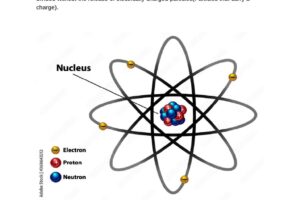
Atoms are held together by electromagnetic forces acting between negatively charged electrons and positively charged nuclei. These forces are essential for the stability of matter. In a hypothetical environment devoid of electromagnetic fields, atomic bonds would collapse, potentially causing matter to disintegrate into unbound particles. Consequently, materials exhibiting magnetic properties would lose their structural integrity and cease to function as magnets.
Magnetic Domains and Their Dependence on Electromagnetic Interactions
Ferromagnetic materials such as iron, cobalt, and nickel display magnetism due to the organized alignment of their magnetic domains. This alignment is sustained by electromagnetic forces. If these forces were removed, the coherence of magnetic domains would be disrupted, eliminating the net magnetic moment and thus the material’s magnetism.
Electromagnets and the Necessity of Electric Currents
Electromagnets generate magnetic fields through the flow of electric current in coils of wire. This induced magnetism exists only while current flows. Without electromagnetic fields, the movement of electric charges would be impossible, rendering electromagnets nonfunctional. This highlights that even temporary magnetism relies fundamentally on electromagnetic phenomena.
Speculative Considerations: Magnetism Without Electromagnetic Fields
Imagining a universe where magnetism exists independently of electromagnetic fields challenges our current understanding of physics. Such a scenario would imply the existence of unknown forces or interactions beyond the four fundamental forces recognized today. While intriguing, this remains purely theoretical and unsupported by empirical evidence.
Impact on Technology and Society
Magnetism underpins numerous technologies, including electric motors, generators, magnetic storage devices, and medical imaging equipment. The absence of electromagnetic fields-and thus magnetism-would disrupt these technologies, causing significant economic and societal upheaval. Modern industry and daily life are deeply reliant on magnetic principles.
Summary and Scientific Perspective
The question of whether magnets would operate without electromagnetic fields is a profound exploration of the interconnectedness of physical forces. Magnetism is inherently tied to electromagnetic interactions; without them, the atomic and molecular structures that produce magnetic effects would not exist. Therefore, magnets would not function in a vacuum lacking electromagnetic fields. This understanding reinforces the delicate balance of forces that sustain the universe and highlights the fundamental role of electromagnetism in the natural world.
FAQ
Would magnets still work if there were no electromagnetic fields?
No, magnets depend on electromagnetic fields to function. Without these fields, the magnetic properties of materials would not exist.
What causes permanent magnets to have magnetic properties?
Permanent magnets have magnetic properties due to the alignment of magnetic domains within the material, which is governed by electromagnetic interactions.
How does the absence of electromagnetic fields affect matter?
Without electromagnetic fields, atomic bonds would not hold, leading to the disintegration of matter as atoms could not maintain their structure.
Can electromagnets operate without electromagnetic fields?
Electromagnets rely on electric currents to generate magnetic fields. Without electromagnetic fields, electromagnets cannot function.
What technological effects would occur if magnetism ceased to exist?
Technologies relying on magnets, such as electric motors and data storage devices, would fail, causing major technological and economic disruptions.




Leave a Reply