
Short Answer
Definition of Quantum Computing
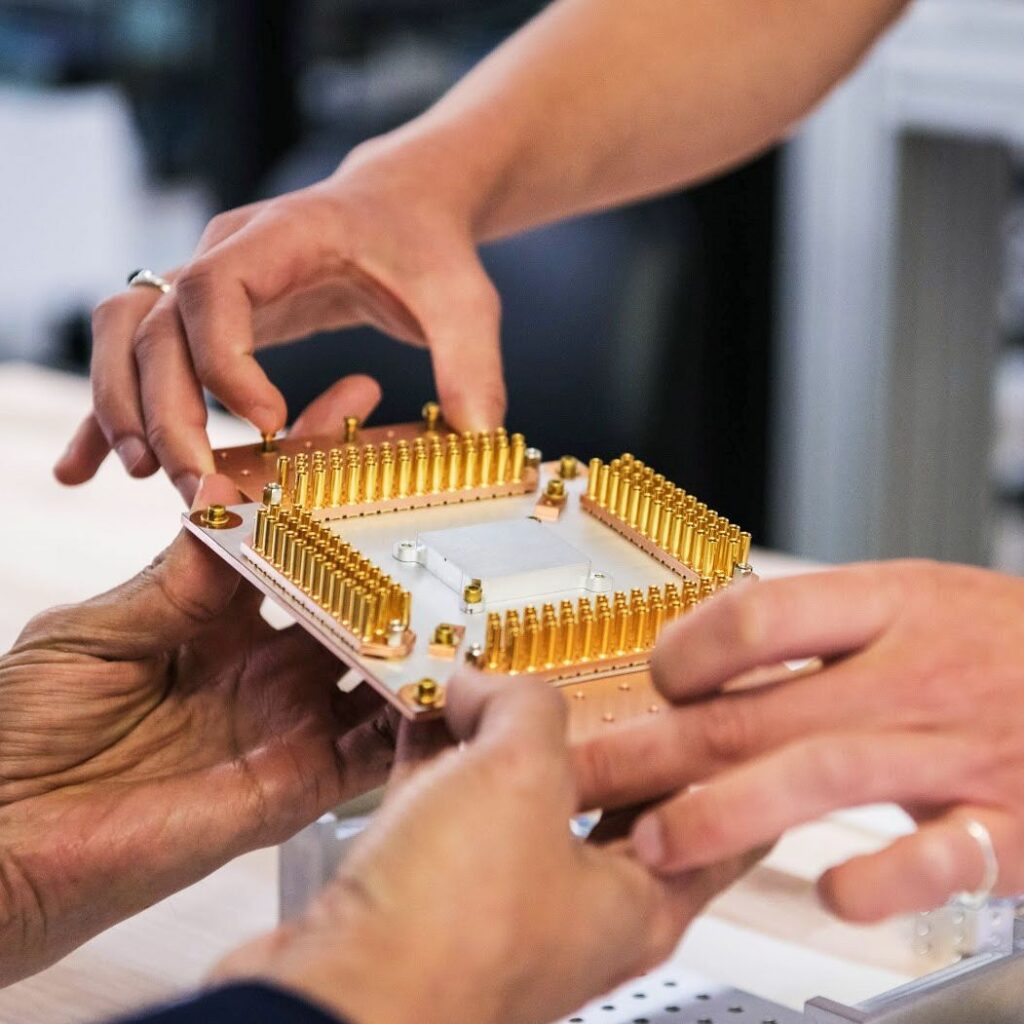
Quantum computing represents a groundbreaking computational approach based on the principles of quantum mechanics. Unlike classical computing, which relies on bits as the smallest unit of information, quantum computing utilizes quantum bits or qubits. These qubits exploit phenomena such as superposition and entanglement, enabling quantum computers to process information in fundamentally new ways. This emerging technology promises to surpass traditional computational limits, offering transformative potential across numerous scientific and industrial fields.
Theoretical Foundations and Key Developments
The evolution of quantum computing is deeply rooted in theoretical breakthroughs that explore the behavior and manipulation of qubits. Central to this are concepts like superposition, where qubits exist in multiple states simultaneously, and entanglement, which links qubits in ways that classical bits cannot replicate. Recent progress in quantum error correction has been crucial, addressing the challenge of decoherence-where qubits lose their quantum state due to environmental interference. Innovations such as topological qubits are being investigated for their inherent resistance to noise, potentially enabling more stable and scalable quantum systems.
Additionally, the creation of specialized quantum algorithms has propelled the field forward. Algorithms like Shor’s algorithm for integer factorization and Grover’s algorithm for database searching demonstrate how quantum computers can achieve exponential speed-ups over classical counterparts. These developments highlight quantum computing not just as a faster alternative, but as a fundamentally different computational paradigm capable of solving problems previously deemed intractable.
Quantum Hardware: Architectures and Innovations
Multiple hardware platforms are competing to become the standard for quantum computing. Among the leading technologies are superconducting qubits, trapped ions, and photonic systems, each with distinct strengths and limitations. Superconducting qubits have shown promising coherence times and gate fidelities, making them suitable for near-term applications. Trapped ion systems offer exceptional precision in qubit manipulation, supporting longer computation durations.
Efforts are underway to develop hybrid quantum architectures that combine the advantages of different qubit technologies, aiming to create more robust and versatile quantum processors. Another significant advancement is the rise of quantum cloud computing services, which provide remote access to quantum hardware. This democratizes the technology, allowing researchers and businesses to experiment with quantum algorithms without the need for costly physical infrastructure.
Quantum Software Ecosystem and Development Tools
The maturation of quantum computing is closely tied to the growth of its software environment. Programming frameworks such as Qiskit and Cirq have become popular, offering user-friendly interfaces for designing and testing quantum algorithms. These platforms include comprehensive toolkits for simulating quantum circuits, optimizing performance, and mitigating errors, thereby lowering the barrier to entry for developers and researchers.
Quantum software development kits (SDKs) foster collaboration between academia and industry, promoting standardization and benchmarking of quantum algorithms to ensure reliability and reproducibility. Emerging areas like quantum machine learning and quantum cryptography are gaining momentum within the software domain, illustrating the expanding versatility of quantum technologies across diverse applications.
Applications of Quantum Computing in the Real World
Quantum computing is poised to revolutionize various sectors by enabling new capabilities and efficiencies. In finance, quantum algorithms can optimize investment portfolios, improve derivative pricing models, and enhance risk assessment methodologies. The pharmaceutical industry stands to benefit from quantum simulations that accurately model molecular interactions, accelerating drug discovery and development.
Material science research can leverage quantum computing to design novel materials with specific properties, such as high-temperature superconductors or efficient catalysts, potentially transforming manufacturing and energy sectors. In artificial intelligence, quantum-enhanced machine learning algorithms promise faster data processing and improved pattern recognition, driving advances in automation and analytics.
Cybersecurity is another critical area impacted by quantum computing. As quantum algorithms threaten to break classical encryption methods, the development of quantum-resistant cryptographic techniques is essential to safeguard digital information in the quantum era.
Challenges and Ethical Implications
Despite its promise, quantum computing faces significant technical obstacles. Issues such as high error rates, limited qubit connectivity, and thermal management complexities require innovative engineering and scientific solutions. Achieving fault-tolerant quantum computation demands interdisciplinary efforts spanning physics, materials science, and computer science.
Ethical considerations are equally important as quantum technologies advance. The potential disruption of current encryption standards raises concerns about privacy and security, necessitating responsible development and deployment. Furthermore, equitable access to quantum resources and international cooperation are vital to prevent technological disparities and ensure that the benefits of quantum computing are shared globally.
Why Quantum Computing is Important
Quantum computing holds the potential to redefine the landscape of computation, impacting science, technology, and everyday life. By enabling solutions to complex problems beyond the reach of classical computers, it can accelerate innovation in medicine, finance, materials, and artificial intelligence. Its influence on cybersecurity will shape the future of digital privacy and data protection. As such, quantum computing represents a critical frontier with profound implications for technological progress and societal advancement.
Looking Ahead: The Future of Quantum Computing
The trajectory of quantum computing is shaped by continuous innovation, collaborative research, and ethical stewardship. As the technology matures, it promises to unlock unprecedented computational power, transforming industries and expanding human knowledge. The journey ahead involves not only building advanced quantum machines but also reimagining the fundamental principles of computation, heralding a new era where quantum technologies become integral to solving the world’s most challenging problems.
FAQ
What is quantum computing?
Quantum computing is a computational paradigm that utilizes quantum bits (qubits) to perform calculations that are infeasible for classical computers.
What are the main applications of quantum computing?
Quantum computing can be applied in finance for portfolio optimization, in pharmaceuticals for drug discovery, and in artificial intelligence for enhanced machine learning.
What are the challenges faced by quantum computing?
Challenges include high error rates, decoherence, and the complexity of qubit management.






Leave a Reply