
Short Answer
Understanding the Speed of Light in Optical Fibers
The velocity at which light travels through optical fibers is a subject that bridges fundamental physics and practical technology. Optical fibers form the essential infrastructure for modern telecommunications, enabling rapid data transfer over extensive distances. To grasp how fast light moves within these fibers, it is necessary to explore core concepts such as the refractive index, the intrinsic properties of light, and the technological framework of fiber optics.
Definition and Basic Principles
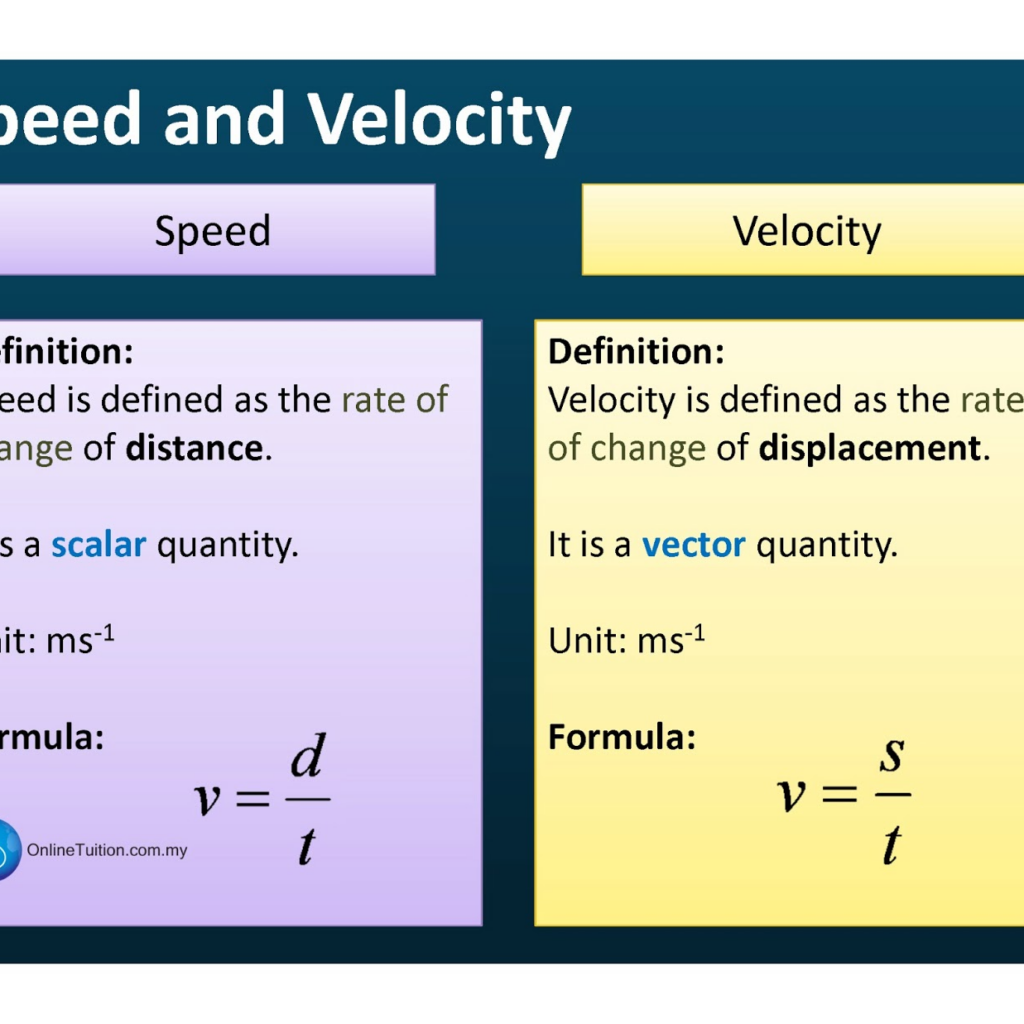
Light’s speed in a vacuum is a universal constant, approximately 299,792 kilometers per second (km/s). However, this speed is not fixed when light passes through other materials, including the glass or plastic used in optical fibers. The reduction in speed is governed by the material’s refractive index, a fundamental optical property.
- Refractive Index (n):
Defined as the ratio of the speed of light in a vacuum (c) to its speed in a given medium (v), expressed mathematically as n = c / v. This means that the higher the refractive index, the slower light travels through that medium. - Typical Values:
Optical fibers generally have refractive indices between 1.44 and 1.55, depending on the material composition, with glass fibers commonly around 1.5.
Calculating Light Velocity in Optical Fibers
Using the refractive index, the speed of light inside an optical fiber can be determined. For example, if the refractive index is 1.5, the velocity of light (v) is calculated as:
v = c / n = 299,792,458 m/s ÷ 1.5 ≈ 199,861,700 m/s
This calculation shows that light travels at roughly 200,000 kilometers per second within the fiber core, significantly slower than in a vacuum but still extraordinarily fast.
Structure of Optical Fibers and Light Propagation
Optical fibers are composed of two main parts: the core and the cladding. Each has a distinct refractive index, which is crucial for guiding light efficiently.
- Core:
The central region where light signals are transmitted. - Cladding:
Surrounds the core and has a lower refractive index, enabling total internal reflection to keep light confined within the core.
This mechanism of total internal reflection ensures minimal signal loss and allows light to travel long distances with little attenuation, making optical fibers ideal for high-speed communication networks.
Principle of Total Internal Reflection
Total internal reflection occurs when light strikes the boundary between the core and cladding at an angle greater than the critical angle, causing it to reflect entirely back into the core. This phenomenon is fundamental to the operation of optical fibers, as it maintains the light signal within the fiber, preventing leakage and preserving signal integrity over vast distances.
Technological Significance and Applications
The velocity of light in optical fibers is not just a theoretical curiosity but a cornerstone of modern communication technology. As digital data demands escalate, optical fibers provide unparalleled bandwidth and speed compared to traditional copper cables, capable of transmitting trillions of bits per second.
Beyond telecommunications, understanding light’s behavior in fibers influences advancements in laser technology, medical imaging, and sensor systems, where precise control of light speed and propagation is essential.
Advanced Fiber Technologies
Recent innovations such as photonic crystal fibers employ engineered microstructures to manipulate light’s velocity and propagation characteristics further. These fibers offer enhanced control over dispersion and signal loss, promising improvements in speed and efficiency for future communication systems.
Factors Affecting Light Speed in Fibers
Several variables can influence the effective speed of light within optical fibers:
- Temperature:
Changes in temperature can alter the refractive index of the fiber material, affecting light velocity. - Material Imperfections:
Flaws or impurities in the fiber can cause scattering and absorption, impacting signal speed and quality. - Laser Source Characteristics:
The wavelength and coherence of the light source can influence propagation speed and dispersion.
Ongoing research aims to develop materials and technologies that minimize these effects, enhancing the reliability and performance of fiber optic systems.
Light’s Dual Nature and Its Impact on Fiber Optics
Light exhibits both wave-like and particle-like properties, a duality that underpins many optical phenomena. This dual nature is critical in understanding how light interacts with fiber materials and how its velocity can be influenced by quantum mechanical effects, which are increasingly relevant in cutting-edge optical technologies.
Common Misconceptions About Light Speed in Optical Fibers
Light travels at the same speed in all media.
Light slows down when passing through materials with refractive indices greater than one, such as glass or plastic in optical fibers.
Optical fibers transmit light without any loss.
While total internal reflection minimizes loss, factors like scattering, absorption, and imperfections cause some attenuation.
Importance of Light Velocity in Optical Fibers
Understanding the speed of light in optical fibers is vital for optimizing communication networks, improving data transmission rates, and developing new technologies in various scientific fields. This knowledge supports the continuous evolution of global connectivity, enabling faster internet, more reliable telecommunications, and innovations in medical and industrial applications.
FAQ
What factors affect the speed of light in optical fibers?
Factors include the refractive index, temperature, material imperfections, and laser source characteristics.



Leave a Reply