
Short Answer
Definition of Martian Gravity
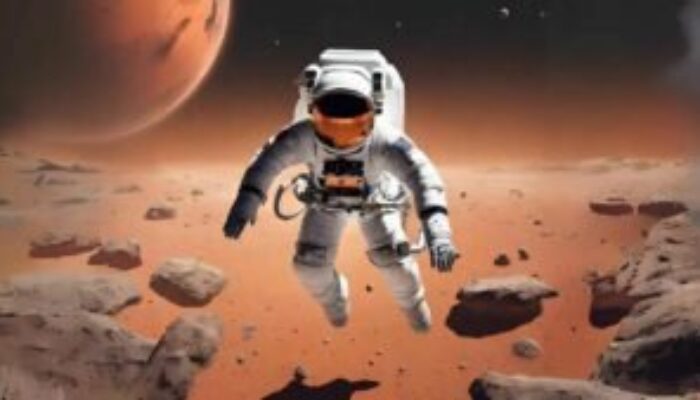
Gravity is the natural force by which a celestial body attracts objects toward its center. On Mars, this gravitational pull is significantly weaker than on Earth, measuring approximately 3.71 meters per second squared (m/s²), which is about 38% of Earth’s gravity. This difference profoundly influences the physical environment, biological processes, and technological challenges associated with the Red Planet.
Factors Determining Mars’ Gravitational Strength
The reduced gravity on Mars arises primarily from its smaller size and mass compared to Earth. Mars has roughly 10.7% of Earth’s mass and a radius about 53% that of Earth. According to Newton’s law of universal gravitation, the gravitational acceleration on a planet’s surface depends directly on its mass and inversely on the square of its radius. Consequently, Mars’ lower mass combined with its smaller radius results in a gravitational acceleration significantly less than Earth’s.
Physical Effects of Martian Gravity
Experiencing Mars’ gravity would feel markedly different from Earth. For instance, a person weighing 150 pounds on Earth would weigh only about 57 pounds on Mars. This reduction means that movements such as jumping would be higher and easier, and objects would fall more slowly. Additionally, the ability to carry heavier loads with less effort could revolutionize how explorers manage equipment and supplies on the Martian surface.

Physiological Implications for Humans
The diminished gravitational force on Mars has critical consequences for human health. On Earth, gravity helps maintain muscle strength and bone density. In Mars’ weaker gravity, astronauts may experience muscle atrophy and bone demineralization similar to, but potentially more severe than, those observed in microgravity environments like the International Space Station. Furthermore, fluid distribution within the body would change, potentially affecting cardiovascular function and eye pressure. These physiological challenges necessitate specialized life-support systems, exercise protocols, and habitat designs to support long-term human presence.
Impact on Technology and Machinery
Lower gravity on Mars influences the design and operation of vehicles and equipment. Reduced gravitational force means less energy is required to lift and transport materials, enabling innovative rover designs and more efficient payload handling. However, it also presents challenges such as decreased traction and stability, requiring advanced suspension systems and control algorithms. Additionally, Martian dust behaves differently under this gravity, affecting maintenance and operational reliability of machinery.
Influence on Mars’ Atmosphere and Climate
Mars’ gravity plays a significant role in its atmospheric characteristics. The planet’s gravitational pull is insufficient to retain lighter gases effectively, contributing to an atmosphere that is only about 1% as dense as Earth’s. This thin atmosphere results in minimal greenhouse warming, making Mars a cold and arid environment. Understanding how gravity affects atmospheric retention is essential for developing strategies for colonization and potential terraforming.
Biological and Ecological Considerations
The unique gravity of Mars invites speculation about how life might adapt or evolve under such conditions. Reduced gravity could influence plant growth patterns, potentially leading to shorter, sturdier vegetation or altered structural development. For humans, long-term adaptation might require genetic modifications or technological enhancements to overcome physiological limitations. These considerations extend the discussion of Martian gravity beyond physics into biology and ecology, highlighting its interdisciplinary significance.
Role of Martian Gravity in Space Exploration
Gravity is a fundamental factor in planning and executing missions to Mars. It affects spacecraft trajectories, landing procedures, and the design of habitats and life-support systems. Mastery of Mars’ gravitational environment is crucial for ensuring safe landings and sustainable human presence. Understanding this force enables engineers and scientists to optimize mission success and advance humanity’s interplanetary ambitions.
Common Misconceptions About Martian Gravity
Mars’ gravity is too weak to support human life.
While weaker gravity poses challenges, it does not preclude human survival. With proper countermeasures, humans can adapt to and thrive in Mars’ environment.
Objects fall at the same speed on Mars as on Earth.
Due to lower gravity, objects fall more slowly on Mars, affecting everything from movement to machinery operation.
Why Understanding Martian Gravity Is Crucial
Grasping the nature of Mars’ gravity is vital for multiple reasons. It shapes the planet’s environment, influences human physiology, and dictates technological design. This knowledge is indispensable for future colonization efforts, scientific research, and the broader quest to expand humanity’s presence beyond Earth. Martian gravity challenges our terrestrial assumptions and opens new frontiers in exploration, biology, and engineering.
Summary
The gravitational acceleration on Mars, approximately 3.71 m/s², is a defining characteristic of the planet that affects physical phenomena, human health, technology, and atmospheric conditions. Its weaker pull compared to Earth’s offers both opportunities and challenges for exploration and habitation. Embracing the unique properties of Martian gravity is essential for advancing human space exploration and understanding life’s adaptability in the cosmos.


Leave a Reply