
Short Answer
Overview of the James Webb Space Telescope
The James Webb Space Telescope (JWST) represents a groundbreaking advancement in astronomical observation, captivating both the scientific community and the public. Engineered to explore the universe with unprecedented depth, JWST aims to shed light on the earliest epochs of cosmic history, the formation of galaxies, and the characteristics of planetary atmospheres. As the initial wave of data has been analyzed, intriguing questions have arisen about whether these findings challenge or redefine our current cosmological understanding. This article offers a comprehensive examination of JWST’s contributions, highlighting how its discoveries refine and expand existing scientific paradigms.
Definition and Purpose of JWST
The JWST is a space-based observatory designed primarily to observe the universe in the infrared spectrum, allowing it to detect celestial objects and phenomena obscured by cosmic dust or too distant for visible light telescopes.
- Infrared Observation:
Enables the study of early galaxies, star formation, and planetary atmospheres by penetrating dust clouds and capturing faint signals from the distant universe. - Scientific Goals:
To investigate the origins of galaxies, stars, and planetary systems, and to analyze the chemical composition of exoplanet atmospheres.
Technological Innovations Behind JWST
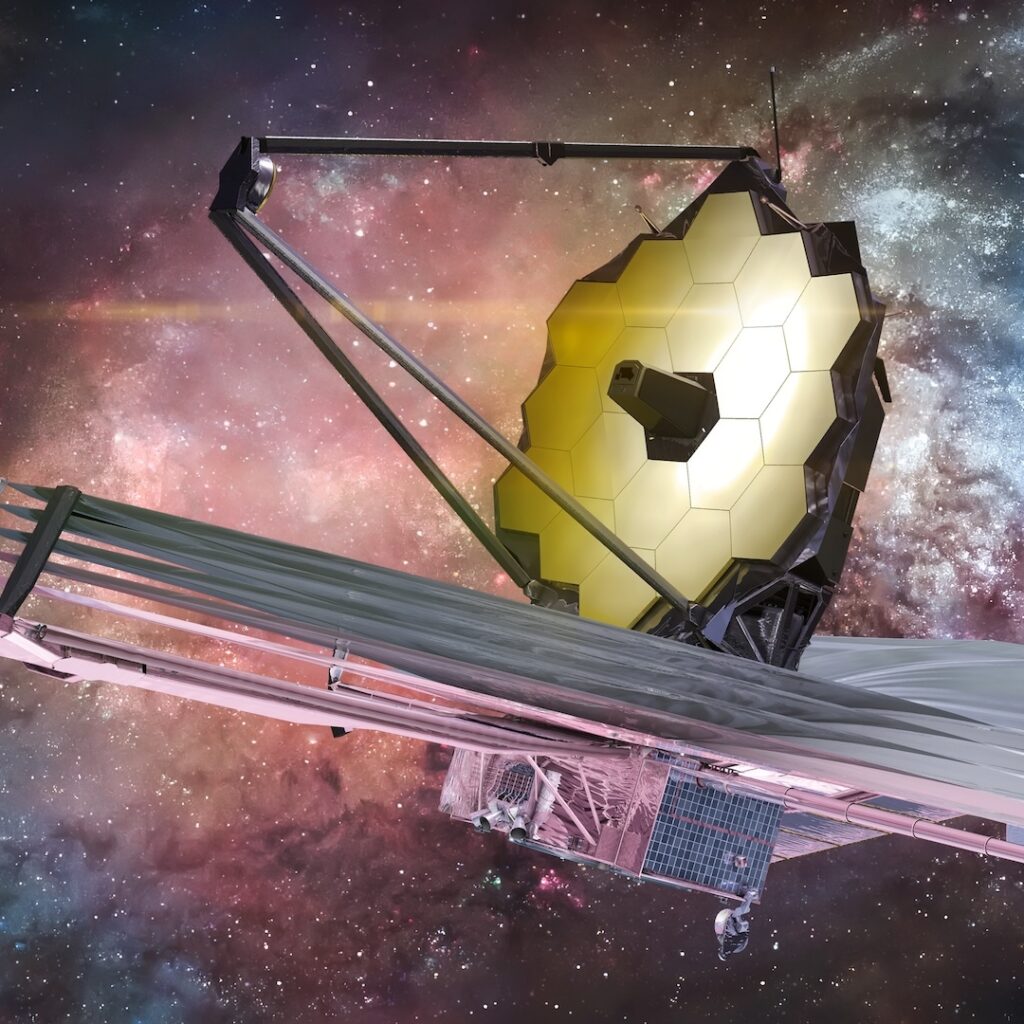
The JWST’s design incorporates cutting-edge engineering feats that facilitate its scientific mission. Its segmented primary mirror, composed of beryllium, and highly sensitive infrared detectors are central to its capabilities.

- Segmented Beryllium Mirror:
Comprising 18 hexagonal segments, this mirror unfolds in space to create a large, precise surface for collecting infrared light. - Infrared Detectors:
These instruments capture faint heat signatures from distant objects, enabling observations beyond the reach of previous telescopes. - Deployment and Operation:
The telescope’s complex deployment sequence and positioning at the second Lagrange point (L2) ensure stable, unobstructed views of the cosmos.
Revolutionizing Our View of the Early Universe
JWST’s infrared sensitivity has unveiled galaxies that appear surprisingly mature and chemically complex at epochs much earlier than previously anticipated. This challenges the conventional timeline of galaxy formation and evolution.
- Early Mature Galaxies:
Observations reveal massive, well-structured galaxies existing just a few hundred million years after the Big Bang, contradicting the slow, hierarchical growth model. - Implications for Cosmic Evolution:
These findings suggest that galaxy formation may have occurred through faster or alternative processes, prompting revisions to astrophysical theories.
Exploring the Interstellar Medium and Cosmic Chemistry
Beyond galaxies, JWST’s spectroscopic capabilities provide detailed insights into the chemical makeup of the interstellar medium and the primordial materials that gave rise to stars and planets.
- Chemical Abundances:
Analysis of molecular clouds and elemental composition informs our understanding of star formation and the synthesis of elements in the early universe. - Dark Matter and Baryonic Matter Interactions:
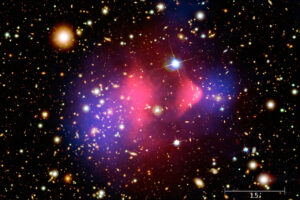
Studies explore how visible matter interacts with dark matter to shape cosmic structures. - Reionization Era:
JWST helps elucidate the transition from the cosmic “dark ages” to a universe filled with luminous objects.
Advancements in Exoplanetary Science
The telescope’s ability to capture transit spectra of exoplanets opens new avenues for studying their atmospheres, climates, and potential habitability, bridging cosmology and planetary science.
- Atmospheric Composition:
Detailed spectral data reveal the presence of molecules such as water vapor, methane, and carbon dioxide in exoplanet atmospheres. - Climate and Habitability:
Understanding atmospheric conditions aids in assessing the potential for life-supporting environments beyond our solar system. - Biosignature Detection:
JWST’s observations contribute to the search for chemical indicators of biological activity.
Scientific Impact and Theoretical Reassessment
While JWST’s discoveries challenge some existing models, they do not invalidate prior knowledge. Instead, they provide empirical data that refine and sometimes expand theoretical frameworks.
- Model Validation and Revision:
Comparative analyses of pre- and post-JWST data highlight areas of agreement and discrepancy, guiding future research directions. - Data-Driven Insights:
Simulations and spectroscopic studies help reconcile observations with theoretical predictions.
Philosophical and Ethical Considerations
The revelations from JWST also provoke reflection on humanity’s place in the cosmos and the broader implications for science and society.
- Cosmic Timeline Reinterpretation:
New findings may lead to a reevaluation of the universe’s history and our understanding of cosmic evolution. - Anthropic Principle:
Discussions about the conditions necessary for life and the uniqueness of our existence are invigorated by JWST data. - Future of Space Exploration:
The telescope’s success influences funding priorities and encourages interdisciplinary collaboration across physics, astronomy, and philosophy.
Conclusion: Expanding the Horizons of Cosmic Knowledge
The James Webb Space Telescope has not dismantled our comprehension of the universe; rather, it has illuminated new dimensions and posed profound questions that stimulate ongoing scientific inquiry. Its technological achievements and groundbreaking discoveries collectively enrich our understanding of the cosmos, underscoring the dynamic and evolving nature of knowledge. As research continues, JWST promises to remain a pivotal tool in humanity’s quest to unravel the mysteries of our origins and the vast universe beyond.


Leave a Reply