
Short Answer
Definition of Atoms and Molecules
Atoms and molecules constitute the fundamental building blocks of all matter in the universe. Atoms are the smallest units of elements, each consisting of a dense nucleus surrounded by electrons. Molecules, on the other hand, are assemblies of two or more atoms bonded together, forming the diverse substances that make up the physical world.
- Atom:
The basic unit of an element, composed of a nucleus containing protons and neutrons, with electrons orbiting in probabilistic regions called orbitals. - Molecule:
A chemical entity formed when atoms connect through various types of bonds, resulting in compounds with unique properties.
Historical Development of Atomic Theory
The concept of atoms has evolved significantly over centuries. Early philosophical ideas, such as those proposed by Democritus, suggested that matter is made of indivisible particles. This notion was scientifically formalized in the 19th century by John Dalton, who introduced the idea that each element consists of unique atoms with specific weights. Subsequent discoveries, including J.J. Thomson’s identification of the electron and Ernest Rutherford’s nuclear model, refined our understanding of atomic structure.
Atomic Structure and Quantum Mechanics
Atoms are composed of a nucleus-containing positively charged protons and neutral neutrons-held together by the strong nuclear force, one of the fundamental forces in nature. Surrounding the nucleus is a cloud of electrons that do not follow fixed orbits but exist in probabilistic regions called orbitals, as described by quantum mechanics. The wave-particle duality of electrons and principles such as Heisenberg’s uncertainty principle revolutionized the classical view, leading to the development of quantum chemistry that explains electron behavior in atoms and molecules.
Chemical Bonding and Molecular Formation
Molecules arise when atoms bond through different types of chemical interactions:
- Covalent Bonds:
Formed by the sharing of electron pairs between atoms, creating strong and stable connections common in organic and inorganic compounds. - Ionic Bonds:
Result from electrostatic attraction between positively and negatively charged ions, often forming crystalline solids. - Metallic Bonds:
Characterized by a ‘sea of electrons’ that are delocalized over metal atoms, imparting unique electrical and thermal properties.
The Octet Rule and Molecular Stability
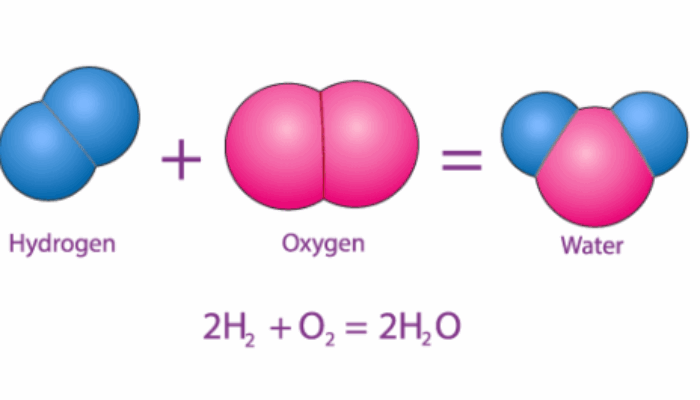
The octet rule explains why atoms tend to form bonds that result in eight electrons in their outermost shell, achieving a stable electronic configuration. This principle underlies the structure and function of many essential molecules. For example, water (H₂O) exhibits a bent molecular shape due to its electron arrangement, which is crucial for its liquid state and exceptional solvent capabilities. Similarly, carbon dioxide (CO₂) adopts a linear geometry that influences its chemical behavior and role in the environment.
Molecular Interactions and States of Matter
The interactions between molecules govern the physical states of matter-solid, liquid, and gas. The kinetic molecular theory describes how molecules move and interact under different temperatures and pressures, leading to phase changes. Intermolecular forces, such as hydrogen bonding in water, contribute to unique properties like high specific heat capacity and surface tension, which are vital for biological and ecological systems.
Advancements in Atomic and Molecular Visualization
Modern technologies, including scanning tunneling microscopy and atomic force microscopy, have enabled scientists to observe atoms and molecules with remarkable precision. These imaging techniques have opened new frontiers in nanotechnology and material science by allowing manipulation at the atomic scale, paving the way for innovations in electronics, medicine, and engineering.
Applications and Significance in Science and Technology
Understanding atoms and molecules is fundamental to numerous scientific disciplines. In pharmacology, molecular knowledge guides the design of drugs with targeted effects. Biochemistry relies on molecular interactions to explain life processes, while materials science uses atomic principles to engineer substances with tailored properties. This foundational understanding drives technological progress and enhances our ability to solve complex challenges.
Summary: The Essence of Matter
The scientific exploration of atoms and molecules weaves together historical insights and contemporary quantum theories, forming a comprehensive framework for interpreting the material universe. These elemental units underpin every physical phenomenon, from the smallest particles to the vast cosmos. Delving into their nature enriches our comprehension of matter and inspires ongoing scientific discovery, highlighting the profound connection between atomic interactions and the fabric of existence.
FAQ
What are atoms?
Atoms are the smallest units of elements, consisting of a nucleus surrounded by electrons.
What are molecules?
Molecules are formed when two or more atoms bond together, creating compounds with unique properties.
What is the octet rule?
The octet rule states that atoms tend to form bonds that result in eight electrons in their outermost shell for stability.
How do atoms interact?
Atoms interact through various types of chemical bonds, including covalent, ionic, and metallic bonds.






Leave a Reply