

Short Answer
Definition
The intersection of physics and medical sciences represents a remarkable fusion of disciplines that enhances our understanding of health, disease, and therapeutic interventions. This interdisciplinary field applies fundamental physical principles to develop technologies and methods that improve diagnosis, treatment, and patient care.
- Physics in Medicine:
The application of physical laws and techniques to medical problems, including imaging, therapy, and device development. - Medical Physics:
A specialized branch focusing on the safe and effective use of radiation and other physical modalities in healthcare.
Diagnostic Imaging Technologies
One of the most transformative contributions of physics to medicine is in the realm of diagnostic imaging. Techniques such as X-rays, computed tomography (CT), and magnetic resonance imaging (MRI) rely on physical phenomena to visualize internal body structures non-invasively.
X-rays and Computed Tomography
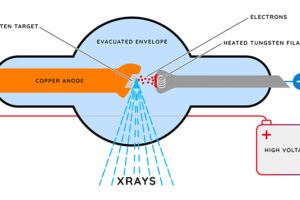
X-rays utilize electromagnetic radiation to penetrate tissues, producing images that reveal bones and certain internal organs. CT scans build upon this by combining multiple X-ray images taken from different angles to create detailed cross-sectional views, enhancing diagnostic accuracy.
Magnetic Resonance Imaging (MRI)
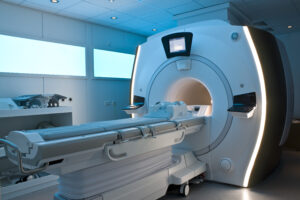
MRI employs strong magnetic fields and radiofrequency pulses to generate detailed images of soft tissues. This technique is based on nuclear magnetic resonance, which detects the behavior of hydrogen nuclei in the body. Unlike X-rays, MRI does not use ionizing radiation, making it safer for repeated use and particularly valuable for imaging the brain, muscles, and connective tissues.
Therapeutic Applications: Radiation Therapy
Physics also plays a critical role in cancer treatment through radiation therapy. This method uses high-energy radiation to destroy malignant cells while sparing healthy tissue as much as possible.
- Dosimetry:
The precise calculation and measurement of radiation doses to ensure effective treatment and minimize side effects. - Radiation Types:
Includes X-rays, gamma rays, and particle beams, each with specific physical properties suited for different therapeutic goals.
The success of radiation therapy depends on a thorough understanding of radiation physics and biological responses, highlighting the importance of interdisciplinary collaboration among physicists, oncologists, and medical technologists.
Medical Devices and Acoustic Physics
Beyond imaging and therapy, physics underpins the development of numerous medical devices. Ultrasound imaging, for example, uses high-frequency sound waves to produce real-time images of internal organs and fetuses during pregnancy.
- Ultrasound Imaging:
Relies on the reflection of sound waves at tissue boundaries to create images, essential in obstetrics and cardiology. - Interventional Radiology:
Combines imaging techniques with minimally invasive procedures, guided by principles of fluid dynamics and acoustics.
Role of Medical Physicists
Medical physicists are professionals who ensure the safe and effective application of physical methods in healthcare. Their responsibilities include calibrating imaging equipment, optimizing radiation therapy protocols, and maintaining compliance with safety regulations. Their expertise bridges the gap between theoretical physics and clinical practice, ensuring patient safety and treatment efficacy.
Biomedical Engineering and Innovation
The field of biomedical engineering exemplifies how physics drives innovation in healthcare technology. The design and development of prosthetics, implants, and biocompatible materials depend heavily on principles from biomechanics, materials science, and fluid mechanics.
- Prosthetic Design:
Involves understanding mechanical forces and material properties to create functional artificial limbs. - Implants and Biomaterials:
Require knowledge of physical interactions between materials and biological tissues to ensure compatibility and durability.
These advancements significantly improve the quality of life for individuals with disabilities and chronic conditions.
Quantitative Methods in Medical Research
Physics also contributes to medical research through quantitative analysis and modeling. Techniques from statistical physics and computational modeling help decipher complex biological systems, facilitating drug development, disease progression studies, and public health strategies.
- Mathematical Modeling:
Simulates biological processes to predict outcomes and optimize treatments. - Data Analysis:
Employs algorithms to interpret large datasets, enhancing understanding of health trends and informing clinical decisions.
Future Directions and Ethical Considerations
The future of physics in medicine is poised for remarkable growth, driven by emerging technologies such as artificial intelligence (AI) and nanotechnology. These innovations promise personalized therapies, improved diagnostics, and more efficient healthcare delivery.
- Artificial Intelligence:
Integrates computational models with biomedical data to tailor treatments and predict disease outcomes. - Nanotechnology:
Enables targeted drug delivery and novel diagnostic tools at the molecular level.
However, these advancements raise important ethical questions regarding data privacy, equitable access to care, and the responsibilities of healthcare professionals in managing complex technologies.
Significance of Physics in Medicine
The integration of physics into medical sciences is vital for advancing healthcare. It enhances diagnostic accuracy, improves therapeutic outcomes, and fosters innovation in medical technology. This interdisciplinary synergy not only deepens our understanding of human biology but also drives the development of solutions that address pressing health challenges worldwide.
FAQ
What is the role of medical physicists?
Medical physicists ensure the safe application of physical methods in healthcare, calibrating equipment and optimizing treatment protocols.
How does physics contribute to medical imaging?
Physics enables technologies like X-rays and MRIs, which visualize internal structures non-invasively.




Leave a Reply