
Short Answer
Definition of Collimation in Radiation Protection
Collimation refers to the technique of narrowing and directing beams of particles or waves to limit their spread. In the context of radiation safety and medical physics, it involves controlling the shape and size of radiation beams to optimize their delivery while minimizing exposure to non-target areas. This process is essential for both enhancing the precision of radiation-based procedures and protecting patients and healthcare workers from unnecessary radiation.
Types and Applications of Collimators
Collimators are specialized devices designed to shape and guide radiation beams. They come in various forms tailored to specific uses across multiple fields:
- Medical Imaging:
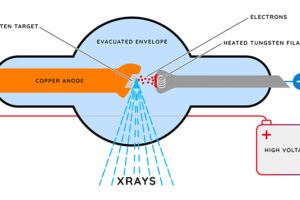
Collimators restrict X-ray beams to the region of interest, improving image clarity and reducing radiation dose to surrounding tissues. - Radiation Therapy:
They focus therapeutic radiation precisely on tumors, sparing healthy organs and tissues. - Industrial Radiography:
Collimators help in inspecting materials by directing radiation beams accurately to detect flaws without excessive exposure.
Importance of Collimation in Medical Imaging
In diagnostic radiology, collimation is critical to ensure that only the targeted anatomical area receives radiation. Without proper collimation, X-ray beams may irradiate a broader field than necessary, leading to increased scatter radiation. This scatter not only degrades image quality by reducing contrast but also elevates the risk of radiation-induced damage to adjacent organs. For example, an uncollimated X-ray beam during chest imaging could unnecessarily expose the thyroid or breast tissue, increasing long-term health risks. Therefore, precise beam alignment through collimation enhances diagnostic accuracy and acts as a safeguard against excessive radiation exposure.
Collimation’s Role in Protecting Healthcare Workers
Healthcare professionals working in environments with radiation sources, such as interventional radiology and nuclear medicine, benefit significantly from collimation. By narrowing the radiation beam, collimators reduce the amount of scattered radiation in the surrounding area, thereby lowering occupational exposure. Studies have demonstrated that strategic use of collimators can markedly decrease the cumulative radiation dose received by medical staff, contributing to safer working conditions. Additionally, improved beam control enhances the signal-to-noise ratio in imaging, facilitating more accurate diagnoses.
Balancing Image Quality and Radiation Dose
While collimation reduces radiation exposure, overly restrictive beam narrowing can sometimes compromise image quality. If the collimated field excludes important anatomical landmarks, vital diagnostic information may be lost. This necessitates a careful balance between minimizing radiation dose and maintaining comprehensive imaging coverage. Determining optimal collimation parameters remains an active area of research, aiming to achieve the best compromise between patient safety and diagnostic effectiveness.
Physical Principles Underpinning Collimation
The effectiveness of collimation is grounded in fundamental radiation physics, particularly the inverse square law. This law states that radiation intensity decreases proportionally to the square of the distance from the source. By shaping the beam and controlling its divergence, collimation influences how radiation intensity is distributed over the target area. In radiation therapy, precise collimation ensures that the highest dose is concentrated on the tumor while minimizing exposure to adjacent healthy tissues. Achieving this requires meticulous treatment planning and advanced technology to delineate both the target and organs at risk accurately.
Technological Advances in Collimation
Recent innovations, such as computer-assisted collimation and image-guided radiation therapy (IGRT), have revolutionized beam shaping techniques. These technologies enable real-time adjustments of collimator settings based on imaging obtained immediately before treatment, allowing for dynamic and highly precise radiation delivery. This enhanced control improves therapeutic outcomes by maximizing tumor targeting and minimizing collateral damage, representing a significant leap forward in radiation safety and efficacy.
Ethical and Regulatory Considerations
Collimation also intersects with ethical responsibilities in patient care. Patients should be informed about the radiation doses involved in their diagnostic or therapeutic procedures and the protective measures, including collimation, employed to minimize risks. Transparent communication fosters trust and empowers patients to make informed decisions. Moreover, as regulatory standards evolve, healthcare providers must stay current with best practices in collimation to ensure compliance and uphold safety standards.
Summary: The Significance of Collimation in Radiation Safety
Collimation plays a vital role in the safe and effective use of radiation in medicine and industry. By precisely shaping radiation beams, it protects patients and healthcare workers from unnecessary exposure while enhancing the quality of diagnostic images and treatment outcomes. The ongoing challenge lies in balancing dose reduction with the need for comprehensive imaging. As technology and understanding advance, collimation techniques will continue to evolve, shaping the future landscape of radiation protection and clinical practice.
FAQ
What is the role of collimation in radiation protection?
Collimation controls the shape and direction of radiation beams to reduce exposure to non-target areas, thereby protecting patients and healthcare workers.
Why is collimation important in medical imaging?
It improves image clarity by limiting scatter radiation and reduces the risk of radiation-induced damage to surrounding tissues.
How does collimation affect occupational radiation dose?
By narrowing the radiation beam and minimizing scatter, collimation lowers the cumulative radiation dose received by healthcare professionals.
Are there any risks associated with collimation?
Overly restrictive collimation can lead to loss of important diagnostic information if critical anatomy is excluded from the imaging field.



Leave a Reply