

Short Answer
Understanding Dark Matter
Dark matter constitutes a mysterious and largely invisible component of the universe, accounting for roughly 27% of its total mass-energy composition. Unlike ordinary matter, it neither emits nor interacts with electromagnetic radiation, rendering it undetectable through conventional telescopic observations. Its presence is inferred primarily through gravitational effects on visible celestial bodies such as galaxies and galaxy clusters, which exhibit behaviors that cannot be explained solely by observable matter.
Characteristics and Candidates
- Non-luminous nature:
Dark matter does not emit, absorb, or reflect light, making it invisible to standard detection methods. - Particle candidates:
Leading theoretical particles proposed to constitute dark matter include Weakly Interacting Massive Particles (WIMPs), axions, and sterile neutrinos, each possessing unique interaction properties that influence how they might be detected or manipulated. - Gravitational influence:
Its gravitational pull affects the rotation curves of galaxies and the dynamics of galaxy clusters, providing indirect evidence of its existence.
Principles Behind Energy Conversion from Dark Matter
The concept of converting dark matter into usable energy hinges on the fundamental principle that mass can be transformed into energy, as described by Einstein’s equation E=mc². Since dark matter is believed to have mass, theoretically, it could serve as an energy source if a mechanism to extract this energy were discovered. However, the weak interaction between dark matter and ordinary matter presents significant obstacles to isolating and harnessing it.
Challenges in Harnessing Dark Matter
- Weak interactions:
Dark matter’s minimal interaction with normal matter complicates efforts to detect and manipulate it in laboratory environments. - Unknown mechanisms:
No established process currently exists to convert dark matter mass into usable energy, making the concept highly speculative.
Analogies with Existing Energy Technologies
To conceptualize potential methods for extracting energy from dark matter, parallels can be drawn with current nuclear energy technologies. Nuclear reactors generate power by splitting atomic nuclei (fission) or fusing them (fusion), releasing vast amounts of energy. If dark matter particles such as WIMPs can be induced to interact or annihilate under controlled conditions, similar energy release mechanisms might be possible. This remains a theoretical proposition requiring extensive research and technological innovation.
Current Research and Detection Efforts
Scientists are actively developing advanced detection instruments designed to observe rare interactions between dark matter particles and ordinary matter. These experiments, conducted in highly sensitive terrestrial laboratories, aim to capture signals that could reveal the properties of dark matter and potentially pave the way for energy extraction techniques.
Innovative Experimental Approaches
- Quantum field theory applications:
Researchers explore how dark matter might influence quantum fields, potentially offering clues to its behavior and interaction mechanisms. - Cosmic microwave background studies:
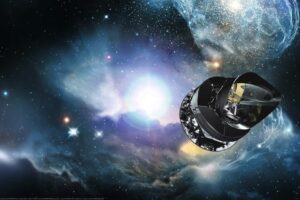
Analysis of subtle imprints left by dark matter on the cosmic microwave background radiation may provide insights into its nature and energy potential.
Ethical and Philosophical Considerations
The prospect of utilizing dark matter as an energy source raises important ethical questions and concerns about long-term sustainability. The ecological and cosmological impacts of extracting energy from a fundamental cosmic component are unknown and could have far-reaching consequences. Therefore, any advancement in this field must be accompanied by careful evaluation of environmental stewardship, public policy implications, and ethical frameworks.
Moreover, the ability to manipulate dark matter would profoundly alter humanity’s understanding of the universe and our existential role within it. Engaging with such a pervasive yet enigmatic substance invites deep philosophical reflection on the nature of reality and our place in the cosmic order.
Summary and Future Outlook
While the idea of converting dark matter into usable energy remains speculative and faces significant scientific and technological hurdles, it stimulates a rich dialogue across physics, philosophy, and ethics. The challenges stem from our limited knowledge and current technological capabilities, yet the pursuit embodies the spirit of scientific inquiry and curiosity. As research progresses, what is now theoretical may eventually evolve into practical applications, potentially revolutionizing energy generation and expanding our comprehension of the universe.
FAQ
What is dark matter?
Dark matter is a non-luminous form of matter that constitutes about 27% of the universe's mass-energy, detectable only through its gravitational effects.
Is it possible to convert dark matter into energy?
While theoretically possible according to mass-energy equivalence, practical conversion of dark matter into energy remains speculative with no current technology to achieve it.
What particles might make up dark matter?
Leading candidates include Weakly Interacting Massive Particles (WIMPs), axions, and sterile neutrinos.
What are the main obstacles to using dark matter as an energy source?
The main obstacles include the elusive nature of dark matter, its weak interaction with normal matter, and lack of a known mechanism for energy extraction.
Are there ethical concerns with extracting energy from dark matter?
Yes, potential ecological, cosmological, and philosophical implications should be carefully considered before pursuing such technologies.


Leave a Reply