
Short Answer
Definition of the Central Dogma of Molecular Biology
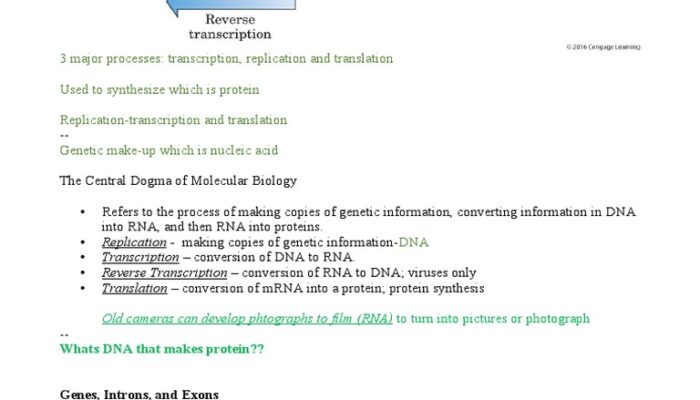
The central dogma of molecular biology is a fundamental concept that describes the directional flow of genetic information within living organisms. It asserts that genetic instructions are transferred from DNA to RNA and then translated into proteins, which perform essential cellular functions. This principle has long served as a foundational framework in genetics and molecular biology, guiding our understanding of how genetic information is expressed and utilized.
- DNA:
The hereditary material that stores genetic information in the form of nucleotide sequences. - RNA:
A nucleic acid synthesized from DNA that acts as an intermediary in the transfer of genetic information. - Protein:
Complex molecules composed of amino acids, synthesized based on RNA templates, responsible for most cellular activities.
Molecular Mechanisms Underpinning the Central Dogma
The central dogma encompasses two primary molecular processes: transcription and translation. Each step involves intricate biochemical machinery that ensures the accurate transfer and expression of genetic information.
Transcription: From DNA to RNA
During transcription, the enzyme RNA polymerase reads the DNA template strand and synthesizes a complementary RNA molecule. This process is highly regulated and precise, as errors can lead to faulty RNA transcripts, potentially disrupting cellular function and organismal development.
Translation: From RNA to Protein
Translation occurs in the ribosomes, where messenger RNA (mRNA) sequences are decoded to assemble amino acids into polypeptide chains. Transfer RNA (tRNA) molecules deliver specific amino acids corresponding to codons on the mRNA, ensuring the correct sequence of the resulting protein. The genetic code’s redundancy allows some flexibility in codon-amino acid pairing, adding complexity to the translation process.
Exceptions and Extensions to the Central Dogma
While the central dogma provides a clear framework, biological systems exhibit exceptions and additional layers of complexity that challenge its universality.
Reverse Transcription
Contrary to the traditional unidirectional flow, certain viruses, such as retroviruses, can reverse the process by converting RNA back into DNA through reverse transcription. This phenomenon raises questions about the dogma’s scope and suggests the need for a more flexible model accommodating bidirectional information flow.
Non-Coding RNAs and Regulatory Roles
Beyond messenger RNAs, various non-coding RNAs (ncRNAs), including long non-coding RNAs (lncRNAs) and microRNAs (miRNAs), play crucial roles in regulating gene expression without being translated into proteins. These RNA molecules influence cellular pathways and gene activity, indicating that RNA functions extend far beyond serving as mere intermediaries in protein synthesis.
Epigenetic Influences on Gene Expression
Epigenetics introduces another dimension by demonstrating how chemical modifications to DNA and histone proteins can alter gene accessibility and transcriptional activity. Such modifications, including DNA methylation and histone acetylation, affect the flow of genetic information without changing the underlying DNA sequence, highlighting regulatory mechanisms outside the original dogma.
Why the Central Dogma Remains Crucial
Despite its limitations, the central dogma continues to be a vital conceptual tool in molecular biology. It provides a simplified yet powerful model for understanding the fundamental processes of genetic information transfer and protein synthesis. This framework underpins numerous scientific advances, from genetic engineering to medical diagnostics, and remains essential for education and research.
Common Misunderstandings About the Central Dogma
- Misconception: The central dogma implies a strict, one-way flow of information.
Correction: Biological systems exhibit exceptions such as reverse transcription, indicating that information flow can be bidirectional. - Misconception: All RNA molecules code for proteins.
Correction: Many RNA types, including ncRNAs, regulate gene expression without being translated. - Misconception: Gene expression is solely determined by DNA sequence.
Correction: Epigenetic factors significantly influence gene activity beyond the DNA code.
Real-World Applications and Examples
The principles of the central dogma are foundational in biotechnology and medicine. For instance, recombinant DNA technology relies on understanding DNA transcription and translation to produce therapeutic proteins like insulin. Retroviral vectors used in gene therapy exploit reverse transcription to insert genetic material into host genomes. Additionally, research into non-coding RNAs has opened new avenues for treating diseases by targeting gene regulation pathways.
Conclusion: Evolving Perspectives on Genetic Information Flow
In summary, the central dogma of molecular biology remains a pivotal concept that elucidates the flow of genetic information from DNA to RNA to protein. However, ongoing discoveries reveal a more intricate network of molecular interactions, regulatory mechanisms, and exceptions that enrich and sometimes challenge this classical model. Embracing these complexities allows for a deeper and more accurate understanding of the molecular basis of life, fostering continued innovation and exploration in the biological sciences.
FAQ
What is the central dogma of molecular biology?
It is the framework describing the transfer of genetic information from DNA to RNA and then to proteins.
Are there exceptions to the central dogma?
Yes, exceptions include reverse transcription and the roles of non-coding RNAs.
Why is the central dogma important?
It provides a foundational understanding of gene expression and protein synthesis.





Leave a Reply