
Short Answer
Definition of the Hydrogen Atom
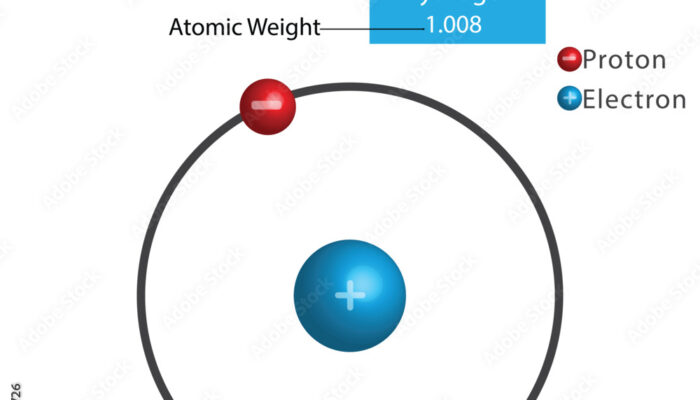
The hydrogen atom is the most basic and prevalent element in the universe, consisting of a single proton and one electron. It serves as a fundamental model for atomic structure and provides essential insights into the nature of matter and atomic theory. Understanding hydrogen’s atomic composition is crucial for grasping broader scientific principles across multiple disciplines.
Fundamental Components
At the heart of the hydrogen atom lies a nucleus made up of a lone proton, which carries a positive charge of +1 elementary charge. Surrounding this nucleus is a single electron, bearing a negative charge of -1 elementary charge, which exists within a probabilistic region rather than a fixed orbit. This electron cloud is described by quantum mechanics, highlighting the atom’s unique structure.
- Proton:
The positively charged particle located in the nucleus, responsible for the atom’s identity as hydrogen. - Electron:
A negatively charged particle that occupies a quantum orbital, its position defined by probability rather than certainty.
Quantum Mechanical Description
Unlike classical models that depict electrons traveling in fixed paths, the hydrogen electron is better understood through quantum wave functions. These mathematical functions describe the likelihood of finding the electron in various regions around the nucleus, forming what are known as electron orbitals. This probabilistic nature challenges traditional views and is fundamental to modern atomic theory.
Nuclear Forces and Atomic Stability
The nucleus of hydrogen, containing only a single proton, is stabilized by the strong nuclear force in more complex atoms, though hydrogen itself lacks neutrons. The electrostatic attraction between the positively charged proton and the negatively charged electron maintains the atom’s structural integrity. This delicate balance between attractive and repulsive forces is a cornerstone of atomic stability.
Electron Energy Levels and Spectral Characteristics
Electrons in a hydrogen atom occupy specific energy levels or shells. When energy is absorbed-via heat, light, or particle collisions-the electron can be excited to a higher energy state. Upon returning to a lower energy level, the electron emits energy in the form of light, producing characteristic emission spectra. Conversely, absorption spectra occur when electrons absorb photons to move to higher energy states.
- Emission Spectrum:
Unique spectral lines emitted as electrons drop to lower energy levels, serving as a quantum mechanical fingerprint for hydrogen. - Absorption Spectrum:
Specific wavelengths absorbed by electrons during excitation, useful in identifying hydrogen in various environments.
Isotopes of Hydrogen
Hydrogen exists in several isotopic forms, differing in neutron number but sharing chemical properties. The most common isotope contains no neutrons, while deuterium has one neutron and tritium contains two. These isotopes illustrate the diversity within a single element and have distinct physical behaviors and applications.
- Protium:
The most abundant isotope with no neutrons. - Deuterium:
Contains one neutron, used in nuclear reactors and scientific research. - Tritium:
Radioactive isotope with two neutrons, utilized in fusion research and luminous devices.
Molecular Hydrogen and Chemical Bonding
Hydrogen atoms readily form molecules by sharing electrons, creating covalent bonds. The simplest molecule, H₂, consists of two hydrogen atoms bonded together. This bonding exemplifies the principles of quantum mechanics and thermodynamics, demonstrating how atomic interactions lead to molecular complexity. Hydrogen bonding also plays a vital role in the structure and function of larger molecules, influencing fields such as biochemistry and materials science.
Hydrogen’s Cosmic Significance
Hydrogen is the primary fuel for stars, powering their energy output through nuclear fusion. In stellar cores, hydrogen nuclei fuse to form helium, releasing vast amounts of energy that sustain star luminosity and drive the synthesis of heavier elements. This process is fundamental to the evolution of the universe and the formation of matter as we know it.
Importance in Science and Technology
The hydrogen atom’s simplicity and fundamental nature make it a cornerstone in various scientific fields. Its study has advanced quantum mechanics, spectroscopy, and astrophysics, while its isotopes and molecular forms have practical applications in energy, medicine, and industry. Understanding hydrogen deepens our comprehension of atomic interactions and the universe’s underlying structure.
Summary
Though seemingly simple, the hydrogen atom embodies complex principles of atomic structure, quantum mechanics, and cosmic processes. From its single proton and electron to its role in molecular bonding and stellar fusion, hydrogen remains a vital subject of scientific inquiry. Its study continues to illuminate the fundamental forces and interactions that shape the physical world.
FAQ
What is the atomic structure of a hydrogen atom?
It consists of one proton in the nucleus and one electron moving in a quantum orbital around the nucleus.
Why does the electron not have a fixed position?
Because of quantum mechanics, the electron's position is described by a probability density rather than a fixed orbit.
What is the significance of hydrogen's emission spectrum?
The emission spectrum provides unique spectral lines that confirm quantum mechanics and help identify hydrogen in space.
How do hydrogen isotopes differ?
They differ in the number of neutrons: protium has none, deuterium has one, and tritium has two, affecting their physical properties.
What role does hydrogen play in stars?
Hydrogen undergoes nuclear fusion to form helium, releasing energy that powers stars.






Leave a Reply