

Short Answer
Understanding the Scale: What Lies Beneath a Molecule?
The microscopic world has fascinated scientists and thinkers for centuries, prompting the question: what exists at scales smaller than a molecule? Exploring this realm reveals a complex hierarchy of particles and forces that form the foundation of all matter. This investigation not only deepens our grasp of the universe’s building blocks but also reshapes our understanding of physical reality.
Definition of a Molecule and Its Constituents
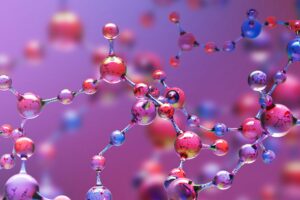
A molecule is conventionally defined as the smallest unit of a chemical compound that retains its chemical properties. It consists of two or more atoms linked by covalent bonds. Examples include simple molecules like water (H2O) and carbon dioxide (CO2), as well as highly complex organic compounds. However, molecules themselves are composed of smaller entities that form the next layers of matter’s structure.
- Molecule:
The smallest chemical unit made of bonded atoms. - Atom:
The fundamental unit of chemical elements, consisting of a nucleus and electrons.
Atoms: The Building Blocks of Molecules
Atoms serve as the fundamental units that combine to form molecules. Each atom contains a dense nucleus made up of protons and neutrons, surrounded by a cloud of electrons. The nucleus is incredibly compact, housing particles that themselves can be further divided. This leads us to the realm of subatomic particles, which are smaller than atoms and essential to their structure.
Subatomic Particles: Protons, Neutrons, and Electrons
Subatomic particles are the components that make up atoms:
- Protons: Positively charged particles located in the nucleus.
- Neutrons: Neutral particles also found in the nucleus.
- Electrons: Negatively charged particles orbiting the nucleus in an electron cloud.
While electrons are elementary particles, protons and neutrons are composite particles made of even smaller constituents called quarks.
Quarks: The Fundamental Constituents of Protons and Neutrons
Quarks are elementary particles that combine to form protons and neutrons, held together by the strong nuclear force mediated by gluons. They come in six varieties, known as “flavors”: up, down, charm, strange, top, and bottom. The specific combination of quarks determines the properties of the particles they form, playing a crucial role in the structure of atomic nuclei and matter itself.
Leptons: A Different Family of Fundamental Particles
Leptons are another class of fundamental particles, distinct from quarks. The electron is the most familiar lepton, but this family also includes muons, tau particles, and their associated neutrinos. Unlike quarks, leptons do not participate in the strong nuclear force; instead, their interactions are governed by the weak nuclear force and electromagnetic force. This distinction highlights the diversity of particles that compose the universe.
Force Carriers: The Mediators of Particle Interactions
In addition to matter particles, the universe contains force carriers, or gauge bosons, which facilitate interactions between particles:
- Photons: Mediate electromagnetic forces.
- Gluons: Bind quarks together via the strong nuclear force.
- W and Z Bosons: Responsible for weak nuclear interactions.
Though not matter themselves, these bosons are essential for the forces that govern particle behavior and the stability of matter.
Beyond Known Particles: Dark Matter and Dark Energy
Extending beyond the particles described by the Standard Model, dark matter and dark energy represent mysterious components of the cosmos. Dark matter, which does not emit or absorb light, is detected through its gravitational effects on visible matter. Dark energy is hypothesized to drive the accelerated expansion of the universe. While not particles smaller than molecules in the traditional sense, they are fundamental to the universe’s large-scale structure and dynamics.
Quantum Entanglement: A Phenomenon Beyond Classical Understanding
Quantum entanglement is a remarkable phenomenon where particles become interconnected such that the state of one instantly influences the state of another, regardless of the distance separating them. This non-local behavior challenges classical physics and suggests that the universe operates on principles far more complex than previously imagined, adding depth to our understanding of the subatomic world.
Summary: The Hierarchy of Matter Below the Molecular Level
Investigating what lies smaller than a molecule reveals a layered structure of matter, from atoms to subatomic particles and fundamental constituents like quarks and leptons. The interactions mediated by force carriers and the enigmatic presence of dark matter and dark energy further enrich this picture. This ongoing exploration continues to push the boundaries of scientific knowledge, hinting at even deeper layers of reality yet to be discovered.
Frequently Asked Questions (FAQ)
What entities are smaller than a molecule?
Smaller than molecules are atoms, subatomic particles such as protons, neutrons, and electrons, and even more fundamental particles like quarks and leptons.
Can you explain what quarks are?
Quarks are elementary particles that combine to form protons and neutrons, held together by the strong nuclear force through gluons.
How do leptons differ from quarks?
Leptons, including electrons, do not experience the strong nuclear force, unlike quarks. They interact mainly via weak nuclear and electromagnetic forces.
What is the role of force carriers in particle physics?
Force carriers, or gauge bosons such as photons, gluons, and W and Z bosons, mediate fundamental forces between particles, enabling essential interactions that maintain the structure of matter.
How are dark matter and dark energy related to particles smaller than molecules?
Although not traditional particles smaller than molecules, dark matter and dark energy are unknown forms of matter and energy that significantly influence the universe’s structure and expansion.
FAQ
What is smaller than a molecule?
Entities smaller than molecules include atoms, subatomic particles such as protons, neutrons, and electrons, and even smaller fundamental particles like quarks and leptons.
What are quarks?
Quarks are fundamental particles that combine to form protons and neutrons, held together by the strong nuclear force mediated by gluons.
What is the difference between leptons and quarks?
Leptons, such as electrons, do not experience the strong nuclear force, unlike quarks, and interact primarily through weak nuclear and electromagnetic forces.
What role do force carriers play in particle physics?
Force carriers, or gauge bosons like photons, gluons, W and Z bosons, mediate fundamental forces between particles, enabling interactions essential to the structure of matter.
How do dark matter and dark energy relate to particles smaller than molecules?
While not particles smaller than molecules in the traditional sense, dark matter and dark energy represent unknown forms of matter and energy that influence the universe at a fundamental level.



Leave a Reply