
Short Answer
Understanding Radiation
Radiation refers to the process by which energy is emitted and transmitted through space or a material medium, either as waves or particles. It is broadly divided into two categories based on energy levels and biological impact: ionizing radiation and non-ionizing radiation. The key distinction lies in whether the radiation carries enough energy to ionize atoms by removing tightly bound electrons, which influences its interaction with matter and living tissues.
Ionizing Radiation: Characteristics and Types
Ionizing radiation is composed of high-energy particles or photons capable of ionizing atoms by displacing electrons from their atomic orbits. This process results in the formation of charged ions and can cause significant molecular and cellular damage. Typically, ionizing radiation possesses energies exceeding 10 electronvolts (eV).
Primary Forms of Ionizing Radiation
- Alpha Particles:
Consisting of two protons and two neutrons, alpha particles are relatively heavy and carry a positive charge. Their penetration ability is limited, as they can be halted by a sheet of paper or the outer dead layer of human skin. - Beta Particles:
These are fast-moving electrons or positrons emitted from radioactive nuclei. Beta particles penetrate biological tissues more deeply than alpha particles but can be blocked by materials such as plastic or glass. - Gamma Rays:
High-frequency electromagnetic waves with very short wavelengths, gamma rays have strong penetrating power, requiring dense shielding like lead or thick concrete to reduce exposure. - X-rays:
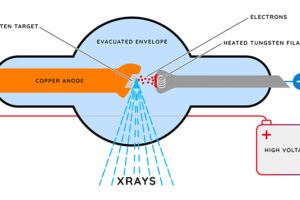
Similar to gamma rays but generally of lower energy, X-rays are generated by electron transitions and are extensively used in medical diagnostics and treatment.
Applications of Ionizing Radiation
- Healthcare:
Ionizing radiation is fundamental in medical imaging techniques such as X-rays and computed tomography (CT) scans, as well as in radiation therapy for cancer treatment. - Industrial Sector:
It is employed in non-destructive testing to inspect materials, radiography, and sterilization of medical equipment and food products. - Scientific Research:
Ionizing radiation is pivotal in nuclear physics, radiochemistry, and other scientific disciplines to explore atomic and subatomic phenomena.
Biological Impact of Ionizing Radiation
Exposure to ionizing radiation can cause damage to cellular components, including DNA, potentially leading to acute radiation sickness in high doses and increasing the risk of cancer and genetic mutations over prolonged exposure. Strict safety standards and exposure limits are essential to protect individuals working with or around ionizing radiation sources.
Non-Ionizing Radiation: Overview and Types
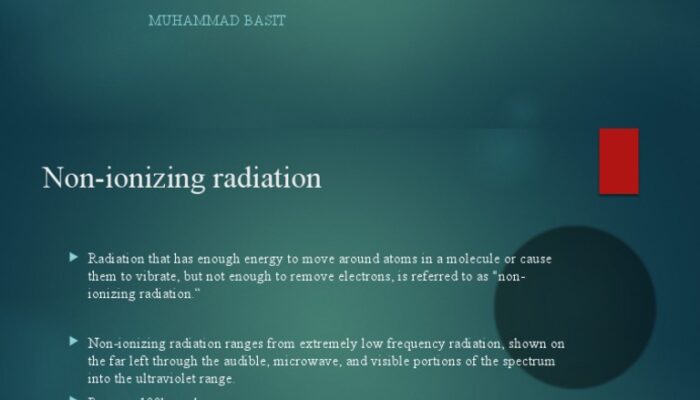
Non-ionizing radiation consists of electromagnetic waves with insufficient energy to ionize atoms or molecules. Generally regarded as less harmful at typical exposure levels, this radiation type is prevalent in everyday technologies and natural phenomena.
Categories of Non-Ionizing Radiation
- Radio Waves:
These waves have the longest wavelengths in the electromagnetic spectrum and are widely used for broadcasting and communication systems such as radio and television. - Microwaves:
With shorter wavelengths than radio waves, microwaves are utilized in cooking appliances, telecommunications, and radar systems. - Infrared Radiation:
Associated with heat emission, infrared radiation is applied in thermal imaging, fiber optic communications, and heating technologies. - Visible Light:
The segment of the electromagnetic spectrum detectable by the human eye, visible light is essential for vision and various cultural and artistic activities. - Ultraviolet (UV) Radiation:
Although UV radiation has some ionizing potential, it is mostly classified as non-ionizing. It is used for sterilization and disinfection but can cause skin damage and increase cancer risk with excessive exposure.
Uses of Non-Ionizing Radiation
- Medical Field:
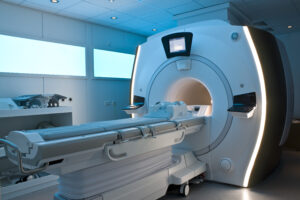
Non-ionizing radiation is employed in magnetic resonance imaging (MRI) and laser therapies for various treatments. - Communication Technologies:
It underpins wireless communication systems, including mobile phones, Wi-Fi networks, and Bluetooth devices. - Consumer Electronics:
Common household devices such as remote controls, LED lighting, and microwave ovens operate using non-ionizing radiation.
Health Considerations of Non-Ionizing Radiation
While generally safer than ionizing radiation, prolonged or intense exposure to certain non-ionizing radiation types, especially ultraviolet rays, can cause adverse effects like skin burns, eye damage, and increased cancer risk. Research continues to evaluate the long-term health implications of exposure to radiofrequency fields from modern communication devices.
Scientific Principles Behind Radiation
Radiation involves the transfer of energy through electromagnetic waves or particles. The energy of radiation is quantified in electronvolts (eV), where ionizing radiation exceeds the threshold energy required to remove electrons from atoms, causing ionization. Non-ionizing radiation falls below this energy level, interacting with matter primarily through excitation rather than ionization.
Practical Examples of Radiation in Daily Life
- Medical Imaging:
X-rays and CT scans use ionizing radiation to visualize internal body structures. - Communication Devices:
Mobile phones and Wi-Fi routers emit non-ionizing radiofrequency waves to transmit data. - Household Appliances:
Microwave ovens use microwaves to heat food efficiently. - Sunlight Exposure:
Visible light and ultraviolet radiation from the sun affect vision and skin health.
Common Misunderstandings About Radiation
- Misconception: All radiation is harmful.
Correction: Only ionizing radiation has sufficient energy to cause cellular damage; non-ionizing radiation is generally safe at normal exposure levels. - Misconception: UV radiation is entirely non-ionizing.
Correction: UV radiation spans a spectrum where some wavelengths have ionizing properties, but most UV radiation is classified as non-ionizing. - Misconception: Radiation exposure always leads to cancer.
Correction: While high doses of ionizing radiation increase cancer risk, controlled medical use and low-level exposures are managed to minimize harm.
Significance of Radiation in Modern Society
Radiation, both ionizing and non-ionizing, plays an indispensable role in science, technology, healthcare, and everyday life. Its applications range from life-saving medical diagnostics and treatments to enabling global communication networks. Understanding the nature and effects of different radiation types is vital for harnessing their benefits responsibly while safeguarding health and safety. Continuous research and public education are essential to navigate the evolving landscape of radiation technologies and their societal impact.
FAQ
What is ionizing radiation?
Ionizing radiation is radiation with enough energy to remove tightly bound electrons from atoms, creating ions and causing molecular damage.
What is non-ionizing radiation?
Non-ionizing radiation has insufficient energy to ionize atoms and interacts with matter mainly through excitation, commonly found in everyday technologies.
How does ionizing radiation affect living tissue?
It can damage cellular DNA, potentially causing radiation sickness, cancer, and genetic mutations depending on exposure levels.
Are X-rays ionizing or non-ionizing?
X-rays are a form of ionizing radiation used primarily in medical imaging.
Is exposure to non-ionizing radiation from devices like mobile phones harmful?
Current evidence suggests typical exposure levels from devices like mobile phones and Wi-Fi are generally safe, though research continues.



Leave a Reply