
Short Answer
Definition of Condensed Matter Physics
Condensed matter physics is a vital branch of modern physics dedicated to studying the properties and behaviors of matter in its solid and liquid forms. This field investigates how atoms and molecules interact within materials, revealing the fundamental principles that dictate their physical characteristics. The everyday contrasts we observe-such as the hardness of a diamond versus the flexibility of rubber-serve as entry points to understanding the complex atomic and molecular dynamics that govern material behavior. Through this exploration, condensed matter physics not only deepens our grasp of nature but also influences technological innovation and broadens our comprehension of the universe.
Core Concepts and Focus Areas
At its essence, condensed matter physics examines how large assemblies of particles behave collectively, rather than in isolation. It primarily studies systems composed of vast numbers of interacting particles, where collective phenomena emerge that cannot be predicted by analyzing individual components alone. These emergent properties include superconductivity, magnetism, and crystallinity, which often defy intuitive expectations and inspire both theoretical and experimental research.
Phases of Matter and Phase Transitions
One of the central themes in condensed matter physics is the investigation of different phases of matter. Beyond the classical states-solid, liquid, and gas-scientists have identified additional phases such as plasma, Bose-Einstein condensates, and fermionic condensates. Each phase is distinguished by unique particle arrangements and interaction patterns. For example, solids feature atoms fixed in a rigid lattice, whereas liquids allow atoms to move freely past one another. Studying phase transitions, such as the freezing of water into ice, provides critical insights into the forces and energy changes involved in altering the structural order of materials.
Symmetry and Topology in Materials
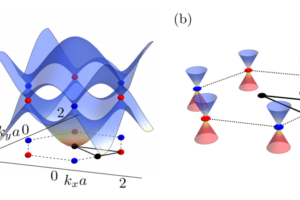
The behavior of particles within condensed matter systems is profoundly influenced by symmetry and topological properties. Symmetry principles dictate the physical laws that govern material characteristics, while topology introduces a framework for classifying materials based on their geometric and spatial properties rather than their chemical composition. A notable example is topological insulators, which exhibit insulating behavior in their bulk but conduct electricity on their surfaces due to their topological nature. This intersection of mathematics and physics enriches our understanding of material properties and opens new avenues for research.
Disorder and Its Effects
Disorder plays a significant role in the properties of condensed matter. Imperfections such as vacancies, impurities, and structural irregularities can drastically alter material behavior. Amorphous solids, which lack long-range order, challenge traditional classifications and demonstrate that disordered systems can possess unique and valuable properties distinct from their crystalline counterparts. Exploring these disordered materials expands the horizons of material science and reveals new physical phenomena.
Mechanisms Underlying Condensed Matter Phenomena
Condensed matter physics explores how microscopic interactions among particles give rise to macroscopic properties. The collective behavior of electrons, atoms, and molecules leads to phenomena such as electrical conductivity, magnetism, and superconductivity. These effects emerge from quantum mechanical principles and the interplay of forces within the material’s structure. Understanding these mechanisms enables scientists to predict and manipulate material properties for various applications.
Mathematical Framework and Formulas
The theoretical foundation of condensed matter physics relies heavily on quantum mechanics and statistical physics. Key mathematical tools include Hamiltonians that describe the energy of particle systems, wave functions representing quantum states, and order parameters that characterize phase transitions.
- Hamiltonian (H):
Represents the total energy of a system, including kinetic and potential energies of particles. - Order Parameter (ψ):
A quantity that changes value across a phase transition, indicating the degree of order in the system. - Partition Function (Z):
Summarizes all possible states of a system, crucial for calculating thermodynamic properties.
Practical Applications and Technological Impact
The insights gained from condensed matter physics underpin many modern technologies. Devices such as smartphones, computers, and medical imaging equipment rely on materials whose properties have been engineered through this field. Semiconductors, superconductors, and magnetoresistive materials are direct outcomes of condensed matter research, enabling advancements in electronics and information technology.
Emerging technologies like quantum computing, which promises vastly superior processing speeds, are deeply rooted in condensed matter principles. Additionally, innovations in energy storage and nanotechnology-where materials are manipulated at the atomic scale-are transforming industries by enhancing performance and enabling new functionalities, such as targeted drug delivery and improved thermal management.
Challenges and Frontiers in Research
One of the most captivating challenges in condensed matter physics is understanding high-temperature superconductivity. Achieving superconductivity at temperatures closer to ambient conditions could revolutionize energy transmission by eliminating electrical resistance and reducing energy loss. This area remains a vibrant field of theoretical and experimental investigation, bridging fundamental physics with practical applications.
Interdisciplinary Connections
Condensed matter physics serves as a nexus where multiple scientific disciplines converge. It integrates concepts from materials science, chemistry, and quantum mechanics, fostering collaborative research that drives innovation. The study of lattice structures, electron interactions, and quantum effects creates a rich tapestry of knowledge that is both intellectually stimulating and practically significant.
Common Misconceptions
Condensed matter physics only deals with solids.
While solids are a major focus, condensed matter physics also extensively studies liquids, amorphous materials, and exotic phases like Bose-Einstein condensates.
Emergent properties are simply the sum of individual particle behaviors.
Emergent phenomena arise from complex interactions and cannot be predicted by examining particles in isolation.
Significance and Future Outlook
Condensed matter physics is fundamental to both scientific understanding and technological progress. It reveals the intricate layers of complexity beneath everyday materials and drives innovations that shape modern life. As research advances, new phases of matter and novel material properties are likely to be discovered, offering solutions to global challenges and expanding the frontiers of knowledge. The ongoing exploration of condensed matter promises to remain a dynamic and transformative journey, highlighting the elegance of nature and the boundless potential of scientific inquiry.
FAQ
What is condensed matter physics?
Condensed matter physics is the study of how large groups of interacting particles behave collectively in solids and liquids, leading to unique material properties.
What are emergent properties in condensed matter?
Emergent properties are phenomena like superconductivity and magnetism that arise from the collective interactions of particles and are not predictable from individual particle behavior.
How does condensed matter physics relate to technology?
It forms the basis for technologies such as semiconductors, superconductors, and nanotechnology, which enable modern electronic devices and medical technologies.
What is the significance of symmetry and topology in condensed matter?
Symmetry governs the laws describing material properties, while topology classifies phenomena based on geometric features, exemplified by topological insulators.
Why study disordered systems in condensed matter physics?
Disordered systems reveal unique properties different from ordered materials, expanding our understanding and enabling new material classifications.



Leave a Reply