

Short Answer
Understanding Zeptosecond Time Measurement
In physics, the precise quantification of time has long fascinated both researchers and the general public. Measuring events with extraordinary accuracy, especially at the scale of subatomic particles, reveals a realm of reality that defies everyday intuition. Among the smallest units of time, the zeptosecond-equivalent to one trillionth of a billionth of a second-stands as a critical threshold. This article explores the advanced instruments and techniques used to measure such fleeting intervals, highlighting their significance in modern physics and their broader implications for our grasp of time.
Definition of a Zeptosecond
A zeptosecond is an ultra-short duration of time, representing 10-21 seconds. To put this into perspective, it is a trillion times shorter than a nanosecond and a million times shorter than a femtosecond. This scale is essential for observing phenomena that occur at the atomic and subatomic levels, where traditional timekeeping methods fall short.
- Scale:
1 zeptosecond = 10-21 seconds. - Context:
Used primarily in high-energy physics and quantum mechanics to study ultrafast processes.
Evolution of Time Measurement Techniques
Historically, timekeeping began with mechanical devices such as pendulum clocks, which provided remarkable accuracy for their era. However, as scientific inquiry delved into increasingly smaller time scales, these methods became inadequate. The advent of optical and atomic timekeeping revolutionized precision, enabling measurements at the scale of nanoseconds and beyond.
Atomic Clocks: The Foundation of Modern Timekeeping
Atomic clocks represent the pinnacle of time measurement accuracy. These devices harness the natural oscillations of atoms-commonly cesium-133 or rubidium-to maintain an exceptionally stable frequency standard. The International System of Units (SI) defines the second based on exactly 9,192,631,770 oscillations of the cesium-133 atom’s radiation, making atomic clocks indispensable for global synchronization.
Techniques for Measuring Zeptosecond Intervals
While atomic clocks excel at defining the second, they cannot directly measure events occurring within zeptoseconds. To overcome this, scientists have developed specialized methods rooted in ultrafast laser physics.
Attosecond Physics and Laser Pulses
Attosecond physics involves generating and manipulating light pulses lasting on the order of attoseconds (10-18 seconds), which are still longer than zeptoseconds but provide a gateway to exploring even faster phenomena. These pulses are produced using high-intensity laser systems that interact with matter to create ultrashort bursts of light.
Laser-Induced Plasma Generation
One key process is laser-induced plasma generation, where an intense laser pulse strips electrons from atoms, forming a plasma. As this plasma cools, it emits a sequence of attosecond pulses. These pulses enable researchers to track electron dynamics in real time, offering unprecedented insight into atomic-scale events.
Sub-Cycle Measurement Techniques
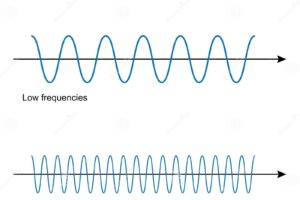
To push temporal resolution further into the zeptosecond domain, scientists employ sub-cycle measurement methods. These techniques analyze the phase shifts between attosecond pulses, effectively using the oscillatory nature of light waves as a temporal ruler. This approach allows the observation of processes occurring within zeptoseconds, such as molecular vibrations and electron transitions.
Scientific and Technological Significance
Measuring time at the zeptosecond scale is not merely an academic exercise; it has profound implications across multiple fields.
- Nanotechnology and Materials Science:
Understanding electron behavior at ultrafast timescales aids in designing novel materials and devices with enhanced properties. - Quantum Computing:
Precise timing of quantum states is crucial for developing reliable quantum information systems. - Chemical Reaction Dynamics:
Time-resolved spectroscopy at zeptosecond resolution reveals the fundamental steps of energy transfer and bond formation.
Philosophical and Quantum Mechanical Implications
Exploring time intervals as brief as zeptoseconds challenges our conceptual understanding of reality. Quantum mechanics, with its wave-particle duality and probabilistic nature, becomes more tangible when observed through such precise temporal lenses. These measurements provoke deeper questions about the nature of time, existence, and the limits of human perception.
Addressing Measurement Challenges
Achieving reliable measurements at zeptosecond scales involves overcoming significant technical hurdles. No measurement is free from uncertainty, especially at quantum scales. To enhance accuracy, researchers utilize quantum interference techniques, which refine temporal resolution by exploiting the wave-like properties of particles and light. These methods help mitigate errors and improve the fidelity of ultrafast observations.
Future Prospects in Zeptosecond Science
As instrumentation and methodologies continue to advance, the potential for new discoveries grows. Emerging technologies like time-resolved spectroscopy promise to unlock even finer details of molecular and atomic interactions, deepening our understanding of the physical world and enabling innovations in various scientific disciplines.
Conclusion
The quest to measure time in zeptoseconds epitomizes humanity’s drive for precision and comprehension of the universe’s most fleeting moments. From atomic clocks to attosecond laser pulses, the tools developed to probe these intervals not only enhance our scientific knowledge but also inspire philosophical reflection on the fabric of time itself. As we continue to refine these techniques, the insights gained will undoubtedly shape the future of science and technology.
FAQ
What is a zeptosecond?
A zeptosecond is one trillionth of a billionth of a second (10^-21 seconds), representing an incredibly small time interval used to study ultrafast phenomena.
Which instruments measure time in zeptoseconds?
While atomic clocks define the second, measuring zeptosecond intervals relies on attosecond laser pulses and ultrafast laser systems that generate extremely brief light bursts.
Why can't atomic clocks measure zeptoseconds directly?
Atomic clocks rely on atomic vibrations with frequencies insufficient to resolve events on the zeptosecond scale, necessitating the use of ultrafast laser techniques.
What scientific fields benefit from zeptosecond measurements?
Fields such as quantum mechanics, photonics, nanotechnology, and materials science benefit by gaining insight into ultrafast electron and molecular dynamics.


Leave a Reply