
Short Answer
Definition of Chemical Properties of an Atom
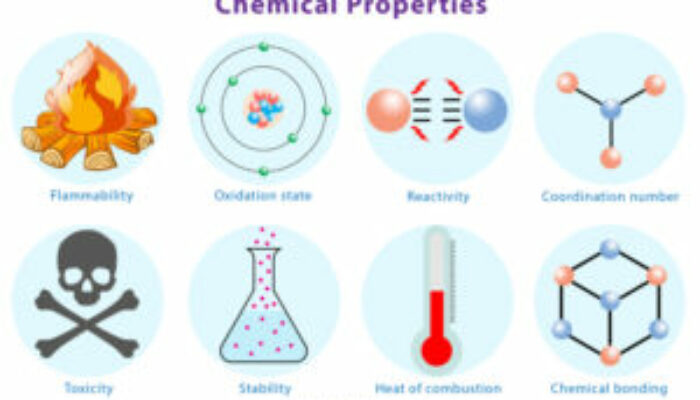
Chemical properties describe how an atom interacts and bonds with other atoms, defining its behavior in chemical reactions. These properties arise from the atom’s internal structure, including its nucleus and electron arrangement, and determine the atom’s role in forming matter. Understanding these characteristics provides essential insights into the fundamental nature of substances and the forces shaping the universe.
Atomic Structure and Its Influence on Chemical Behavior
At the core of every atom lies the nucleus, a dense center composed of protons and neutrons. The number of protons, known as the atomic number, uniquely identifies the element and dictates its chemical identity. For example, hydrogen has one proton, while carbon contains six, distinguishing their elemental properties.
Surrounding the nucleus are electrons arranged in specific energy levels or shells. These negatively charged particles orbit the nucleus and are crucial in chemical interactions. Particularly important are the valence electrons-the electrons in the outermost shell-which largely determine how an atom bonds and reacts with others. The configuration of these electrons can be compared to dancers in a performance, where the lead dancers (valence electrons) guide the overall choreography of chemical reactions.
Key Chemical Properties of Atoms
Electronegativity
Electronegativity measures an atom’s tendency to attract and hold electrons during bonding. Atoms with high electronegativity, such as fluorine, strongly pull electrons toward themselves, influencing the nature and strength of chemical bonds. Conversely, atoms like cesium with low electronegativity exhibit a weaker attraction for electrons, resulting in different chemical behaviors.
Reactivity
Reactivity refers to how readily an atom participates in chemical reactions. This property depends on electron configuration and the desire of atoms to achieve stable electron arrangements. Alkali metals, for instance, are highly reactive due to their single valence electron, which they readily lose to attain stability. In contrast, noble gases have full valence shells, making them largely inert and resistant to chemical change.
Oxidation States
Oxidation states indicate the degree to which an atom gains, loses, or shares electrons during chemical reactions. These states reflect the atom’s ability to undergo oxidation or reduction, often changing its charge and bonding behavior. Transition metals are notable for exhibiting multiple oxidation states, allowing them to form a variety of complex compounds.
Acidity and Basicity
The acidic or basic nature of a substance is linked to the ability of its atoms to donate or accept protons (H+ ions). This proton exchange is fundamental to acid-base chemistry and depends on the atomic structure and chemical properties of the involved elements.
Types of Chemical Bonds and Atomic Interactions
Chemical bonds form when atoms interact to achieve more stable electron configurations. The two primary bonding types are ionic and covalent bonds, each illustrating different atomic behaviors.
Ionic Bonds
Ionic bonding occurs when electrons are transferred from one atom to another, creating charged ions. These oppositely charged ions attract each other through electrostatic forces, forming compounds with distinct properties from their constituent atoms. This process can be likened to celestial bodies attracting each other through gravity, resulting in a new, stable entity.
Covalent Bonds
Covalent bonds involve the sharing of electrons between atoms, fostering a cooperative relationship. This mutual sharing leads to the formation of molecules where atoms achieve stability together, similar to a community working collectively toward a shared goal. The properties of these molecules depend on the nature of the atoms involved and the arrangement of their shared electrons.
How Chemical Properties Shape the Material World
The chemical properties of atoms underpin the vast diversity of matter observed in the natural world. By dictating how atoms bond and interact, these properties influence the formation of compounds, materials, and biological molecules essential to life and technology. Understanding these atomic characteristics enables advancements in fields such as materials science, pharmacology, and environmental chemistry.
Common Misconceptions About Atomic Chemical Properties
Atoms with full electron shells are always completely inert.
While noble gases are generally unreactive, under certain conditions, some can form compounds, demonstrating that full shells do not guarantee absolute inertness.
Electronegativity is a fixed property for all atoms.
Electronegativity can vary depending on the atom’s chemical environment and bonding context, affecting its electron-attracting ability.
Summary: The Significance of Atomic Chemical Properties
The chemical properties of atoms-such as electronegativity, reactivity, oxidation states, and bonding tendencies-compose a complex symphony that governs the behavior of matter. These properties not only define elemental identity but also orchestrate the interactions that build the universe’s material fabric. A deep understanding of these atomic characteristics is essential for exploring chemical phenomena, developing new materials, and advancing scientific knowledge.
FAQ
What determines the chemical properties of an atom?
Chemical properties are mainly determined by the atom’s electron configuration and valence electrons.
Why are valence electrons important?
Valence electrons are crucial because they participate in chemical bonding and reactions.
What is electronegativity?
Electronegativity measures how strongly an atom attracts electrons in a bond.
How do oxidation states influence chemistry?
Oxidation states show how many electrons an atom can lose, gain, or share, affecting compound formation.
What is the difference between ionic and covalent bonds?
Ionic bonds transfer electrons between atoms; covalent bonds share electrons.






Leave a Reply