
Short Answer
Definition of Fruit Fly Aerial Locomotion
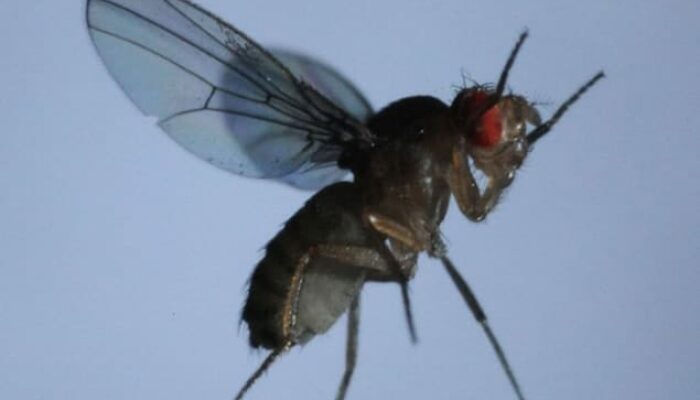
The phenomenon often described as fruit flies “swimming” through the air refers to their remarkable ability to navigate and maneuver with exceptional agility during flight. This metaphorical expression highlights their dynamic aerial movements, which resemble the fluid, multidirectional motions of swimming in water. The common fruit fly, Drosophila melanogaster, exhibits this complex locomotion through a combination of specialized anatomy, aerodynamic principles, and neural control mechanisms.
Wing Morphology and Flight Mechanics
Fruit flies possess wings that, despite their apparent simplicity, are highly optimized for flight performance. Each wing is a delicate, membranous structure reinforced by a network of rigid veins, which enhances strength while minimizing weight. This design maximizes the wing’s efficiency in generating aerodynamic forces. The wings beat at astonishing frequencies-up to 200 times per second-allowing rapid thrust production and fine-tuned control over flight dynamics.
- Wing Structure:
Thin membranes supported by a vein framework provide a balance of flexibility and rigidity. - Wingbeat Frequency:
High-frequency flapping enables swift changes in speed and direction. - Control of Motion:
Adjustments in wingbeat amplitude and frequency facilitate hovering, darting, and complex trajectory shifts.
Aerodynamic Principles Behind Flight
Fruit fly flight relies on two main aerodynamic mechanisms: unsteady aerodynamics and continuous lift generation. During the downward stroke, the wings create pressure differences above and below their surfaces, producing lift. The rapid wing movements also generate vortex shedding-rotating air masses trailing the wings-that reduce drag and enhance acceleration. At the stroke reversal, wing rotation optimizes the angle of attack and recaptures energy from these vortices, producing lift even during the upward stroke.
Neurobiological Control and Sensory Integration
The extraordinary flight agility of fruit flies is supported by a sophisticated neural system that integrates sensory inputs and coordinates motor outputs. Their compound eyes provide a wide field of vision, enabling rapid detection of environmental motion. Meanwhile, antennae function as sensitive mechanoreceptors, detecting subtle changes in airflow. This sensory information is processed by the central nervous system, which modulates wing muscle activity to execute precise flight maneuvers.
- Visual Processing:
Compound eyes detect motion and spatial orientation. - Mechanosensory Feedback:
Antennae sense air currents and assist in balance. - Motor Coordination:
Neural circuits translate sensory data into wing movement commands.
Flight Maneuverability and Behavioral Significance
Fruit flies demonstrate exceptional three-dimensional maneuvering capabilities, including rapid turns, hovering, and aerial acrobatics. These skills are crucial for survival behaviors such as evading predators, pursuing mates, and foraging. The ability to perform sudden 180-degree turns or intricate aerial pirouettes reflects the integration of their sensory and motor systems, enabling real-time adjustments to flight posture and trajectory.
Evolutionary Adaptations for Flight
The flight characteristics of fruit flies have evolved under selective pressures that favor efficient navigation, predator avoidance, and reproductive success. Their anatomical features, such as wing design and sensory organs, alongside their neural control systems, represent adaptations shaped by millions of years of evolution. These traits enhance their ability to exploit ecological niches and improve survival odds in complex environments.
Interdisciplinary Insights: Fluid Dynamics and Mathematical Modeling
Studying fruit fly flight extends beyond biology into the realm of physics, particularly fluid dynamics. Researchers use computational fluid dynamics (CFD) to simulate the interactions between wing movements and surrounding airflows. These models help explain how small insects generate lift and thrust in low Reynolds number environments, where viscous forces dominate. Such interdisciplinary research bridges biological understanding with physical laws, offering insights into the fundamental principles of locomotion.
Applications in Robotics and Technology
The detailed understanding of fruit fly flight mechanics inspires innovations in engineering, especially in the development of bio-inspired flying robots. By replicating the wing flapping patterns and agile maneuvering strategies of fruit flies, engineers design compact drones capable of precise navigation in cluttered or confined spaces. These advancements hold promise for applications in aerial surveillance, search-and-rescue missions, and environmental monitoring.
Common Misconceptions About Fruit Fly Flight
Fruit flies simply flutter randomly without control.
Their flight is highly controlled and involves complex sensory-motor coordination enabling precise maneuvers.
The term “swimming” implies they move through air like fish through water.
“Swimming” is a metaphor describing their fluid, multidirectional flight patterns, not literal swimming.
Why Understanding Fruit Fly Flight Is Important
Exploring the flight dynamics of fruit flies enriches our knowledge of biomechanics, neurobiology, and evolutionary biology. It also advances physics by elucidating fluid-structure interactions at small scales. Beyond scientific curiosity, this knowledge drives technological progress in robotics and artificial intelligence, enabling the creation of agile flying machines that mimic natural systems. Ultimately, fruit fly flight exemplifies the intricate connections between biological design and physical principles, offering valuable lessons across multiple disciplines.
FAQ
What is the main focus of the article?
The article focuses on the mechanics of fruit fly flight, including their aerodynamic abilities and neural control.
Why is studying fruit fly flight important?
Understanding fruit fly flight contributes to knowledge in biomechanics, neurobiology, and inspires advancements in robotics.





Leave a Reply