
Short Answer
Definition
The most powerful telescope ever constructed is a groundbreaking astronomical instrument designed to observe the universe with unparalleled precision and depth. It serves as a gateway to the cosmos, enabling scientists to explore celestial phenomena far beyond the capabilities of previous technologies. By capturing light across a broad range of wavelengths, especially in the infrared spectrum, this telescope reveals the universe’s earliest moments and hidden structures, fundamentally enhancing our understanding of space and time.
Technological Innovations and Design
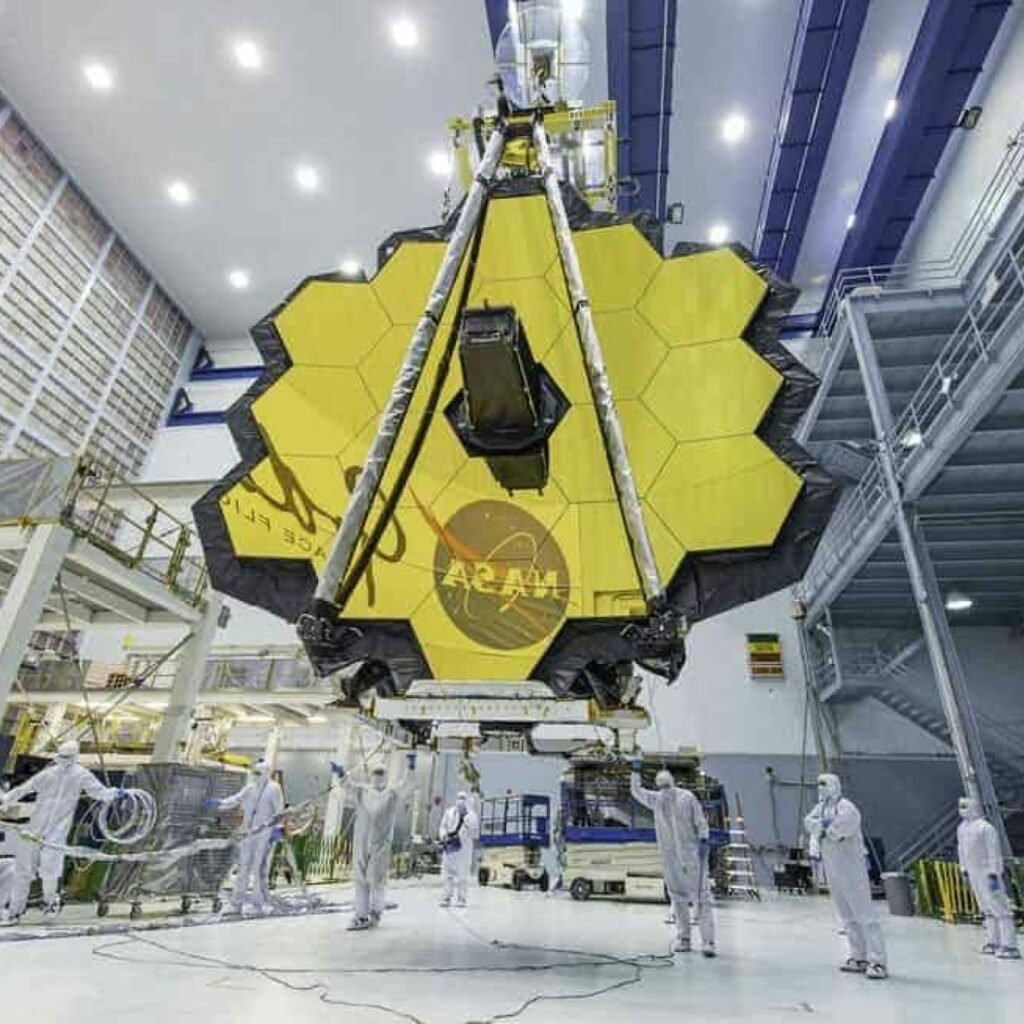
This telescope’s extraordinary capabilities stem from its advanced engineering and innovative design features. Central to its function is a massive primary mirror, composed of multiple hexagonal segments that together span over 21 feet in diameter. This expansive mirror significantly increases the telescope’s light-gathering ability and resolution, allowing it to detect faint signals from galaxies formed billions of years ago.
- Segmented Mirror:
The mirror’s hexagonal segments are precisely aligned to act as a single reflective surface, optimizing image clarity and sensitivity. - Infrared Sensitivity:
By operating primarily in the infrared spectrum, the telescope can observe celestial objects obscured by cosmic dust and detect heat signatures invisible to optical telescopes. - Sunshield:
A tennis-court-sized sunshield protects the telescope from solar radiation, maintaining the instruments at cryogenic temperatures near absolute zero to ensure accurate infrared measurements.
Orbital Placement and Operational Challenges
To avoid atmospheric distortion and thermal interference from Earth, the telescope was strategically positioned at the second Lagrange point (L2), a gravitationally stable location approximately 1.5 million kilometers from Earth, beyond the Moon’s orbit. This placement offers a stable environment for continuous observation but requires precise navigation and deployment techniques.
- Halo Orbit at L2:
This orbit provides a stable vantage point with minimal gravitational perturbations, ideal for long-term space observation. - Thermal Management:
The telescope’s instruments must remain extremely cold to detect faint infrared signals, necessitating sophisticated thermal shielding and cooling systems. - Deployment Complexity:
Launching and unfolding the telescope’s components in space involved intricate engineering to ensure flawless operation in the harsh environment of space.
Scientific Breakthroughs and Discoveries
Since becoming operational, this telescope has revolutionized our view of the universe by unveiling phenomena previously hidden or poorly understood. Its observations have provided unprecedented insights into the formation and evolution of galaxies, stars, and planetary systems.
- Exoplanet Atmospheres:
Detailed analysis of exoplanet atmospheres has revealed chemical compositions that suggest potential habitability and even signs of biological activity. - Galactic Structures:
High-resolution imaging has exposed complex features within distant galaxies, shedding light on their developmental processes over cosmic time. - Star Formation Regions:
Infrared observations have illuminated star nurseries, revealing the intricate interplay of matter and energy during stellar birth. - Compact Objects:
The telescope has penetrated dust clouds to study black holes, neutron stars, and supernova remnants, enriching our understanding of these extreme astrophysical entities.
Scientific and Philosophical Implications
The telescope’s discoveries extend beyond pure science, influencing philosophical thought and cultural perspectives. It embodies humanity’s relentless curiosity and quest for knowledge, inspiring new generations to explore the cosmos and reflect on our place within it.
- Interdisciplinary Research:
The wealth of data encourages collaboration across astrophysics, chemistry, biology, and computer science to interpret complex cosmic phenomena. - Global Collaboration:
Managing and sharing the telescope’s data promotes international cooperation and open access, ensuring that the benefits of discovery are shared worldwide. - Ethical Considerations:
The stewardship of such a monumental scientific resource raises questions about inclusivity, data ownership, and equitable access in the era of big science.
Future Prospects and Continuing Exploration
While the telescope has answered many questions, it also opens new avenues of inquiry. Scientists are eager to explore the universe’s most distant reaches, investigate the origins of cosmic structures, and search for direct evidence of life beyond Earth.
- Beyond the Observable Universe:
Researchers aim to understand what lies beyond the limits of current observation and how early galaxies shaped the cosmos. - Search for Life:
The telescope’s sensitivity may enable detection of biosignatures or technosignatures on exoplanets, advancing the search for extraterrestrial life. - Data Interpretation Challenges:
The vast influx of information demands sophisticated analytical tools and interdisciplinary approaches to fully harness its scientific potential.
Why This Telescope Matters
This telescope represents a monumental leap in humanity’s ability to observe and comprehend the universe. It transforms the cosmos from a distant mystery into a dynamic narrative, enriching scientific knowledge and expanding our existential horizons. By bridging the gap between observation and understanding, it empowers us to confront the vast unknown with humility, wonder, and a shared sense of responsibility.
FAQ
What is the most powerful telescope ever built?
The most powerful telescope ever built is designed to observe the universe with unparalleled precision, capturing light across a broad range of wavelengths to reveal previously hidden celestial phenomena.
What are the key technological innovations of this telescope?
Key innovations include a large segmented mirror for increased light-gathering capability, infrared sensitivity to observe obscured objects, and a sunshield to maintain cryogenic temperatures.
What scientific breakthroughs has the telescope achieved?
The telescope has unveiled details about exoplanet atmospheres, complex galactic structures, star formation regions, and compact objects like black holes.



Leave a Reply