
Short Answer
Definition and Historical Context of the International Space Station
The International Space Station (ISS) represents a monumental milestone in human space exploration, symbolizing a collaborative effort to extend humanity’s reach beyond Earth. Initiated in the late 20th century, the ISS embodies not only a technological achievement but also a profound transformation in how humanity perceives its role within the cosmos. This orbital laboratory serves as a testament to international cooperation and scientific ambition, marking a pivotal moment in the ongoing journey to explore and understand space.
Launch and International Collaboration
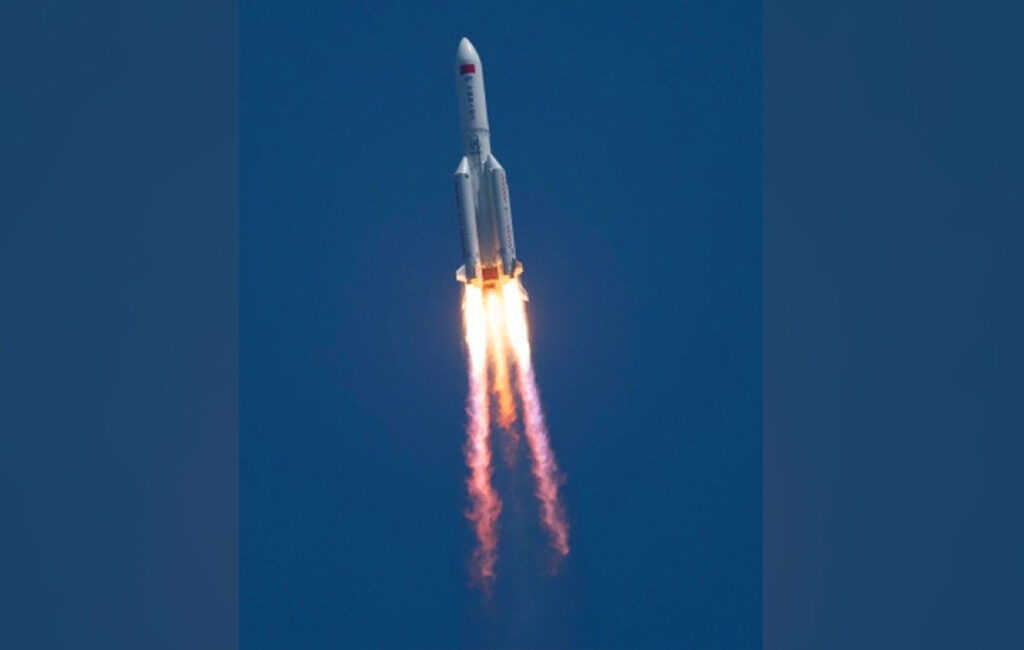
On November 20, 1998, the ISS’s first module, known as Zarya, was successfully launched into low Earth orbit. This event inaugurated a new chapter of multinational partnership, bringing together countries with diverse geopolitical backgrounds under a unified mission of scientific discovery and exploration. The ISS exemplifies how shared goals in space research can transcend political differences, fostering a spirit of unity and collective progress. This cooperative framework has been essential in maintaining peaceful relations and advancing human knowledge in space science.
Technological Innovations and Modular Design
The Zarya module, often considered the structural foundation of the ISS, showcased cutting-edge aerospace engineering. It was equipped with advanced life support systems and designed for modular integration, allowing subsequent components to be added seamlessly. This flexible architecture has enabled the ISS to evolve into a complex laboratory, where each module contributes specialized capabilities. The station’s design supports a wide array of scientific experiments, pushing the boundaries of human ingenuity and expanding our understanding of various scientific disciplines.
Scientific Research and Discoveries in Microgravity
The unique microgravity environment aboard the ISS offers unparalleled opportunities for scientific investigation that are impossible to replicate on Earth. Research conducted in this setting has led to significant advancements in fields such as materials science, biology, and medicine. For example, protein crystallization studies performed in space have provided critical insights that aid drug development. These experiments reveal how biological and physical processes behave differently without Earth’s gravitational influence, opening new avenues for scientific breakthroughs and enhancing our comprehension of life’s fundamental mechanisms.
Role in Advancing Human Spaceflight and Sustainability
The ISS functions as a vital testbed for technologies essential to sustaining human life during extended space missions. It has been instrumental in developing and refining life support systems, radiation shielding, and exercise protocols to counteract the adverse effects of prolonged weightlessness. The knowledge gained from these experiments is crucial for planning future manned missions to distant destinations such as Mars. Moreover, the ISS underscores the importance of human adaptability in extraterrestrial environments, highlighting the challenges and solutions necessary for long-term space habitation.
Philosophical and Ethical Considerations
The presence of an orbiting laboratory inhabited by astronauts from multiple nations invites reflection on profound philosophical questions about humanity’s place in the universe. The ISS fosters research in astrobiology, intensifying the quest to determine whether life exists beyond Earth. This prospect raises ethical dilemmas regarding the exploration and potential contact with extraterrestrial life forms. It prompts critical discussions about our responsibilities and moral obligations in space exploration, emphasizing the need for thoughtful stewardship as humanity ventures further into the cosmos.
Educational Impact and Public Engagement
Beyond its scientific and technological contributions, the ISS plays a significant role in inspiring and educating the public. Through live broadcasts, educational partnerships, and outreach programs, the station has ignited curiosity and enthusiasm for science, technology, engineering, and mathematics (STEM) fields. This engagement is vital for cultivating the next generation of innovators and problem-solvers who will address global challenges such as climate change and resource scarcity. By fostering a culture of scientific inquiry, the ISS helps ensure continued progress and innovation on Earth and beyond.
Symbol of Global Unity and Cooperation
In a world often marked by division, the ISS stands as a powerful symbol of international collaboration. The joint efforts to build, maintain, and operate the station demonstrate the potential for countries to work together toward shared objectives. This partnership highlights the interconnectedness of humanity’s future and reinforces the idea that space exploration is a collective endeavor transcending national boundaries. Each mission aboard the ISS reaffirms the universal human drive to explore, learn, and advance knowledge for the benefit of all.
Balancing Scientific Ambition with Ethical Responsibility
The ongoing exploration facilitated by the ISS requires a careful balance between the pursuit of knowledge and ethical considerations. As scientific capabilities expand, so too does the need for responsible conduct in space activities. The ISS challenges humanity to reflect on the implications of its actions beyond Earth, ensuring that exploration is conducted with respect for both the environment and potential extraterrestrial life. This balance is essential for sustainable and conscientious advancement in space science.
Conclusion: The Enduring Legacy of the ISS
The launch of the ISS’s first module marked a transformative moment in human history, encapsulating the spirit of innovation, cooperation, and curiosity that drives exploration. As a platform for scientific discovery, international partnership, and philosophical inquiry, the ISS continues to expand our horizons and deepen our understanding of the universe. It invites humanity to reconsider its place within the vast cosmic landscape and inspires ongoing efforts to explore the final frontier.
FAQ
What is the International Space Station?
The ISS is a space station that serves as a laboratory for scientific research, developed through international collaboration.
When was the first module of the ISS launched?
The first module, Zarya, was launched on November 20, 1998.
What are the scientific benefits of the ISS?
The ISS provides a unique microgravity environment for research in fields like biology, medicine, and materials science.





Leave a Reply