Why are companies investing in quantum computing?

Understanding Quantum Computing Quantum computing represents a groundbreaking advancement in technology, poised to revolutionize the way computations are performed. By harnessing the principles of quantum mechanics, this technology enables the processing of information in ways that far surpass classical computing capabilities. At the heart of quantum computing lies the quantum bit, or qubit, which differs […]


Read More →

Can quantum computing make encryption useless?

Understanding Quantum Computing and Encryption Quantum computing has emerged as a groundbreaking technology, sparking intense discussions about its potential impact on encryption methods. As digital security becomes increasingly critical in our interconnected world, the reliability of conventional cryptographic systems is being questioned. This article explores the relationship between quantum computing and encryption, addressing the pivotal […]

Read More →

Quantum Computing World: The New Cold War in Code

Understanding the Quantum Computing Race Quantum computing has emerged as a formidable force in the technological landscape, reminiscent of the intense competition seen during the mid-20th century atomic arms race. Unlike traditional geopolitical conflicts, this modern rivalry unfolds within the complex domains of algorithms and computational power. Nations are fiercely competing to dominate this nascent […]

Read More →

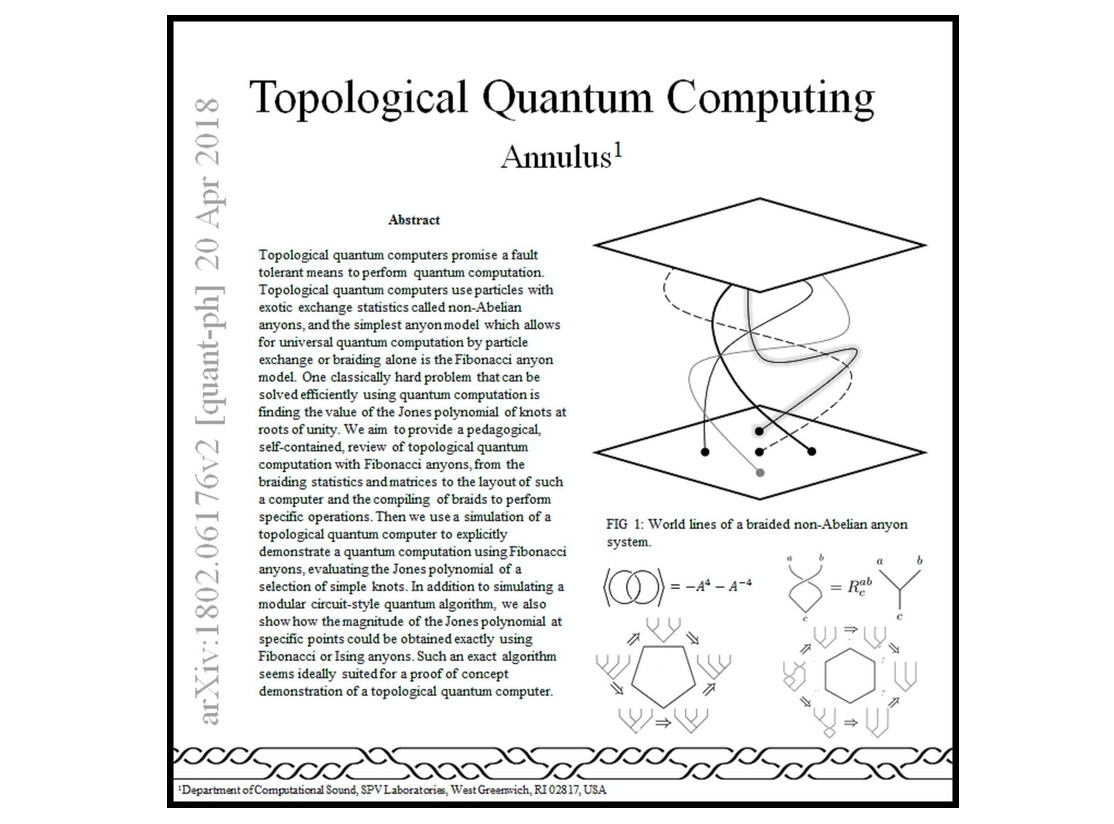
What is topological quantum computing terminology?

Definition of Topological Quantum Computing Topological quantum computing is an interdisciplinary field that merges principles from topology, quantum mechanics, and computer science to develop a novel approach to quantum computation. It leverages the mathematical study of spatial properties that remain invariant under continuous deformations to encode and manipulate quantum information in a way that is […]

Read More →

Where is a good place to start learning quantum computing?

Understanding Quantum Computing Quantum computing represents a cutting-edge domain at the intersection of physics and computer science, leveraging the principles of quantum mechanics to process information in fundamentally new ways. As society increasingly embraces technological advancements, many wonder where to begin their exploration of this complex yet fascinating field. Although quantum computing may initially seem […]

Read More →

Why doesn’t Shor’s algorithm work on a classical computer?

Definition of Shor’s Algorithm Shor’s algorithm is a groundbreaking quantum computing procedure designed to factorize large integers exponentially faster than classical algorithms. This capability poses significant challenges to traditional cryptographic systems, especially those relying on the difficulty of prime factorization, such as RSA encryption. The algorithm leverages quantum mechanical principles to achieve this speedup, distinguishing […]

Read More →

Can we use fermions for quantum computing?

Definition of Fermions in Quantum Computing Fermions are fundamental particles characterized by their adherence to the Pauli exclusion principle, which prohibits any two fermions from occupying the same quantum state simultaneously. This intrinsic property sets them apart from bosons, which can coexist in identical states. Common examples of fermions include electrons, protons, and neutrons. Their […]

Read More →

What are some hot topics in quantum computing research?

Understanding Quantum Computing Quantum computing represents a groundbreaking frontier in technology, poised to transform the limits of computational power. Unlike classical computers, which process information in binary bits, quantum computers utilize quantum bits or qubits, enabling them to tackle problems that are currently insurmountable for traditional systems. This emerging field not only challenges existing computational […]

Read More →

Is Quantum Machine Learning a good career?

Understanding Quantum Machine Learning Quantum machine learning (QML) represents a cutting-edge fusion of two transformative scientific domains: quantum mechanics and machine learning. Quantum mechanics, a cornerstone of modern physics, explores phenomena that often defy classical logic, involving the behavior of particles at atomic and subatomic scales. Machine learning, a branch of artificial intelligence, empowers computers […]

Read More →

How many quantum computers are there in the world?

Definition of Quantum Computers Quantum computers represent a revolutionary class of computational devices that leverage the principles of quantum mechanics to process information. Unlike traditional computers, which operate using binary bits (0s and 1s), quantum computers utilize quantum bits, or qubits, which can exist in multiple states simultaneously due to phenomena such as superposition and […]

Read More →