How is Schrödinger’s equation used in quantum computing?

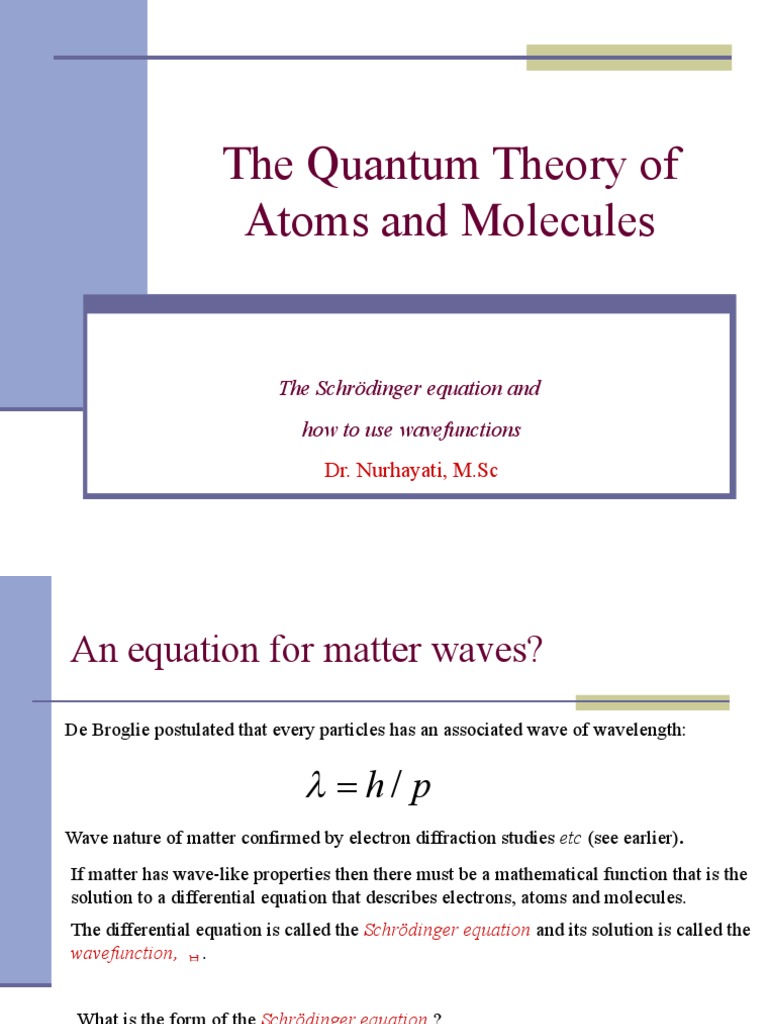
Definition of Schrödinger’s Equation in Quantum Mechanics Schrödinger’s equation is a fundamental mathematical formulation that describes how quantum systems evolve over time. Unlike classical mechanics, which assigns definite positions and velocities to particles, this equation characterizes the state of a quantum system through a wave function. This wave function encodes the probabilities of finding a […]
Read More →

How quantum computing helps for the growth of technology?

Understanding Quantum Computing Quantum computing represents a transformative leap in computational technology, leveraging the principles of quantum mechanics to surpass the limitations of classical computing. At its core, quantum computing utilizes quantum bits, or qubits, which differ fundamentally from traditional binary bits. While classical bits exist strictly as 0 or 1, qubits can simultaneously occupy […]

Read More →

What role will material science play in quantum computing?

Definition of Quantum Computing and Material Science Quantum computing represents a groundbreaking shift in computational technology, leveraging the principles of quantum mechanics to perform complex calculations far beyond the reach of classical computers. Material science, the study of the properties and applications of materials, is integral to the advancement of quantum computing. It provides the […]

Read More →

How developed is quantum computing?

Definition of Quantum Computing Quantum computing represents a cutting-edge domain at the intersection of physics and technology, leveraging the principles of quantum mechanics to revolutionize computational methods. Unlike traditional computing, which relies on binary bits, quantum computing utilizes quantum bits or qubits that can exist in multiple states simultaneously. This unique capability opens avenues for […]

Read More →

Will quantum computing propel us forward to a true AI?

Definition of Quantum Computing and Artificial Intelligence Quantum computing represents a revolutionary approach to computation, utilizing the principles of quantum mechanics to process information in ways fundamentally different from classical computers. Artificial intelligence (AI), on the other hand, encompasses technologies and algorithms designed to simulate human cognitive functions such as learning, reasoning, and problem-solving. The […]

Read More →

What is quantum app development?

Understanding Quantum Application Development Quantum application development is an emerging discipline at the crossroads of quantum physics and software engineering. It explores the potential of leveraging the unique phenomena of quantum mechanics to transform how digital applications are designed and executed. Unlike traditional software development, which builds on classical computing principles, quantum app development demands […]

Read More →

Why can’t classical gates be used in quantum computing?

Understanding Classical and Quantum Computing The evolution from classical to quantum computing marks a significant paradigm shift in computational theory and practice. This transformation is rooted in the fundamental differences between how classical and quantum systems process information. Exploring why classical logic gates cannot be directly applied to quantum computers reveals the unique capabilities quantum […]

Read More →

How to contribute to the development of quantum computing?

Understanding Quantum Computing Quantum computing represents a groundbreaking advancement in computational technology, poised to revolutionize how complex problems are solved across various scientific and engineering disciplines. Unlike classical computers that use bits as the smallest unit of data, quantum computers leverage quantum bits or qubits, enabling them to process information at exponentially faster rates. This […]

Read More →

What role will material science play in quantum computing?

Understanding Quantum Computing Quantum computing represents a cutting-edge technological advancement poised to transform fields ranging from cryptography to molecular biology simulations. Central to this innovation is the concept of quantum bits, or qubits, which differ fundamentally from classical bits. While classical bits are limited to binary states of 0 or 1, qubits can exist simultaneously […]

Read More →

Will quantum computers be able to compute the impossible?

Understanding Quantum Computing Quantum computing represents a groundbreaking advancement in the realm of information processing, poised to redefine the boundaries of what computers can achieve. Unlike classical computers that operate using bits-binary units represented as either 0 or 1-quantum computers employ quantum bits, or qubits. These qubits harness the unique quantum phenomena of superposition and […]

Read More →