
Short Answer
Definition of the Electromagnetic Spectrum and Gamma Rays
The electromagnetic spectrum encompasses a continuous range of electromagnetic radiation, spanning from the longest radio waves to the shortest, most energetic gamma rays. Gamma rays represent the highest-energy segment of this spectrum, characterized by extremely short wavelengths and very high frequencies. These rays are known for their remarkable ability to penetrate matter and carry immense energy, making them the most powerful form of electromagnetic radiation commonly observed.
Origins and Characteristics of Gamma Rays
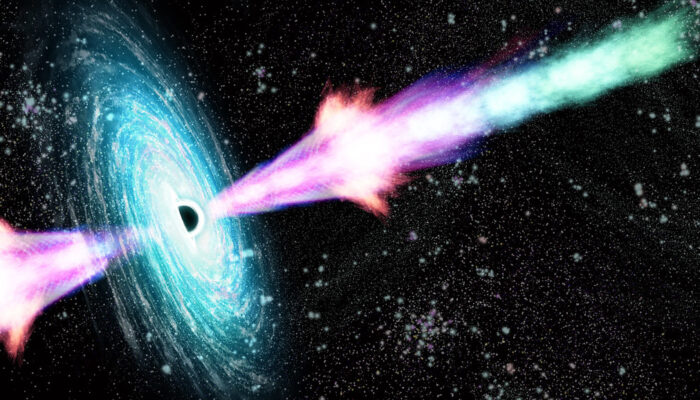
Gamma rays are generated by some of the universe’s most intense and energetic phenomena, including supernova explosions, collisions between neutron stars, and matter accreting onto black holes. Their energies typically range from hundreds of kilo-electron volts (keV) to several mega-electron volts (MeV), significantly exceeding the energy levels of X-rays. Due to their short wavelengths, gamma rays possess the capacity to ionize atoms and disrupt molecular bonds, underscoring their potent physical effects. However, the electromagnetic spectrum does not extend infinitely into higher energies because of fundamental quantum mechanical and relativistic limitations.
Exploring Ultra-High-Energy Gamma Rays (UHEGRs)
While gamma rays mark the upper limit of naturally occurring electromagnetic radiation, scientists hypothesize the existence of Ultra-High-Energy Gamma Rays (UHEGRs). These hypothetical photons would exhibit energies surpassing the typical gamma ray range, potentially reaching tera-electron volt (TeV) or even peta-electron volt (PeV) scales. Detection of such rays relies on advanced instruments like Cherenkov telescopes and space-based observatories. UHEGRs are thought to originate from exotic cosmic accelerators such as quasars and gamma-ray bursts, representing an extension of the electromagnetic spectrum into higher energy domains.
Beyond Electromagnetic Radiation: Particle Physics and Quantum Fields
Investigating what lies beyond gamma rays leads into the realms of particle physics and quantum field theory. Gamma rays are photons-massless bosons that mediate electromagnetic interactions. At energy scales exceeding those of gamma rays, other fundamental particles and forces come into play. For example, neutrinos are nearly massless particles capable of traversing vast cosmic distances with minimal interaction, carrying energies far beyond those of photons, though they are not a form of electromagnetic radiation.
Gravitational Waves and Hypothetical Gravitons
At energies beyond gamma rays, theoretical physics considers gravitons, the proposed quantum carriers of gravity. Unlike photons, gravitons would mediate gravitational forces through quantized gravitational waves-ripples in the fabric of spacetime itself. These waves are detected not by electromagnetic means but through precise measurements of spatial distortions using instruments such as LIGO and Virgo. Although gravitational waves are not electromagnetic radiation, they convey information about the universe at energy scales and distances inaccessible to gamma ray observations.
Cosmic Rays: Energetic Particles Beyond Gamma Rays
In addition to electromagnetic and gravitational phenomena, the universe contains ultra-energetic particles known as cosmic rays. These are charged atomic nuclei traveling near the speed of light, with energies that can reach up to 1020 electron volts, far exceeding gamma ray energies. Unlike photons, cosmic rays are particles governed by different physical laws, yet they exemplify the presence of energy manifestations in the cosmos that surpass gamma rays.
Theoretical Speculations on Radiation Beyond Gamma Rays
On the frontier of theoretical physics, the possibility of exotic radiation or waveforms beyond the gamma ray domain remains speculative but intriguing. Concepts from string theory, extra-dimensional models, and dark matter hypotheses suggest the existence of particles or fields that might emit radiation more energetic than gamma rays. Such emissions could evade current detection methods due to their weak interaction with ordinary matter or nonconformity to known electromagnetic properties.
Limits of Electromagnetic Theory at Extreme Energies
At energies exceeding the Planck scale (~1.22 × 10¹⁹ GeV), conventional electromagnetic theory and quantum electrodynamics (QED) break down. In this regime, the nature of photons may fundamentally change, or new phenomena such as spacetime foam, virtual particle fluctuations, or additional spatial dimensions could emerge. These effects challenge our understanding of gamma rays and suggest that the concept of electromagnetic radiation might require revision at ultra-high energies.
Detection Techniques for Gamma Rays and Beyond
Gamma rays are currently the highest-energy electromagnetic radiation detectable with existing technology. Detection methods include scintillation counters, semiconductor detectors, and space-based telescopes equipped with Compton scattering and pair production sensors. These tools enable scientists to study high-energy astrophysical events. Discovering radiation beyond gamma rays would necessitate revolutionary advances in detection technology, potentially involving quantum sensors or novel observational frameworks.
Interdisciplinary Significance and Scientific Inquiry
The study of gamma rays and the search for phenomena beyond them intersect multiple scientific disciplines. Astrophysics uses gamma radiation to probe violent cosmic events; particle physics explores the quantum nature of photons; and theoretical physics ventures into uncharted territories beyond known particles and forces. This multidisciplinary approach highlights the dynamic frontier of human knowledge, inspiring curiosity about the universe’s most energetic processes and the fundamental structure of reality.
Conclusion: The Quest Beyond Gamma Rays
Gamma rays currently represent the highest-energy electromagnetic radiation confirmed and studied by science. However, physics points toward more enigmatic realms beyond them, including ultra-high-energy gamma phenomena, particle emissions, gravitational waves, and speculative quantum effects. The ongoing exploration of these frontiers drives technological innovation and deepens our cosmic understanding, reminding us that the universe holds mysteries beyond the known electromagnetic spectrum-higher energies, subtler waves, and hidden particles await discovery.

Leave a Reply