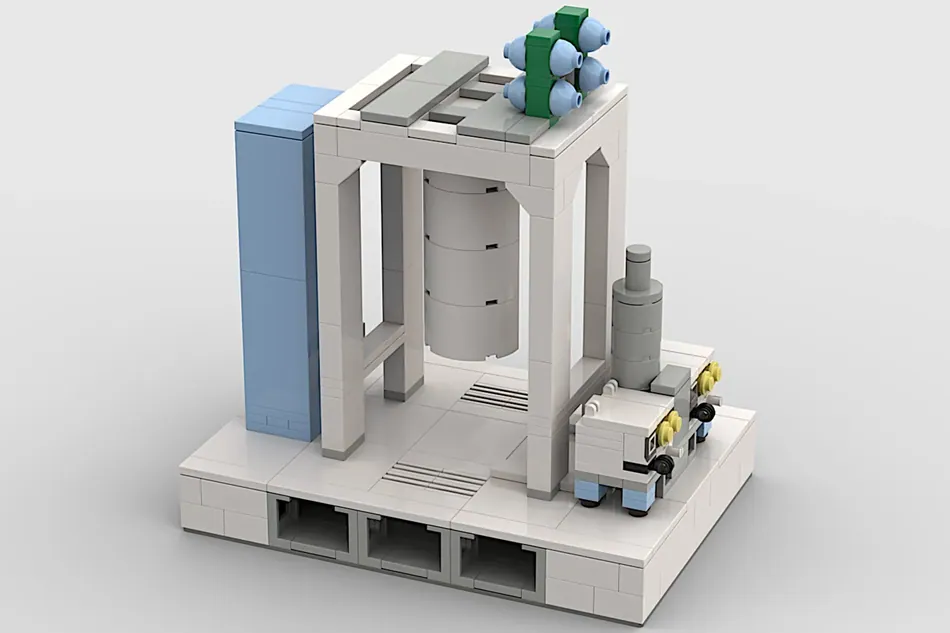
Is it possible to build a quantum computer with Lego?

Understanding the Concept of a Lego Quantum Computer The idea of building a quantum computer using Lego-a toy celebrated for its adaptability and imaginative potential-elicits a wide range of reactions, from skepticism to excitement. This concept sparks intellectual intrigue by merging the playful nature of Lego with the sophisticated realm of quantum computing. Quantum computers […]

Read More →

How do you build a quantum computer in your house?

Definition of Quantum Computing Quantum computing is an advanced field of computing that harnesses the principles of quantum mechanics to process information. Unlike classical computers that use binary bits (0 or 1), quantum computers utilize quantum bits, or qubits, which can exist in multiple states simultaneously due to phenomena such as superposition and entanglement. This […]

Read More →

A Simpler Way to Test Quantum Computers: Cutting Through the Qubits

Understanding Quantum Computing and Its Challenges Quantum computing represents a revolutionary paradigm in information processing, where the fundamental units-qubits-operate under principles vastly different from classical bits. Unlike traditional binary bits restricted to states of 0 or 1, qubits exist in superpositions, simultaneously embodying multiple states until measured. This unique characteristic, reminiscent of the famous Schrödinger’s […]

Read More →

What problems do we need quantum computing to solve?

Understanding Quantum Computing Quantum computing represents a groundbreaking shift in computational technology, harnessing the unique principles of quantum mechanics to process information in fundamentally new ways. Unlike classical computers that use bits as units of data, quantum computers utilize quantum bits or qubits, which can exist in multiple states simultaneously due to superposition. This capability […]

Read More →

How are quantum computing and quantum physics related?

Understanding Quantum Physics Quantum physics explores the behavior of matter and energy at the smallest scales, where classical physics no longer applies. Unlike deterministic classical laws, quantum mechanics introduces a probabilistic framework to describe subatomic particles. A key concept is superposition, which allows particles to exist in multiple states simultaneously until observed. This principle fundamentally […]

Read More →

What practical use will quantum computers have?

Understanding Quantum Computing Quantum computing represents a groundbreaking shift in how information is processed, leveraging the principles of quantum mechanics to perform computations beyond the reach of classical computers. Unlike traditional bits that exist in a state of 0 or 1, quantum bits, or qubits, can exist simultaneously in multiple states due to superposition. This […]

Read More →

What is post-quantum cryptography?

Definition of Post-Quantum Cryptography Post-quantum cryptography refers to a class of cryptographic algorithms designed to remain secure against the potential threats posed by quantum computers. Unlike classical cryptographic methods, which rely on mathematical problems that are difficult for traditional computers to solve, post-quantum cryptography aims to withstand attacks from quantum algorithms that could break these […]

Read More →

SiliconSavvy: Why Quantum Still Loves Silicon

Definition of Silicon in Quantum Computing Silicon, a cornerstone material in the technology sector, has become integral to the development of quantum computing. This element, widely recognized for its role in classical electronics, is now pivotal in advancing quantum information science. Quantum computing leverages the principles of quantum mechanics to process information in fundamentally new […]

Read More →

What is quantum computing?

Understanding Quantum Computing Quantum computing represents a revolutionary leap in the field of technology, merging the abstract principles of quantum mechanics with advanced mathematical frameworks to redefine computational capabilities. Unlike traditional computing, which processes information in binary bits, quantum computing harnesses the unique properties of quantum bits, or qubits, enabling it to tackle problems that […]

Read More →

What are the research possibilities in quantum computing?

Definition of Quantum Computing Quantum computing represents a revolutionary shift in computational technology, harnessing the principles of quantum mechanics to perform calculations at speeds unattainable by classical computers. This innovative approach opens new frontiers in research and technology, promising to transform various scientific and industrial domains by fundamentally altering how computation is understood and executed. […]

Read More →