
Short Answer
Understanding Quantum Computing
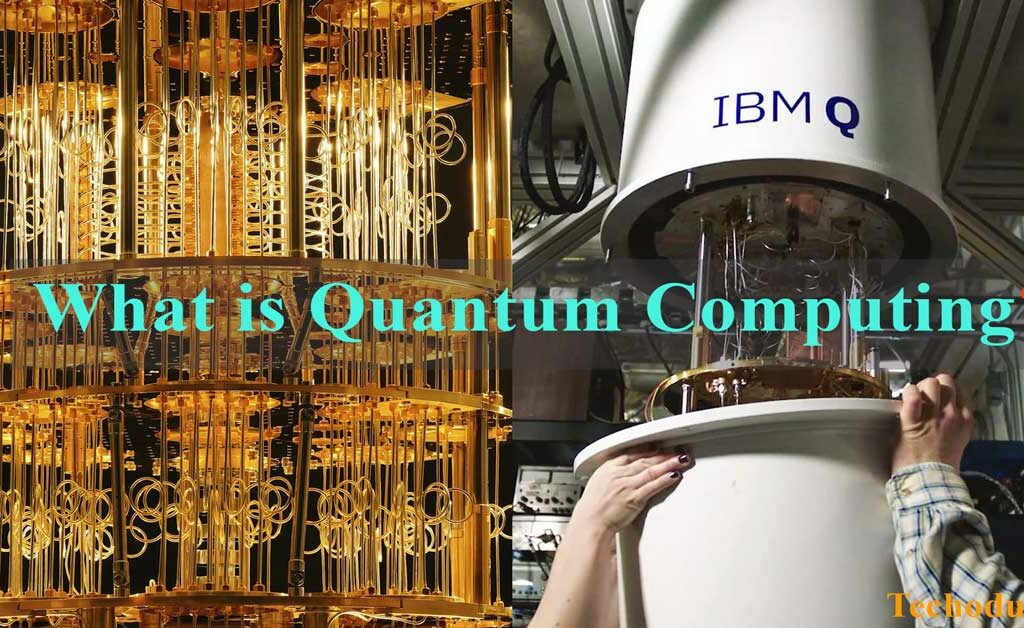
Quantum computing represents a revolutionary leap in the field of technology, merging the abstract principles of quantum mechanics with advanced mathematical frameworks to redefine computational capabilities. Unlike traditional computing, which processes information in binary bits, quantum computing harnesses the unique properties of quantum bits, or qubits, enabling it to tackle problems that classical computers find insurmountable. This emerging technology not only promises to accelerate problem-solving but also challenges our fundamental perceptions of how information can be processed.
Fundamental Concepts of Quantum Computing
Qubits and Superposition
At the heart of quantum computing lies the qubit, the quantum analogue of the classical bit. While classical bits exist strictly as either 0 or 1, qubits can simultaneously occupy both states through a phenomenon called superposition. This allows quantum computers to evaluate multiple possibilities at once, vastly increasing computational efficiency. Imagine a musical ensemble where every instrument plays simultaneously, creating a rich and complex harmony-this is akin to how superposition enables quantum systems to explore numerous solutions in parallel.
Entanglement: The Quantum Connection
Another pivotal principle is entanglement, where pairs or groups of qubits become interconnected such that the state of one instantly influences the state of another, regardless of the distance separating them. This quantum correlation can be compared to dancers performing a synchronized ballet, moving in perfect harmony despite being apart. Entanglement significantly enhances the processing power of quantum computers, allowing them to solve complex problems like large number factorization and molecular simulations that are beyond the reach of classical machines.
Applications Across Various Fields
Cryptography and Security
Quantum computing poses both challenges and opportunities in the realm of cryptography. Current encryption methods rely on the difficulty of factoring large numbers, a task that quantum algorithms such as Shor’s algorithm could potentially render obsolete. This impending shift necessitates the development of quantum-resistant cryptographic techniques to safeguard data in a post-quantum world.
Advancements in Materials Science
By simulating quantum interactions at an atomic scale with remarkable accuracy, quantum computers offer unprecedented potential in materials science. This capability could lead to the discovery and design of novel materials, including superconductors, catalysts, and pharmaceuticals, by predicting their properties before physical synthesis. Such breakthroughs could revolutionize industries by enabling the creation of materials with tailored characteristics.
Enhancing Artificial Intelligence
The integration of quantum computing with artificial intelligence (AI) promises to accelerate data processing and improve the precision of machine learning models. Quantum-enhanced AI could unlock solutions to complex problems that have remained elusive, driving innovation in fields ranging from healthcare to autonomous systems.
Challenges in Quantum Computing Development
Decoherence and Error Correction
One of the primary obstacles in quantum computing is decoherence, the loss of quantum information due to environmental interference. Qubits are extremely sensitive, and maintaining their quantum state long enough to perform meaningful computations is a significant technical challenge. To address this, researchers are developing quantum error correction codes-protective mechanisms that preserve qubit integrity and enable fault-tolerant quantum operations.
Interdisciplinary Expertise and Workforce Development
The advancement of quantum computing demands a multidisciplinary approach, combining physics, computer science, engineering, and mathematics. Educational institutions worldwide are fostering this expertise by training a new generation of scientists and engineers equipped to navigate the complexities of quantum information science and drive innovation forward.
Why Quantum Computing is Transformative
Quantum computing holds the promise to revolutionize numerous aspects of science and technology. It could enable instantaneous solutions to complex optimization problems in logistics, enhance climate modeling accuracy, and facilitate personalized medicine by analyzing genetic data in real time. By pushing the boundaries of computational power, quantum computing expands the horizon of what technology can achieve, limited only by human ingenuity.
Historical and Philosophical Perspectives
Much like the alchemists of antiquity who sought to transform base metals into gold, today’s quantum researchers aim to convert abstract theoretical concepts into practical technological breakthroughs. This pursuit embodies a blend of curiosity, determination, and intellectual rigor, driving humanity closer to unraveling the fundamental nature of reality itself.
Conclusion: Embracing the Quantum Era
The advent of quantum computing invites a profound reevaluation of the laws governing our universe and the technologies we rely upon. Its far-reaching implications span cryptography, materials science, artificial intelligence, and beyond, presenting both formidable challenges and exciting opportunities. As society progresses toward harnessing this groundbreaking technology, the boundaries of classical logic dissolve, revealing a new realm of possibilities shaped by the enigmatic principles of quantum mechanics.
FAQ
What is quantum computing?
Quantum computing uses quantum bits (qubits) to perform calculations at speeds unattainable by classical computers, allowing for the solving of complex problems.
How does quantum computing differ from classical computing?
Unlike classical computing, which uses binary bits, quantum computing employs qubits that can represent multiple states simultaneously, leveraging principles like superposition and entanglement.
What are potential applications of quantum computing?
Quantum computing has potential applications in cryptography, materials science, artificial intelligence, and more, enabling advancements that classical computing cannot achieve.






Leave a Reply