Why was it so difficult to compile the standard model?

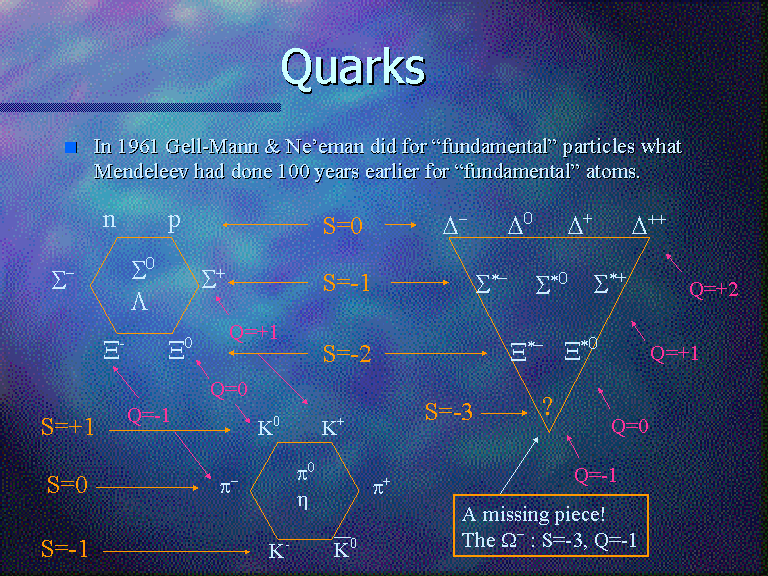
The Standard Model of particle physics represents one of the most profound achievements in the realm of modern science. It serves as a comprehensive framework that unifies the known fundamental particles and their interactions, describing a remarkable variety of phenomena, from the behavior of atomic nuclei to the interactions governing cosmic events. However, the arduous […]

Read More →

What happens to particles in particle accelerators?

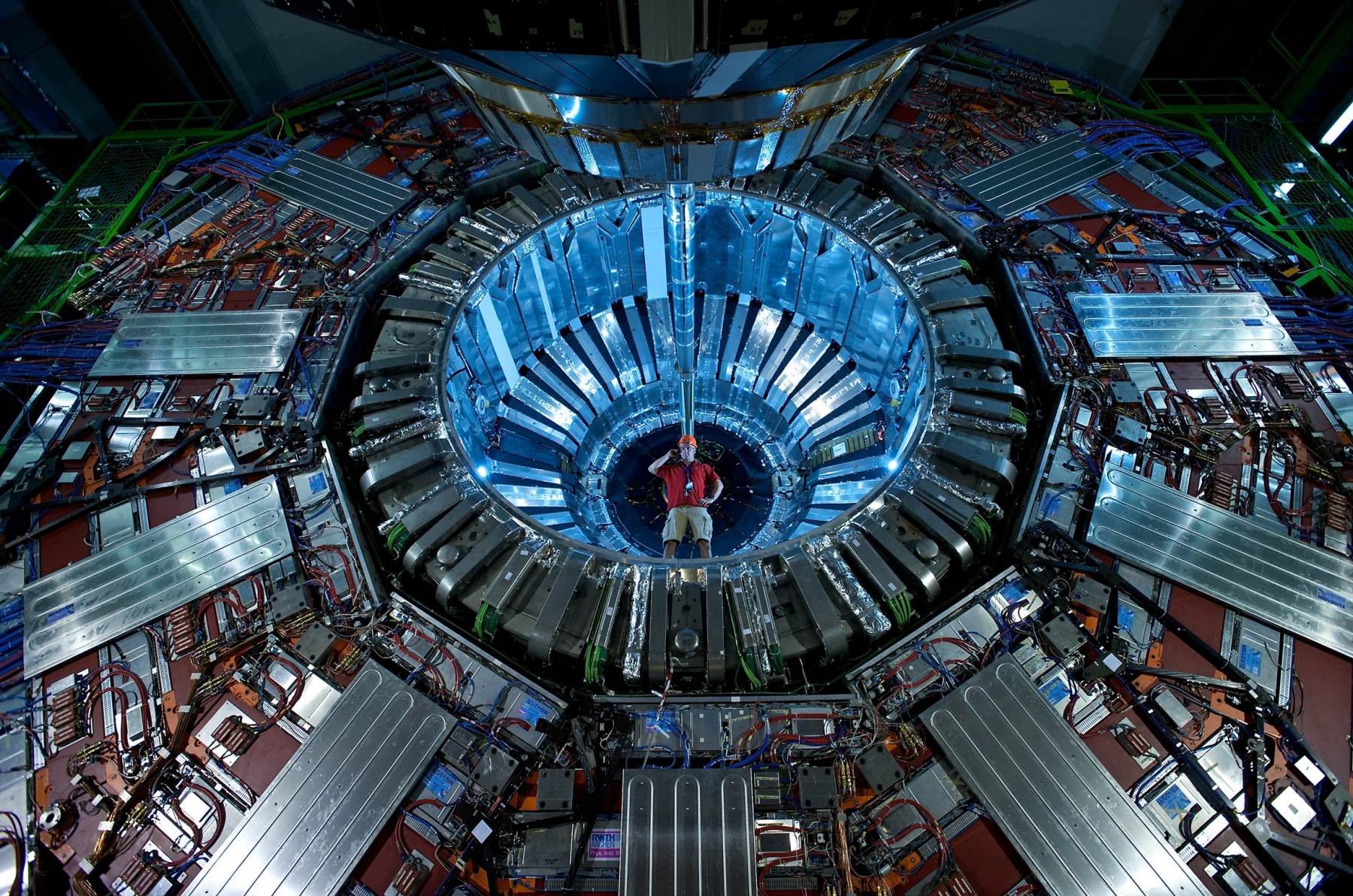
Particle accelerators serve as the modern-day crucibles of fundamental physics, where the building blocks of matter are introspectively examined under extreme conditions. These sophisticated instruments, often likened to colossal cosmic engines, propel particles to prodigious speeds that flirt with the velocity of light. By delving into the intricate machinations within these accelerators, one can appreciate […]

Read More →

Chinese Collider Charms Physicists with Particle Surprises

As the global scientific community rapidly advances in the field of particle physics, the attention of physicists has become increasingly fixated on the advancements emerging from institutions beyond the traditional powerhouses like CERN. One of the most intriguing developments in this realm is the rise of Chinese particle colliders, which have begun to captivate physicists […]

Read More →

Are elementary particles the same as fundamental particles?

In the intricate tapestry of modern physics, the terminology surrounding particles can often appear labyrinthine, particularly when distinguishing between elementary particles and fundamental particles. The question, “Are elementary particles the same as fundamental particles?” serves as a compelling entry point into the depths of particle physics and the universe’s most basic constituents. To embark on […]

Read More →

Are there any theories on how to see elementary particles?

In the realms of modern physics, elementary particles occupy a fundamental status, serving as the building blocks for all matter in the universe. Yet, these minuscule entities are inherently elusive, challenging the very fabric of human perception and observational methodology. This prompts an intriguing question: Are there any theories on how to visualize or “see” […]

Read More →

Why are there no free quarks in nature?

The existence of free quarks—elementary particles that are the fundamental constituents of protons and neutrons—remains a tantalizing enigma in the field of particle physics. While quarks are integral to the formation of hadrons, such as mesons and baryons, they have never been observed in isolation. This profound absence invites inquiry into both the nature of […]

Read More →

Does god’s particle exist now?

The quest to comprehend the fundamental components of our universe has long captivated scientists and laypersons alike. Among the myriad discoveries in modern physics, the Higgs boson, often colloquially termed “God’s particle,” occupies a unique position of intrigue. This moniker, though somewhat dramatized, encapsulates the profound implications of this particle in our understanding of matter […]

Read More →

What is a Higgs boson/particle?

What is a Higgs boson, you might wonder? This seems to be a question of profound simplicity at first glance, yet it opens the door to the complex and intricate universe of particle physics. When one dives into the elusive world of subatomic particles, the Higgs boson emerges not merely as a symbol of scientific […]

Read More →

Power Shift: US Particle Physics Gets New Leadership

The recent transition in leadership within the domain of particle physics in the United States heralds a critical juncture for the field, one marked by nuanced shifts in strategic focus and experimental ambition. This new phase demands a reexamination of the paradigms that have governed particle physics, compelling stakeholders to embrace innovative methodologies and collaborative […]

Read More →

Is there a dark matter connected with elementary particles?

Dark matter remains one of the most enigmatic entities in the cosmos, constituting nearly 27% of the universe’s total mass-energy content. Despite its abundance, dark matter has eluded direct detection, leading researchers to hypothesize its nature and composition. A critical question in contemporary astrophysics and particle physics is whether dark matter can be associated with […]

Read More →