
Short Answer
Overview of Particle Physics
Particle physics occupies a unique position at the intersection of theoretical speculation and experimental verification. This scientific discipline thrives on a dynamic interplay between abstract mathematical models and empirical investigations, each continuously influencing and refining the other. Together, they expand the horizons of human understanding about the universe’s most fundamental components.
Definition and Scope
Particle physics, also known as high-energy physics, is the branch of physics that studies the smallest known building blocks of matter and the forces governing their interactions. It seeks to uncover the fundamental particles that constitute the universe and to understand the principles that dictate their behavior.
- Theoretical Particle Physics:
This facet involves developing mathematical frameworks and conceptual models to describe particle properties and interactions. It relies heavily on advanced mathematics and physical laws to predict phenomena that may not yet be observed. - Experimental Particle Physics:
This area focuses on designing and conducting experiments to test theoretical predictions. It involves the use of sophisticated instruments like particle accelerators and detectors to observe particle interactions at extremely high energies.
Theoretical Particle Physics: Foundations and Frameworks
Theoretical particle physics can be likened to the architectural design of a complex structure, where abstract principles and mathematical rigor form the blueprint. Central to this domain is the Standard Model, a comprehensive theory that integrates quantum mechanics and special relativity to describe the fundamental particles-such as quarks, leptons, and bosons-and their interactions via fundamental forces.
Physicists employ quantum field theory and other advanced mathematical tools to construct models that explain particle behavior, predict new particles, and explore phenomena beyond current experimental reach. These theoretical constructs often precede experimental confirmation, guiding the direction of empirical research.
Experimental Particle Physics: Methods and Instruments
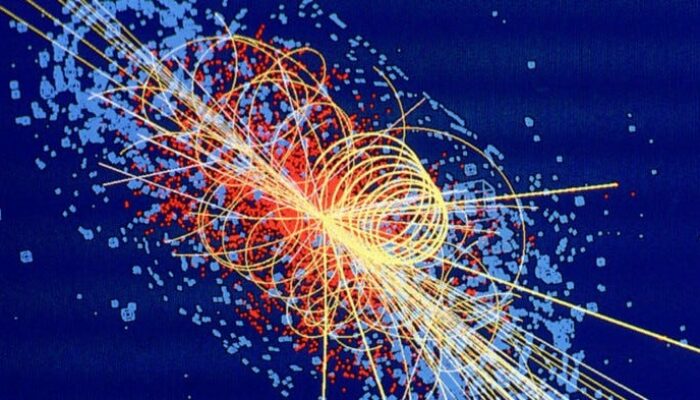
Experimental particle physics translates theoretical predictions into observable phenomena through large-scale experiments. Facilities like the Large Hadron Collider (LHC) at CERN accelerate particles to velocities approaching the speed of light, causing high-energy collisions that produce a variety of subatomic particles. Detectors surrounding collision points capture data on these events, enabling scientists to analyze particle properties and interactions.
Data analysis in this field is a monumental task, requiring advanced computational techniques and algorithms to sift through vast amounts of information. Experimental results serve to validate, refine, or challenge theoretical models, fostering a continuous feedback loop between theory and observation.
Interdependence of Theory and Experiment
The relationship between theoretical and experimental particle physics is symbiotic. Theoretical models propose hypotheses that experimentalists test, while experimental findings can confirm, refute, or inspire modifications to existing theories. This dynamic is exemplified by the discovery of the Higgs boson: theorized in the 1960s based on mathematical elegance, it was experimentally confirmed only decades later in 2012, highlighting the sometimes lengthy journey from prediction to observation.
Philosophical Dimensions and Unobservable Entities
Particle physics also delves into philosophical questions about the nature of reality and knowledge. The discipline grapples with the limits of what can be empirically known versus what remains speculative. Some theoretical entities, such as certain predicted particles or fields, may never be directly observed, raising debates about their ontological status and the interpretation of scientific theories.
Technological Innovations Driving Particle Physics
Advancements in technology have revolutionized both theoretical and experimental particle physics. High-performance computing, machine learning, and sophisticated detection technologies enable researchers to handle and interpret enormous datasets generated by particle collisions. These tools enhance the precision and scope of experiments and facilitate the development of more accurate theoretical models.
Practical Implications and Societal Impact
While particle physics may appear abstract, its discoveries have profound implications for technology and society. Innovations derived from quantum mechanics underpin modern electronics, including semiconductors and medical imaging technologies such as MRI. The continuous dialogue between theory and experiment not only deepens our cosmic understanding but also drives technological progress across multiple industries.
Common Misconceptions About Particle Physics
Particle physics is purely theoretical and disconnected from reality.
Experimental particle physics grounds theoretical predictions in empirical evidence, ensuring that the field remains closely tied to observable phenomena.
Theoretical predictions always immediately lead to experimental confirmation.
Some theoretical ideas, like the Higgs boson, may take decades to verify experimentally due to technological and practical challenges.
Particle physics has no relevance to everyday life.
Technologies developed through particle physics research have direct applications in electronics, medicine, and computing, impacting daily life significantly.
Significance of Particle Physics in Science and Beyond
Particle physics is fundamental to our understanding of the universe’s composition and the forces shaping it. By bridging theoretical insights with experimental validation, the field exemplifies the scientific method and fosters interdisciplinary collaboration. Its contributions extend beyond pure science, influencing technology, philosophy, and our broader worldview, making it a cornerstone of modern scientific inquiry.
FAQ
What is particle physics?
Particle physics is the branch of physics that studies the smallest known building blocks of matter and the forces governing their interactions.
How do theoretical and experimental particle physics interact?
Theoretical models propose hypotheses that experimentalists test, while experimental findings can confirm, refute, or inspire modifications to existing theories.
Why is the Higgs boson significant?
The Higgs boson was theorized in the 1960s and confirmed experimentally in 2012, illustrating the relationship between theory and experimentation in particle physics.






Leave a Reply