
Short Answer
Definition of Superfluidity and Superconductivity
Superfluidity and superconductivity are two extraordinary quantum phenomena observed in condensed matter physics, each exhibiting behaviors that defy classical physics. While they share the common trait of representing states of matter where conventional physical laws appear to break down, they arise from fundamentally different mechanisms and experimental conditions.
- Superfluidity:
A phase of matter typically seen in helium-4 at temperatures near absolute zero, characterized by the ability of the liquid to flow without any viscosity or resistance. - Superconductivity:
A state occurring in certain materials such as lead or niobium when cooled below a critical temperature, where electrical resistance drops to zero, allowing electric current to flow without energy loss.
Origins and Underlying Principles
Understanding the emergence of superfluidity and superconductivity requires examining their microscopic foundations. Superfluidity arises when a large number of bosonic particles, like helium-4 atoms, condense into the same quantum ground state, forming a coherent macroscopic wavefunction. This collective quantum state enables frictionless flow, a phenomenon famously described by physicist Richard Feynman as a collective motion that defies classical expectations.
In contrast, superconductivity is explained by the Bardeen-Cooper-Schrieffer (BCS) theory, which describes how electrons-fermions normally restricted by the Pauli exclusion principle-pair up into Cooper pairs at low temperatures. These pairs behave as composite bosons, enabling them to move coherently through the lattice without scattering, thus eliminating electrical resistance.
Quantum Statistics and Particle Behavior
The distinction between the particles involved in these phenomena is crucial. Superfluid helium consists of bosons, particles that can occupy the same quantum state simultaneously, facilitating the formation of a macroscopic quantum phase. Superconductors, however, are composed of fermions (electrons) that cannot share quantum states individually. Through pairing mechanisms, these fermions effectively transform into boson-like entities, bridging the conceptual gap between the two phenomena.
Quantum Coherence and Phase Transitions
Both superfluidity and superconductivity hinge on quantum coherence, a fundamental aspect of their behavior. In superfluid helium, this coherence manifests as quantized vortices, indicating a fractal-like structure in the flow patterns. In superconductors, phase coherence among Cooper pairs leads to the hallmark zero-resistance state.
Phase transitions mark the onset of these quantum states. Superfluid helium undergoes a transition at the lambda point, characterized by a dramatic change in entropy and the emergence of frictionless flow. Superconductors experience a critical temperature below which their electrical resistance abruptly disappears. These transitions exemplify quantum phase changes, highlighting the deep connection between the two phenomena despite their differing physical contexts.
Mathematical Framework and Theoretical Models
The behavior of superfluidity and superconductivity can be described using quantum mechanical models and mathematical formulations:
- Superfluidity:
The macroscopic wavefunction (Psi(mathbf{r}, t) = sqrt{n(mathbf{r}, t)} e^{iphi(mathbf{r}, t)}) describes the condensate, where (n) is the particle density and (phi) the phase. The superfluid velocity is related to the gradient of the phase by (mathbf{v}_s = frac{hbar}{m} nabla phi), with (hbar) as the reduced Planck constant and (m) the particle mass. - Superconductivity:
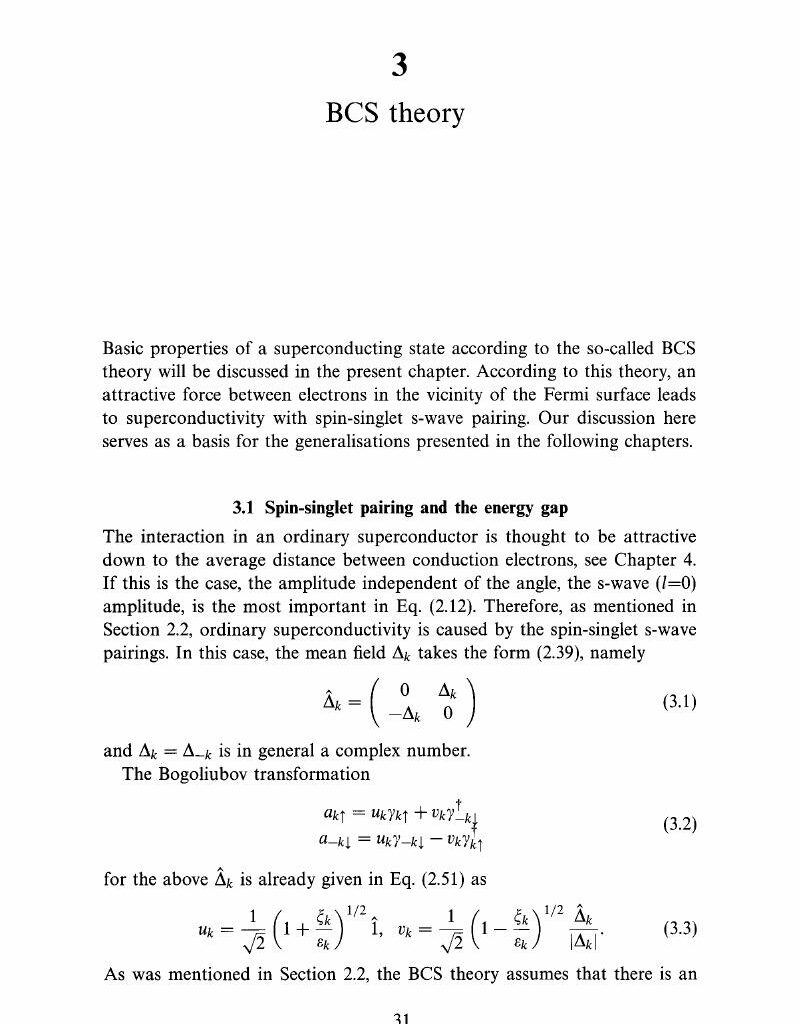
The BCS ground state wavefunction involves Cooper pairs with an energy gap (Delta) that depends on temperature (T). The critical temperature (T_c) marks the transition, and the energy gap follows (Delta(T) approx Delta(0) sqrt{1 – frac{T}{T_c}}) near (T_c).
Practical Applications and Technological Impact
The unique properties of superfluidity and superconductivity have led to numerous technological advancements:
- Superfluidity:
Utilized in cryogenics for ultra-sensitive measurements and cooling systems, superfluid helium enables precision experiments in physics and engineering. - Superconductivity:
Critical for developing lossless power transmission lines, powerful electromagnets in MRI machines, and components in quantum computing, superconductors hold promise for revolutionizing energy and information technologies.
Ongoing research aims to discover materials that exhibit superconductivity at higher temperatures, potentially enabling widespread practical applications without the need for extreme cooling.
Interrelation and Emerging Research
Recent studies explore the overlap between superfluidity and superconductivity, particularly in unconventional superconductors that display superfluid-like characteristics. High-temperature superconductors challenge existing theories and suggest a deeper, unified framework that could connect these quantum states more fundamentally.
Common Misconceptions
Superfluidity and superconductivity are identical phenomena.
Although they share quantum coherence and zero-resistance-like properties, they arise from different particles and mechanisms-bosons in superfluidity and paired fermions in superconductivity.
Superconductivity only eliminates electrical resistance.
Besides zero resistance, superconductors also expel magnetic fields (Meissner effect), a defining characteristic not present in superfluidity.
Significance in Science and Daily Life
Both superfluidity and superconductivity deepen our understanding of quantum mechanics and phase transitions, offering insights into the behavior of matter under extreme conditions. Their applications impact various fields, from medical imaging and energy infrastructure to fundamental physics research, underscoring their importance in advancing technology and scientific knowledge.
Future Directions and Open Questions
The quest to unify the principles governing superfluidity and superconductivity continues to inspire physicists. Discovering room-temperature superconductors or materials that seamlessly blend properties of both states could revolutionize energy systems and quantum technologies. As research progresses, these quantum phenomena remain at the forefront of exploring the mysteries of matter and the universe.
FAQ
What is superfluidity?
Superfluidity is a phase of matter where liquids can flow without viscosity, typically observed in helium-4 at very low temperatures.
What is superconductivity?
Superconductivity is a phenomenon where certain materials exhibit zero electrical resistance when cooled below a specific critical temperature.



Leave a Reply