
Short Answer
Definition of Spintronics and Its Biological Integration
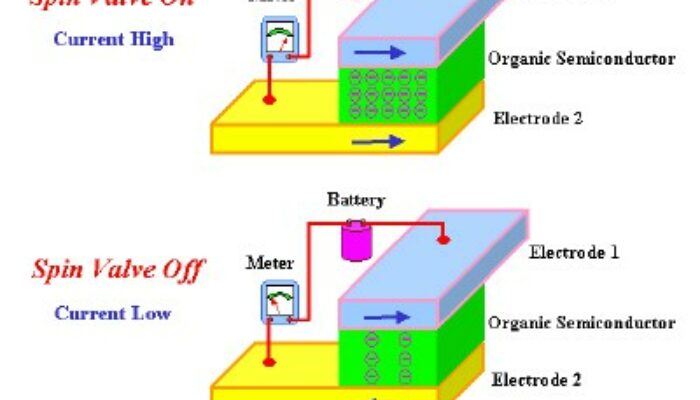
Spintronics, an abbreviation for spin electronics, represents an innovative branch of condensed matter physics that leverages the intrinsic spin property of electrons, rather than relying solely on their charge as in traditional electronics. This emerging discipline has attracted considerable interest due to its promising applications in advanced technologies such as non-volatile memory devices and quantum computing. A particularly captivating frontier within spintronics is the exploration of biological molecules, especially DNA, as carriers of electron spin. This article explores the fundamental concepts, mechanisms, and potential impacts of incorporating biomolecules into spintronic systems, emphasizing recent breakthroughs in this interdisciplinary field.
Fundamental Principles of Spintronics
Conventional electronic devices operate primarily by controlling the flow of electrons and their associated electric charge. However, electrons also possess a quantum mechanical property called spin, which manifests as a magnetic moment with two possible orientations: spin-up and spin-down. Spintronics exploits this additional degree of freedom to encode, manipulate, and store information, potentially enabling devices that are more energy-efficient and faster than traditional charge-based electronics.
- Electron Spin:
A quantum property of electrons that can be oriented in two distinct states, providing a binary system for information processing. - Spin Polarization:
The preferential alignment of electron spins in a particular direction, essential for spintronic device operation.
Role of DNA in Spintronic Applications
Beyond its biological function as the genetic blueprint of life, DNA exhibits unique structural and electronic characteristics that make it a promising candidate for spintronic applications. Its double-helical architecture and efficient electron transfer capabilities enable it to act as a conduit for spin-polarized electrons. Integrating DNA into spintronic devices opens up possibilities for creating bio-hybrid systems that combine the advantages of biological compatibility with advanced electronic functionalities.
Structural Features Favoring Spin Transport
The π-stacking interactions between nucleobases along the DNA helix facilitate spin-conserving electron transport. These interactions create pathways that maintain the spin orientation of electrons as they move through the molecule, which is critical for achieving high-fidelity spin transport in devices.
Biocompatibility and Environmental Benefits
Unlike many inorganic materials traditionally used in electronics, DNA is inherently biocompatible and environmentally sustainable. This makes it an attractive material for developing devices that can interface seamlessly with living systems, such as biosensors and bioinformatics tools, while minimizing ecological impact.
Mechanisms of Spin Polarization in DNA
Spin polarization in DNA arises from the molecule’s chiral structure and the specific electronic interactions within its nucleobases. Modifications to DNA can enhance its ability to preferentially transport electrons with a particular spin orientation, a phenomenon that is crucial for the practical implementation of DNA-based spintronic devices.
Challenges in DNA-Based Spintronics
Despite the promising attributes of DNA, several obstacles must be addressed to fully realize its potential in spintronics:
- Spin Coherence Time:
The duration over which electron spin states remain stable is limited in DNA due to environmental interactions that cause decoherence. Extending coherence times is vital for reliable device performance. - Interface Engineering:
Efficient integration of DNA with conventional electronic components requires careful design of interfaces to preserve spin polarization during electron transport. Techniques such as chemical functionalization and hybridization with nanomaterials are being explored to improve these interfaces.
Advances Through Synthetic Biology
The field of synthetic biology offers exciting opportunities to engineer DNA molecules with customized spintronic properties. By designing synthetic DNA sequences with tailored electronic and spin characteristics, researchers aim to develop novel materials that exhibit enhanced or entirely new spin-related behaviors, potentially revolutionizing the scope of spintronic devices.
Applications and Future Prospects
The integration of DNA into spintronic technology holds transformative potential across various domains:
- Data Storage:
DNA’s exceptional information density combined with spin transport capabilities could lead to ultra-compact, energy-efficient storage media that surpass current magnetic storage technologies. - Bio-Hybrid Electronics:
Devices that merge biological molecules with electronic components may enable new forms of biosensing, medical diagnostics, and bioinformatics applications.
Common Misconceptions About DNA Spintronics
DNA is only useful for genetic information storage.
Beyond genetics, DNA’s structural and electronic properties make it a viable medium for spin transport in advanced electronic devices.
Spin coherence times in DNA are sufficient for all spintronic applications.
DNA’s spin coherence times are currently limited and require enhancement through environmental control and molecular engineering for practical use.
Significance of DNA in Spintronics
Incorporating DNA into spintronic systems represents a convergence of biology and physics that could redefine electronic device design. The biocompatibility, sustainability, and unique spin transport properties of DNA offer pathways to develop environmentally friendly, high-performance technologies. Continued interdisciplinary research is essential to overcome existing challenges and unlock the full potential of DNA-based spintronics, promising innovations that could impact computing, data storage, and bioelectronics.
FAQ
What is spintronics?
Spintronics is a field of condensed matter physics that utilizes the intrinsic spin of electrons for information processing, rather than relying solely on their charge.
How does DNA contribute to spintronic applications?
DNA’s unique structural and electronic properties allow it to act as a conduit for spin-polarized electrons, facilitating the development of bio-hybrid spintronic devices.
What challenges does DNA-based spintronics face?
Key challenges include limited spin coherence times and the need for efficient interface engineering between DNA and traditional electronic components.



Leave a Reply