
Short Answer
Definition of Galaxy Clusters
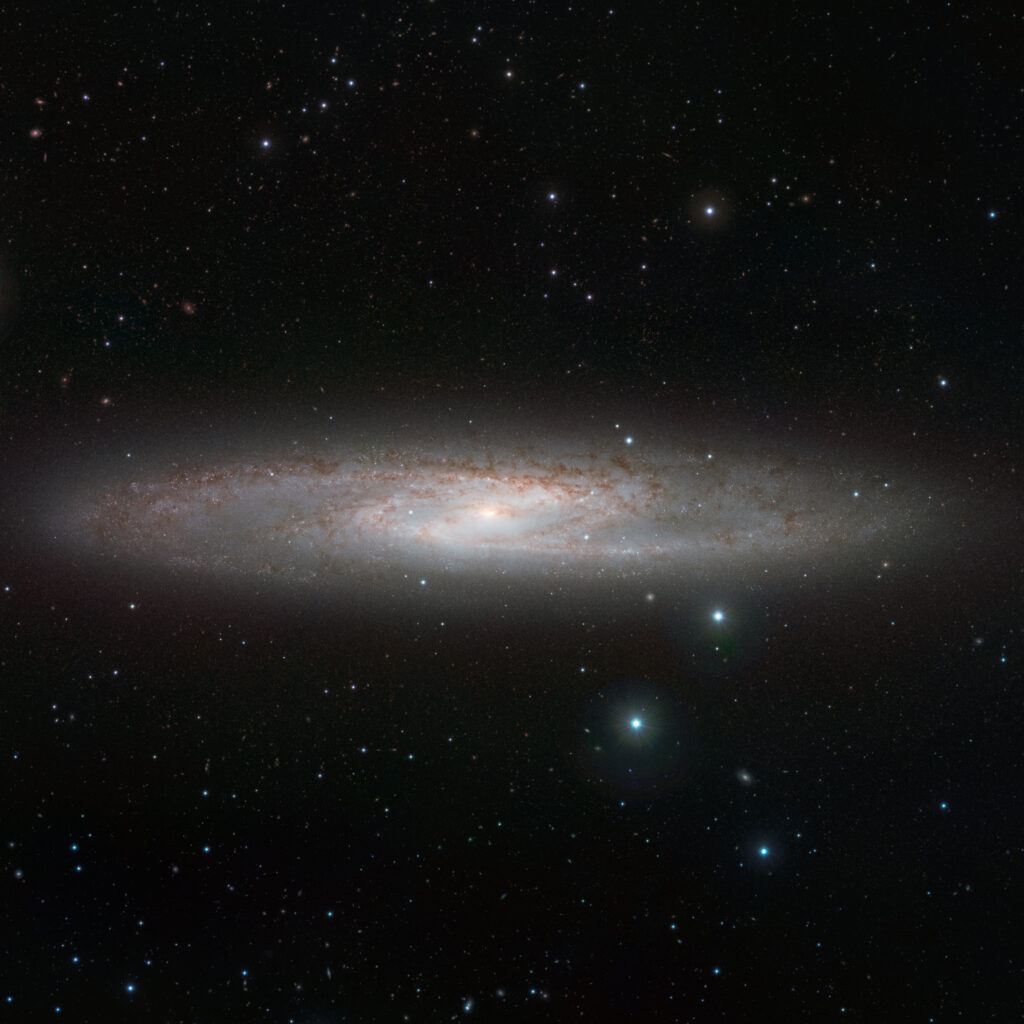
Galaxy clusters represent some of the universe’s most massive and gravitationally bound systems, consisting of hundreds to thousands of galaxies grouped together. These immense cosmic structures serve as key laboratories for understanding gravitational interactions and the large-scale evolution of matter in the cosmos. Their collective motion and behavior reveal fundamental processes shaping the universe’s architecture.
Formation and Evolution of Galaxy Clusters
The origin of galaxy clusters is deeply rooted in the early universe’s history. Following the Big Bang, the universe was a hot, dense plasma undergoing rapid expansion. Minute fluctuations in density created gravitational wells where matter began to accumulate. Over billions of years, these regions attracted more matter, gradually forming the massive clusters observed today. This hierarchical assembly process, central to cosmological structure formation, involves smaller galaxies and groups merging into larger conglomerates, influencing the clusters’ internal dynamics and their surrounding environment.
Dynamics and Motion within Galaxy Clusters
Galaxy clusters are far from static; they exhibit complex motions influenced by their mass, velocity dispersion, and interactions with neighboring structures. The galaxies within a cluster move in intricate orbits shaped by gravitational forces, often resembling a cosmic dance. When two clusters collide-a process known as a merger-their dynamics can change dramatically. Such mergers trigger gravitational interactions that alter galaxy trajectories and can compress intergalactic gas, sometimes igniting bursts of star formation.
Gravitational Interactions and Orbital Mechanics
The movement of galaxies inside clusters can be explained through classical physics and general relativity. Gravitational forces create a delicate balance, with galaxies moving along paths influenced by tidal forces and velocity dispersions. Occasionally, galaxies may be accelerated enough to escape the cluster’s gravitational pull, illustrating the dynamic and evolving nature of these systems.
The Role of Dark Matter in Cluster Motion
Dark matter, an invisible yet dominant component of the universe, plays a crucial role in shaping the motion of galaxy clusters. Unlike ordinary matter, dark matter does not emit or absorb light, making it detectable only through its gravitational effects. The distribution of dark matter within clusters forms a gravitational framework that governs the orbits of galaxies, acting as a cosmic scaffold that supports the cluster’s structure and dynamics.
Observational Techniques and Insights
Modern astronomy employs advanced observational methods to study galaxy cluster dynamics. Optical and radio imaging provide detailed views of cluster components, while gravitational lensing-an effect predicted by Einstein’s theory of general relativity-allows astronomers to map dark matter distribution by observing the bending of light from background objects. These observations, combined with the virial theorem, help scientists estimate cluster masses and understand the equilibrium between kinetic and potential energies within clusters.
Galaxy Clusters within the Cosmic Web
Galaxy clusters are integral parts of the cosmic web, a vast network of filaments and voids formed by gravitational interactions on the largest scales. Clusters reside at the nodes of this web, connected by filaments of galaxies and dark matter. Their motion and interactions influence the transfer of matter and energy across the universe, contributing to the ongoing growth and evolution of cosmic structures.
Scientific Significance and Future Research
Studying the motion of galaxy clusters is vital for understanding the thermodynamics and large-scale evolution of the universe. Cluster mergers provide clues about galaxy formation and morphological changes, while their dynamics offer insights into dark matter properties and cosmic expansion. Upcoming space missions and ground-based observatories promise to deepen our knowledge, unveiling new aspects of cluster behavior and their role in cosmic history.
Common Misconceptions about Galaxy Clusters
Galaxy clusters are static, unchanging structures.
Clusters are dynamic systems with galaxies constantly moving and interacting, often undergoing mergers that reshape their structure.
Dark matter can be directly observed like normal matter.
Dark matter is detected indirectly through its gravitational effects, as it does not emit or absorb electromagnetic radiation.
Why Understanding Galaxy Cluster Motion Matters
The study of galaxy cluster dynamics is essential for grasping the universe’s large-scale structure and evolution. These clusters act as cosmic storytellers, encoding information about the formation, interaction, and fate of matter across billions of years. By observing their movements and interactions, scientists gain valuable insights into fundamental forces, the nature of dark matter, and the interconnectedness of cosmic phenomena, enriching our comprehension of the universe as a dynamic and evolving entity.
FAQ
What are galaxy clusters?
Galaxy clusters are large groups of galaxies held together by gravity, consisting of hundreds to thousands of galaxies.
How do galaxy clusters form?
They form from density fluctuations in the early universe, where matter accumulates over billions of years.
What role does dark matter play in galaxy clusters?
Dark matter's gravitational effects shape the motion and structure of galaxy clusters but cannot be directly observed.
What techniques are used to observe galaxy clusters?
Astronomers use optical and radio imaging, as well as gravitational lensing, to study galaxy clusters.

Leave a Reply