
Short Answer
Definition of the Ampere
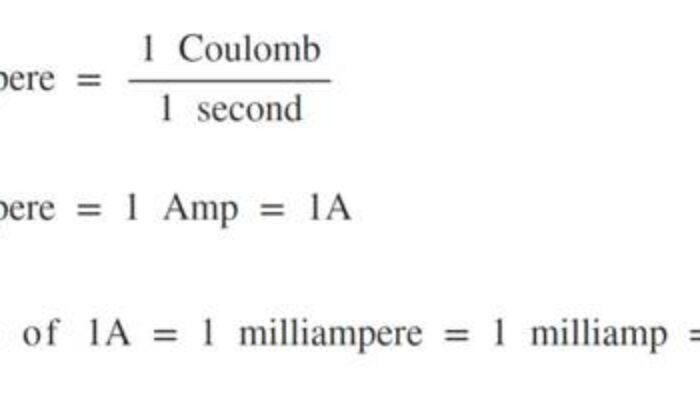
The ampere, denoted by the symbol “A,” is a fundamental unit within the International System of Units (SI) that quantifies electric current. It represents the rate at which electric charge flows through a conductor. Traditionally, one ampere corresponds to the movement of one coulomb of charge passing through a conductor’s cross-sectional area every second. This unit serves as a cornerstone in electrical measurement, linking macroscopic electrical phenomena to the microscopic behavior of charged particles.
Historical Context and Evolution
Originally, the ampere was defined based on the force exerted between two parallel conductors carrying electric current. This classical definition, rooted in macroscopic electromagnetic forces, provided a practical but indirect method of quantifying current. Over time, advances in physics and metrology revealed limitations in this approach, particularly regarding precision and reproducibility at smaller scales. Consequently, the definition has undergone significant refinement to align with modern scientific understanding.
Modern Redefinition Based on Fundamental Constants
In recent years, the ampere has been redefined by anchoring it to fundamental physical constants, specifically the elementary charge-the charge of a single electron, approximately 1.602 × 10⁻¹⁹ coulombs. This shift moves away from mechanical or force-based standards toward a quantum-based framework. The new definition establishes the ampere as the flow of a fixed number of elementary charges per second, enhancing measurement accuracy and universality across scientific disciplines.
Elementary Charge and Its Role
- Elementary Charge (e):
The smallest unit of electric charge carried by a single proton or electron, fundamental to quantum physics and electrical measurements. - Quantization of Charge:
Electric charge exists in discrete packets, making the flow of electrons a natural basis for defining current.
Quantum Perspective on Electric Current
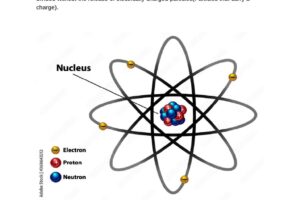
The redefinition of the ampere reflects a paradigm shift from classical to quantum perspectives. Instead of viewing current as a continuous flow, it is now understood as a stream of discrete electrons. Each ampere corresponds to approximately 6.242 × 10¹⁸ electrons passing a point in a conductor every second. This quantum viewpoint is crucial for high-precision applications such as quantum computing and nanotechnology, where the behavior of individual electrons significantly impacts system performance.
Advantages of the New Definition
- Enhanced Precision:
By basing the ampere on a fixed fundamental constant, measurements become more accurate and reproducible worldwide. - Reduced Environmental Influence:
The new definition minimizes errors caused by temperature fluctuations, material inconsistencies, and electromagnetic interference. - Universal Applicability:
Grounding the ampere in quantum constants ensures consistency across diverse scientific and technological fields.
Philosophical and Scientific Implications
The quantum-based definition of the ampere invites deeper reflection on the nature of electrons and electric charge. Electrons exhibit dual wave-particle characteristics, challenging classical notions of matter and prompting reconsideration of physical laws. This duality enriches our understanding of electricity as a fundamental force interwoven with the fabric of the universe, bridging physics with philosophical inquiry about the nature of reality.
Impact on Technology and Interdisciplinary Fields
The refined definition of the ampere has far-reaching consequences beyond theoretical physics. It underpins advancements in real-time electrical monitoring, the development of ultra-sensitive electromagnetic sensors, and improvements in medical imaging technologies. Moreover, it supports progress in renewable energy systems, telecommunications, and electronics, highlighting the ampere’s central role in driving innovation across multiple sectors.
Common Misconceptions About the Ampere
The ampere measures the number of electrons directly.
The ampere quantifies the flow of electric charge, which is carried by electrons, but it is defined through the total charge passing per unit time, not by counting individual electrons.
The ampere is a fixed mechanical standard.
The ampere is now defined by fundamental constants of nature, moving away from mechanical or force-based standards to a quantum-based definition.
Why the Ampere’s Redefinition Is Crucial
Redefining the ampere based on fundamental constants enhances the precision and reliability of electrical measurements, which are vital for scientific research and technological development. This shift supports the global standardization of units, enabling consistent communication and innovation. Furthermore, it deepens our grasp of quantum phenomena, fostering new technologies and expanding humanity’s understanding of the universe’s underlying principles.
Summary
The ampere, a key SI unit measuring electric current, has evolved from a classical force-based definition to a modern quantum-based standard grounded in the elementary charge. This transformation reflects advances in physics and metrology, emphasizing precision, universality, and the quantum nature of electric charge. The redefined ampere not only improves measurement accuracy but also enriches scientific and philosophical perspectives, driving progress across technology and deepening our comprehension of the natural world.
FAQ
What is the ampere?
The ampere is the SI unit of electric current, defined as the flow of one coulomb of charge per second.
Why was the ampere redefined?
The ampere was redefined to enhance the precision and reliability of electrical measurements by anchoring it to fundamental physical constants.




Leave a Reply