
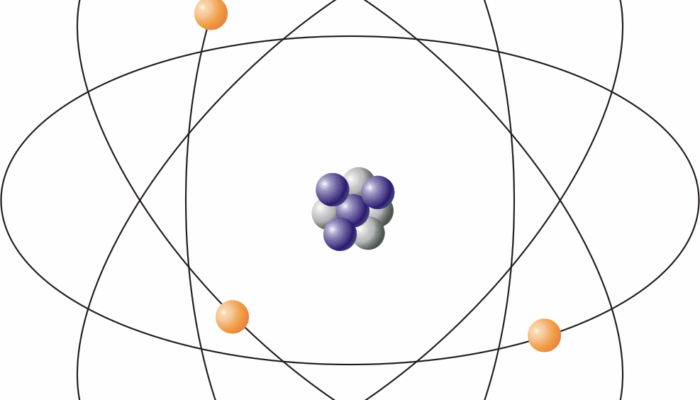
Short Answer
Definition of Atom Lasers
Atom lasers represent a cutting-edge advancement in quantum physics, where coherent beams of atoms are generated similarly to how traditional lasers emit photons. These devices exploit the wave-like nature of atoms, producing matter waves that exhibit coherence-a property essential for precision applications. Unlike conventional lasers that emit light, atom lasers emit streams of neutral atoms, opening new avenues for scientific exploration and technological innovation.
Origins and Underlying Principles
The foundation of atom laser technology lies in the discovery and manipulation of Bose-Einstein condensates (BECs). When cooled to temperatures approaching absolute zero, certain atoms enter a collective quantum state where they behave as a single coherent entity. This phenomenon allows atoms to synchronize their quantum phases, enabling the extraction of a coherent atomic beam. The coherence of these matter waves is analogous to the harmony found in a well-orchestrated symphony, distinguishing atom lasers from incoherent atomic sources.
How Atom Lasers Operate
Atom lasers function by releasing atoms from a Bose-Einstein condensate in a controlled manner, forming a coherent beam of matter waves. These neutral atoms, free from electrical charge, interact with external fields and other atoms in unique ways, providing advantages over photon-based lasers. The coherent atomic beam can be manipulated to perform interference experiments, enabling measurements with exceptional sensitivity and precision.
Mathematical Framework and Quantum Coherence
The behavior of atom lasers is governed by quantum mechanics, particularly the principles describing Bose-Einstein condensates and matter wave interference. The wavefunction (psi(mathbf{r}, t)) of the condensate satisfies the Gross-Pitaevskii equation:
(ihbar frac{partial psi}{partial t} = left( -frac{hbar^2}{2m} nabla^2 + V(mathbf{r}) + g|psi|^2 right) psi)
- (hbar): Reduced Planck’s constant
- m: Mass of the atom
- (V(mathbf{r})): External potential
- g: Interaction strength between atoms
This nonlinear Schrödinger equation describes the evolution of the condensate’s wavefunction, capturing the coherence and interactions essential for atom laser operation.
Applications in Precision Measurement
Atom lasers have transformative potential in metrology, particularly in enhancing the accuracy of measurements beyond classical limits. By exploiting matter wave interference, these devices can surpass constraints imposed by the Heisenberg Uncertainty Principle on simultaneous measurements of complementary variables such as position and momentum. This capability allows scientists to probe phenomena at microscopic scales with unprecedented clarity.
Inertial Sensing and Gravity Mapping
One of the most promising uses of atom lasers is in inertial sensing technologies. Atom lasers serve as the core component of atomic gravity gradiometers, instruments capable of detecting minute variations in gravitational fields. This sensitivity enables applications such as geophysical exploration, underground resource detection, and environmental monitoring, where subtle gravitational changes reveal hidden structures or activities.
Role in Quantum Information Science
Atom lasers also hold significant promise for advancing quantum computing. The coherent atomic beams can be harnessed to create and manipulate qubits with enhanced stability and reduced error rates. By acting as precise architects of quantum states, atom lasers contribute to building more robust quantum information systems, potentially revolutionizing computational power and efficiency.
Fundamental Research and Quantum Mechanics Insights
Beyond practical applications, atom lasers provide a powerful platform for investigating fundamental quantum phenomena. Their ability to generate and control coherent matter waves facilitates studies into decoherence, entanglement, and the foundational aspects of quantum reality. These explorations deepen our understanding of the quantum world and challenge existing theoretical frameworks.
Challenges in Atom Laser Development
Despite their potential, atom lasers face significant technical hurdles, particularly in maintaining coherence over extended distances and durations. Environmental disturbances can induce decoherence, disrupting the delicate quantum states. Researchers are actively developing methods such as optical lattice confinement and novel matter states to preserve coherence, aiming to realize scalable and reliable atom laser systems.
Significance and Future Prospects
The advent of atom lasers marks a pivotal moment in the intersection of quantum physics and engineering. By merging coherent matter wave technology with precision measurement and quantum information science, atom lasers promise to expand our scientific horizons and technological capabilities. As research progresses, these devices are poised to unlock new dimensions of understanding and innovation, heralding a future where quantum coherence and precision measurement redefine multiple disciplines.
FAQ
What is an atom laser?
An atom laser is a device that emits coherent beams of neutral atoms, analogous to how traditional lasers emit photons.
What are the main applications of atom lasers?
They are used in high-precision measurement, inertial sensing, and quantum computing.
What challenges do atom lasers face?
Challenges include maintaining coherence over distances and durations, and mitigating environmental disturbances.


Leave a Reply