
DAΦNE Accelerates Again: A Particle Boost in Italy’s Collider

Overview of the DAΦNE Collider Situated at the National Laboratories of Frascati in Italy, the DAΦNE (Double Accumulator for the Physics of Nonlinear Effects) collider is a landmark scientific instrument that has recently undergone substantial enhancements. These improvements have significantly boosted its particle acceleration efficiency, marking a major milestone in experimental particle physics. DAΦNE exemplifies […]
Read More →

Climate by Cosmic Ray? Investigating Interstellar Influence

Definition of Cosmic Rays and Their Climatic Relevance Cosmic rays are highly energetic particles, predominantly protons, that originate from astrophysical events such as supernova explosions and other cosmic phenomena. Traveling vast distances through space, these particles eventually collide with Earth’s atmosphere, initiating a series of interactions that may influence atmospheric conditions. The hypothesis that cosmic […]

Read More →

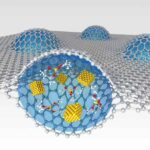
A Graphene Capsule Reveals How Nanocrystals Grow

Understanding Nanocrystal Growth The formation of nanocrystals can be compared to the emergence of intricate star patterns in a mysterious night sky, where each crystal represents a unique point of order arising from random atomic interactions at the nanoscale. The introduction of graphene capsules has revolutionized this field by providing a novel platform to observe […]

Read More →

Enter the Yoctosecond: Welcome to the Smallest Slice of Time

Definition of the Yoctosecond The yoctosecond represents one of the smallest measurable units of time, defined as one septillionth of a second, or 10-24 seconds. To contextualize its brevity, a single yoctosecond is significantly shorter than the lifespan of a proton, highlighting its relevance in the study of ultrafast phenomena at the subatomic scale. Magnitude: […]

Read More →

Supercomputing Showdown: Roadrunner Takes the Lead

Definition of Supercomputing and the Roadrunner Supercomputing refers to the use of extremely powerful computers designed to perform complex calculations at extraordinary speeds, far surpassing conventional computing capabilities. These machines are engineered to handle high-performance computing (HPC) tasks that require vast computational resources. The Roadrunner supercomputer, housed at Los Alamos National Laboratory, represents a landmark […]

Read More →

The Universe’s Background Light: Gamma Rays Set a Limit

Definition of Cosmic Gamma Rays and Background Light The universe is permeated by a vast array of electromagnetic radiation, among which gamma rays represent the highest-energy photons. These gamma rays originate from some of the most extreme and energetic astrophysical processes, providing critical insights into cosmic phenomena. Alongside gamma rays, the cosmic background light encompasses […]

Read More →

Black Hole Confirmed: A 40-Year Journey Ends in Proof

Definition of Black Holes Black holes are extraordinary cosmic objects characterized by gravitational fields so intense that nothing, not even light, can escape their pull. Originally emerging as theoretical solutions to Albert Einstein’s general relativity equations in 1915, black holes have transitioned from abstract mathematical concepts to observable astrophysical entities. They are often visualized as […]

Read More →

Tiny but Mighty: Ferroelectricity Discovered at the Nanoscale

Definition of Ferroelectricity Ferroelectricity refers to the intrinsic property of certain materials to exhibit spontaneous electric polarization, which can be reversed by applying an external electric field. This reversible polarization arises from the asymmetric arrangement of ions within the crystal lattice, typically found in non-centrosymmetric structures. Classic examples of ferroelectric materials include barium titanate (BaTiO3) […]

Read More →

EU Clashes with US Over Atmosphere Testing: Science Meets Politics

Overview of the EU-US Atmospheric Testing Debate The ongoing dialogue between the European Union (EU) and the United States (US) concerning atmospheric testing represents a complex intersection of scientific investigation and political strategy. As global concerns about climate change and environmental harm intensify, these two influential entities find themselves engaged in a multifaceted dispute involving […]

Read More →