
Short Answer
Understanding Nanocrystal Growth
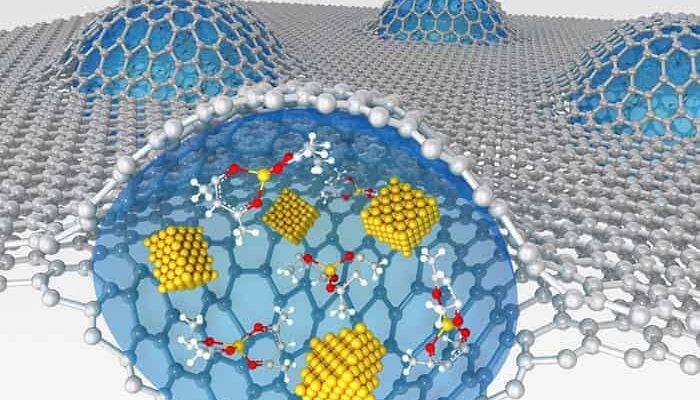
The formation of nanocrystals can be compared to the emergence of intricate star patterns in a mysterious night sky, where each crystal represents a unique point of order arising from random atomic interactions at the nanoscale. The introduction of graphene capsules has revolutionized this field by providing a novel platform to observe the subtle and complex processes that govern the assembly of atoms into stable nanostructures. Graphene, a single layer of carbon atoms arranged in a hexagonal lattice, offers exceptional properties that enable scientists to monitor nanocrystal growth with unprecedented precision.
Definition and Role of Nucleation
Nucleation is the fundamental step in nanocrystal formation, analogous to the birth of stars in the cosmos. It involves the initial aggregation of atoms into small clusters, or embryos, which transition from a disordered to an ordered state. This phase change is critical because it determines whether these clusters will grow into fully formed nanocrystals. Various environmental factors such as temperature, pressure, and the presence of surfactants influence the stability and evolution of these embryonic clusters. Graphene capsules act as controlled microenvironments, allowing researchers to finely tune these parameters and observe nucleation events with exceptional clarity.
Graphene Capsules as Microreactors
Graphene capsules serve as innovative nanoscale reactors that confine the growth of nanocrystals within a precisely controlled space. Their two-dimensional structure provides remarkable electronic and thermal conductivity, which supports the assembly and stabilization of nanoparticles. Additionally, the mechanical robustness of graphene ensures the capsule remains intact during the growth process, protecting the developing nanocrystals from fragmentation. This encapsulation mimics a protective cocoon, maintaining the purity and uniformity of the crystals as they form.
Mechanisms Behind Nanocrystal Formation
The transformation from isolated nanoparticles into continuous nanocrystals is governed by a delicate interplay of quantum mechanical forces and thermodynamic principles. Cohesive forces attract atoms to form ordered structures, while thermal fluctuations can disrupt these nascent formations. Within the confined environment of a graphene capsule, researchers can directly observe this dynamic balance, capturing real-time crystallization events that bridge theoretical models with experimental evidence.
Non-Equilibrium Thermodynamics in Nanocrystal Growth
Nanocrystal formation often occurs under non-equilibrium conditions, where systems evolve from high-energy, disordered states toward more stable configurations. This process is comparable to a turbulent river resisting control, reflecting the complex and often chaotic nature of atomic interactions. The graphene capsule environment embodies this struggle, providing a unique window into how non-equilibrium thermodynamics influence material synthesis. Insights gained here are vital for designing advanced materials with tailored properties.
Applications in Catalysis
Nanocrystals, especially those made from noble metals, exhibit significantly enhanced catalytic properties due to their large surface area relative to volume. When encapsulated within graphene, these nanocrystals benefit from the support’s unique electronic and geometric characteristics, which can alter reaction pathways and improve catalytic efficiency and selectivity. This synergy holds promise for advancing sustainable chemical production and fuel generation technologies.
Impact on Electronics and Photonics
The integration of graphene-coated nanocrystals is poised to transform the electronics and photonics industries. These materials enable the development of smaller, faster, and more efficient devices by enhancing the performance of components such as transistors, memory storage units, and light-emitting diodes (LEDs). By leveraging detailed observations of nanocrystal growth within graphene capsules, researchers can optimize material properties to push the boundaries of miniaturization and functionality in electronic circuits.
Significance and Future Directions
The study of nanocrystal growth inside graphene capsules exemplifies the convergence of interdisciplinary science, advanced materials, and innovative experimental techniques. This research not only deepens our fundamental understanding of nanoscale phenomena but also inspires new approaches to material design and technology development. By mastering the intricate atomic interactions within these systems, scientists are paving the way for breakthroughs that will shape the future of nanotechnology and its applications across various fields.
Summary of Key Concepts
- Nanocrystal Growth:
The process by which atoms aggregate and organize into nanoscale crystalline structures. - Graphene Capsules:
Two-dimensional carbon-based enclosures that provide a controlled environment for observing and manipulating nanocrystal formation. - Nucleation:
The initial phase transition where atomic clusters form ordered embryos capable of further growth. - Non-Equilibrium Thermodynamics:
The study of systems evolving from unstable to stable states, crucial for understanding nanocrystal synthesis. - Catalytic Enhancement:
The improvement of chemical reaction rates and selectivity through nanocrystal and graphene synergy. - Technological Applications:
Utilization of graphene-encapsulated nanocrystals in electronics, photonics, and sustainable energy solutions.
FAQ
What are graphene capsules?
Graphene capsules are two-dimensional structures made of carbon that provide a controlled environment for observing and manipulating the growth of nanocrystals.
How do nanocrystals form?
Nanocrystals form through a process called nucleation, where atoms aggregate into small clusters and transition from a disordered to an ordered state.
What is the significance of non-equilibrium thermodynamics in nanocrystal growth?
Non-equilibrium thermodynamics helps understand how systems evolve from high-energy, disordered states to stable configurations during nanocrystal growth.






Leave a Reply