What is the particle easiest to remove from an atom?

Definition of Subatomic Particles Atoms are composed of three primary subatomic particles: protons, neutrons, and electrons. Each of these particles plays a distinct role in defining the atom’s characteristics and behavior. Protons: Located in the nucleus, protons carry a positive electrical charge and determine the atomic number, which defines the element. Neutrons: Also found in […]

Read More →

How much light loss is acceptable in an optical fiber link?

Definition of Light Loss in Optical Fiber Communication Light loss in optical fiber systems refers to the reduction in optical signal power as it travels through the fiber. This phenomenon, commonly known as attenuation, is a critical parameter in telecommunications, influencing the efficiency and reliability of data transmission over fiber optic networks. Attenuation: The decrease […]

Read More →

What is the meaning of ‘reproducibility’ in instrumentation?

Definition of Reproducibility in Scientific Research Reproducibility is a fundamental principle in scientific investigation and instrumentation, referring to the ability of an experiment or measurement to consistently produce the same results when repeated under identical conditions. This concept is essential for validating the reliability and accuracy of scientific methods and findings across various disciplines. It […]

Read More →

Nuclear Structure and Synthesis (Split 1 of 3)?

Understanding Nuclear Structure The nucleus, the dense core at the center of an atom, is composed of protons and neutrons-collectively known as nucleons. These nucleons form the fundamental units of matter, held together by powerful forces that govern their interactions. The nucleus can be metaphorically compared to a miniature solar system, where positively charged protons […]

Read More →

What are some areas of research in applied physics?

Definition of Applied Physics Applied physics is a multidisciplinary scientific field that connects theoretical physics concepts with practical applications in technology and industry. It focuses on utilizing fundamental physical principles to solve real-world problems, driving innovation across various sectors. This branch of physics encourages researchers to explore complex phenomena and develop novel technologies that impact […]

Read More →

Is it possible to pursue MD after a BSc in Physics?

Definition The transition from a Bachelor of Science (BSc) in Physics to a Doctor of Medicine (MD) involves shifting from a discipline grounded in the physical sciences to one focused on medical and biological sciences. This pathway explores how foundational knowledge in physics can complement and enhance medical education and practice. BSc in Physics: An […]

Read More →

What is the importance of quantum mechanics in science?

Understanding Quantum Mechanics Quantum mechanics represents a groundbreaking theoretical framework in modern physics, providing the essential basis for interpreting phenomena at the microscopic scale. Far from being a purely abstract theory, it has far-reaching consequences across numerous scientific fields, including chemistry, materials science, and cosmology. This article explores the diverse significance of quantum mechanics, highlighting […]

Read More →

What is the unit for measuring the mass of an atom?

Definition of Atomic Mass and Its Measurement Atomic mass refers to the quantity of matter contained within a single atom, encompassing the combined mass of its protons, neutrons, and electrons. Due to the extraordinarily small scale of atoms, conventional units like grams or kilograms are impractical for expressing atomic mass. Instead, scientists utilize a specialized […]

Read More →

What is chromodynamic energy?

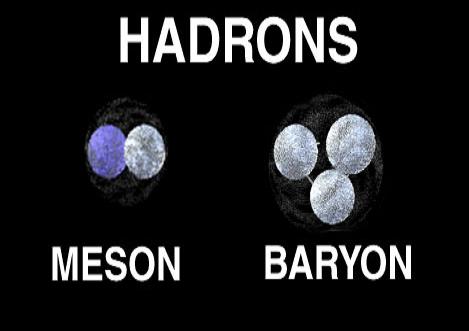
Definition of Chromodynamic Energy Chromodynamic energy refers to the energy associated with the strong interactions between quarks and gluons, the fundamental particles that compose protons, neutrons, and other hadrons. This concept is rooted in quantum chromodynamics (QCD), the quantum field theory that describes the strong nuclear force, one of the four fundamental forces in nature. […]

Read More →

Butterfly Lights the Way: Nature Inspires Thermal Imaging

Definition of Thermal Imaging and Biomimicry Thermal imaging technology utilizes infrared radiation to detect and visualize temperature differences that are invisible to the human eye. This technology has become indispensable across numerous industries, from medical diagnostics to environmental monitoring. Biomimicry, the practice of drawing inspiration from natural systems and organisms, plays a crucial role in […]

Read More →