
Short Answer
Definition of Clocks
Clocks are devices designed to measure and display the passage of time. They serve not only as practical tools for timekeeping but also as cultural artifacts and technological milestones. The study of clocks, known as horology, encompasses their historical development, mechanical design, and diverse applications across societies.
Types of Clocks
Clocks can be broadly divided into two main categories: analog and digital, each with distinct characteristics and uses.
- Analog Clocks:
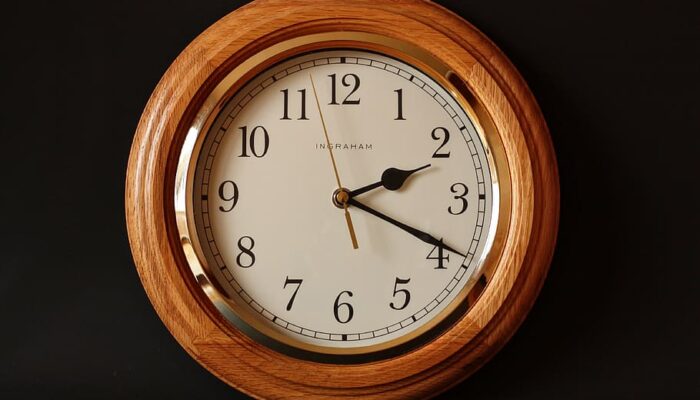
These clocks feature rotating hands that move around a dial, often circular, to indicate hours, minutes, and sometimes seconds. Their design appeals to human cognitive preferences for circular patterns, making time perception intuitive. Analog clocks range from elaborately decorated grandfather clocks to sleek, minimalist wall clocks, showcasing a blend of craftsmanship and mechanical engineering. - Digital Clocks:
Utilizing electronic displays, digital clocks present time numerically. They often include additional features such as alarms, timers, and synchronization with global time standards. Subtypes include LED clocks, known for their bright, easily readable displays in low light, and LCD clocks, which offer energy efficiency and can display supplementary information like temperature or date.
Historical Evolution of Timekeeping Devices
The journey of clocks began with rudimentary instruments and has progressed to highly precise modern devices.
- Sundials:
Among the earliest time-measuring tools, sundials use the sun’s shadow to indicate time. Despite their simplicity, they required adjustments for seasonal changes and geographic location, laying foundational principles for later horological advancements. - Pendulum Clocks:
Introduced in the 17th century, pendulum clocks significantly improved accuracy. Their precise timekeeping was crucial for maritime navigation, enabling sailors to calculate longitude and facilitating the Age of Exploration. - Atomic Clocks:
Representing the zenith of precision, atomic clocks measure time based on the consistent vibration frequencies of atoms such as cesium or rubidium. These clocks are vital for technologies like GPS, telecommunications, and scientific experiments where exact timing is essential.
Design and Cultural Significance
Beyond functionality, clocks often reflect cultural identities and aesthetic values.
- Artistic Craftsmanship:
Analog clocks frequently showcase intricate designs, from the ornate details of traditional timepieces to the clean lines of modern minimalism. - Cultural Symbolism:
Clocks can embody national or regional characteristics, such as the renowned precision of Swiss watches or the understated elegance of Scandinavian designs. - Public Timepieces:
Large-scale clocks, like clock towers, serve as communal landmarks. Iconic examples include London’s Big Ben, which symbolizes punctuality, resilience, and the unifying power of time within urban environments.
Clocks in Navigation and Astronomy
Timekeeping has played a pivotal role in navigation and astronomical observations throughout history.
- Navigation:
Accurate clocks allowed sailors to determine their longitude at sea, a breakthrough that revolutionized maritime travel and exploration. - Astronomy:
Early timekeeping devices helped astronomers track celestial movements, contributing to the development of calendars and scientific understanding of time cycles.
Psychology of Time Perception
The way humans perceive and interact with time is complex and influenced by cultural and psychological factors.
- Clock Time vs. Event Time:
Different cultures prioritize either strict adherence to clock schedules or flexible timing based on events, affecting social behavior and time management. - Impact on Society:
The presence of clocks structures daily routines, influences productivity, and shapes societal rhythms.
Modern Innovations: Smartwatches and Beyond
Contemporary timekeeping devices have evolved to integrate multifunctional technology.
- Smartwatches:
These wearable devices combine traditional timekeeping with health monitoring, communication, and organizational tools, reflecting a shift in how people engage with time and technology. - Technological Integration:
Modern clocks often synchronize with global time standards and incorporate features that extend their utility beyond simple time display.
Why Clocks Remain Essential
Clocks continue to hold significant importance in various aspects of life, science, and technology. They enable precise coordination in communication networks, navigation systems, and scientific research. Moreover, clocks influence cultural practices and personal routines, underscoring their enduring relevance in a rapidly evolving world.
FAQ
What are the main types of clocks?
The main types of clocks are analog and digital.
What is horology?
Horology is the study of clocks and timekeeping.
How have clocks impacted navigation?
Accurate clocks allowed sailors to determine their longitude at sea.
What is the significance of atomic clocks?
Atomic clocks are vital for technologies like GPS and telecommunications.



Leave a Reply