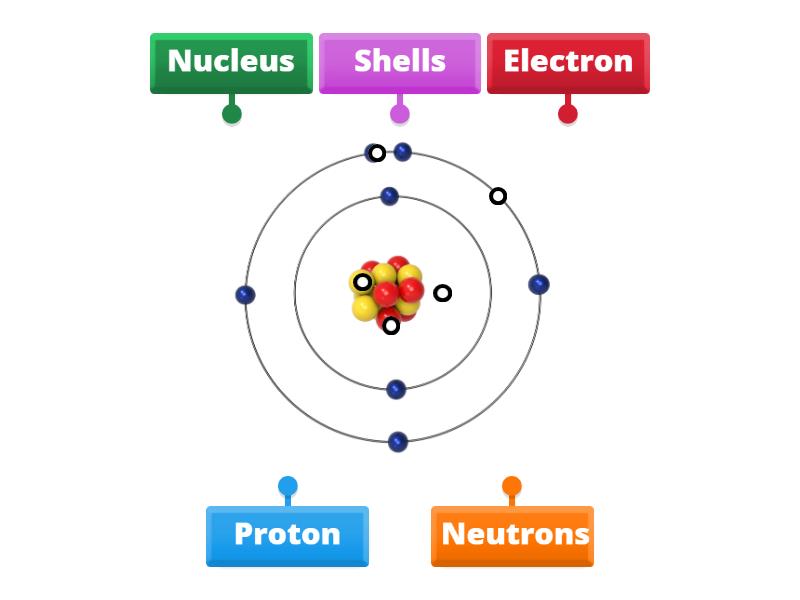
Which of the 3 subatomic particles is the smallest in mass?

Definition of Subatomic Particles Subatomic particles are the fundamental constituents of atoms, forming the building blocks of matter. The three primary types of subatomic particles are protons, neutrons, and electrons, each with distinct properties and roles within the atomic structure. Protons: Positively charged particles located in the nucleus of an atom, contributing significantly to the […]

Read More →

Caesium Condensate Debuts: Another Player in the Quantum Chill Game

Definition of Caesium Condensate Caesium condensate refers to a state of matter formed when caesium atoms are cooled to temperatures near absolute zero, resulting in a Bose-Einstein condensate (BEC). This exotic phase occurs when bosonic particles, such as caesium atoms, occupy the same quantum state, behaving collectively as a single quantum entity. The phenomenon reveals […]

Read More →

Ballistic Breakthrough: Molecular Logic May Be Within Reach

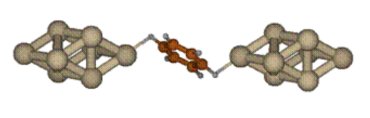
Definition of Molecular Logic Gates and Ballistic Transport Molecular logic gates represent a cutting-edge fusion of nanotechnology and computational science, enabling information processing at an unprecedentedly small scale. These devices utilize individual molecules or molecular assemblies to perform logical operations traditionally handled by silicon-based transistors. Ballistic transport, a key physical phenomenon in this context, refers […]

Read More →

A Faster Way to Better Quantum Computers: Acceleration Through Innovation

Understanding Quantum Computing Quantum computing represents a groundbreaking domain at the intersection of physics and computer science, promising to transform computational capabilities far beyond what classical computers can achieve. Unlike traditional computers that rely on bits as the smallest unit of data-each bit being either a 0 or a 1-quantum computers utilize quantum bits, or […]

Read More →

Why do insulators have a large band gap?

Definition of Insulators and Band Gaps Insulators are materials that inherently resist the flow of electric current due to their electronic structure. A defining characteristic that sets insulators apart from conductors and semiconductors is the presence of a large band gap. The band gap refers to the energy difference between the valence band, which holds […]

Read More →

What are the subatomic particles and their roles?

Definition of Subatomic Particles Subatomic particles are the essential components that constitute atoms, which in turn form all matter in the universe. These particles exist within atoms and are characterized by intrinsic properties such as mass, electric charge, and spin. They serve as the foundational elements that determine the structure and behavior of matter at […]

Read More →

What is a nuclear ‘warning shot’?

Definition of a Nuclear Warning Shot A nuclear warning shot refers to a deliberate and strategic demonstration of nuclear military capability designed to send a clear message to potential adversaries without initiating full-scale conflict. It acts as a form of deterrence, signaling readiness and strength while simultaneously aiming to prevent escalation into actual warfare. This […]

Read More →

Can a physics major work as an entry-level quality engineer?

Definition of Quality Engineering and Its Relation to Physics Quality engineering is a specialized branch of engineering focused on ensuring that products and services meet established standards and satisfy customer requirements. It involves the systematic application of technical principles, quality control techniques, and statistical methods to monitor and improve product quality throughout its lifecycle. Physics, […]

Read More →

The Future of Quantum Computing – Mindshift Mentor?

Understanding Quantum Computing Quantum computing represents a groundbreaking shift in computational technology, poised to revolutionize how complex problems are addressed across various industries. As the demand for advanced computational techniques grows, grasping the fundamentals and nuances of quantum computing becomes essential. This field merges classical computational principles with quantum mechanics, unlocking new possibilities in areas […]

Read More →