
Short Answer
Definition of Planetary Orbital Velocity
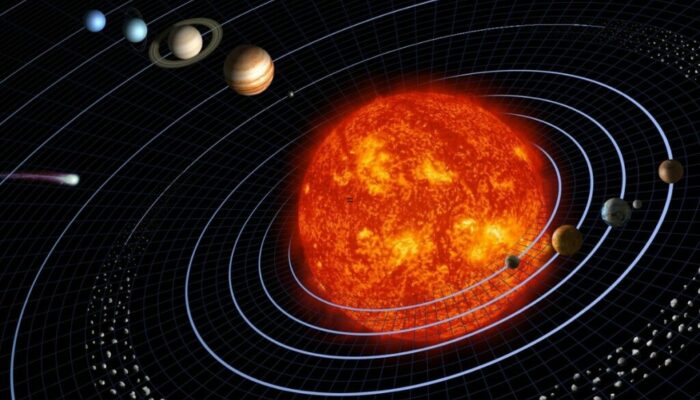
Planetary orbital velocity refers to the speed at which a planet travels along its path around the sun. This velocity varies significantly among planets, influenced by their position within the solar system and the gravitational forces acting upon them. The concept is fundamental to understanding the motion of celestial bodies and the mechanics governing their orbits.
Fundamental Principles Governing Orbital Speed
The velocity at which a planet orbits the sun is primarily dictated by gravitational forces and the laws of planetary motion. The sun’s gravity serves as the centripetal force that keeps planets bound in their elliptical trajectories. According to Newton’s law of universal gravitation, the force between two masses decreases with the square of the distance separating them. Consequently, planets closer to the sun experience a stronger gravitational pull, necessitating higher orbital speeds to maintain stable orbits.
Kepler’s Laws and Their Role
- Kepler’s First Law:
Planets move in elliptical orbits with the sun at one focus, meaning their distance from the sun changes throughout the orbit. - Kepler’s Second Law:
A planet sweeps out equal areas in equal intervals of time, implying that it moves faster when nearer to the sun (perihelion) and slower when farther away (aphelion). - Kepler’s Third Law:
The square of a planet’s orbital period is proportional to the cube of its average distance from the sun, linking orbital time and distance mathematically.
Orbital Mechanics and Velocity Variations
Planetary orbits are not perfect circles but ellipses, causing orbital speeds to fluctuate during a single revolution. At perihelion, the point closest to the sun, a planet accelerates due to stronger gravitational attraction. Conversely, at aphelion, the farthest point, the planet slows down. The degree of this speed variation depends on the orbit’s eccentricity; higher eccentricity results in more pronounced changes.
Impact of Orbital Eccentricity
For example, Mercury’s orbit is highly elliptical, leading to significant differences in its speed between perihelion and aphelion. In contrast, Venus has a nearly circular orbit, resulting in relatively uniform orbital velocity throughout its path.
Influence of Planetary Mass and Energy Considerations
Interestingly, a planet’s own mass has minimal effect on its orbital velocity. The dominant factor remains the sun’s gravitational pull. While massive planets like Jupiter possess strong gravitational fields and numerous moons, their mass does not alter their orbital speed around the sun.
From an energy perspective, a planet’s total mechanical energy is the sum of its kinetic energy (due to motion) and gravitational potential energy. Closer to the sun, where gravitational potential energy is more negative, planets must have higher kinetic energy, reflected in faster speeds, to sustain stable orbits. Farther planets reside in shallower gravitational wells and thus move more slowly.
Additional Factors Affecting Orbital Velocity
Beyond classical gravitational dynamics, other influences subtly modify planetary orbits over time:
- Gravitational Perturbations:
Interactions with other planets, passing comets, and asteroids can cause minor shifts in orbital velocity and trajectory, sometimes leading to resonances or changes in eccentricity. - Protoplanetary Disk Legacy:
The early solar system’s gas and dust disk imparted initial angular momentum and velocities to forming planets, shaping their current orbital characteristics. - Planetary Migration:
Over millions of years, giant planets like Jupiter and Saturn may have shifted positions due to gravitational interactions, altering the solar system’s orbital architecture and influencing planetary speeds.
Mathematical Explanation of Orbital Velocity
The orbital velocity (v) of a planet can be approximated by the formula derived from Newtonian mechanics:
v = √(GM / r)
- v: Orbital velocity of the planet
- G: Universal gravitational constant
- M: Mass of the sun
- r: Distance between the planet and the sun at a given point in the orbit
This equation shows that velocity depends on the gravitational parameter (GM) and inversely on the square root of the distance from the sun, explaining why planets closer to the sun move faster.
Real-World Examples of Orbital Velocity Differences
Mercury, the innermost planet, completes an orbit in just 88 Earth days, traveling at an average speed of about 47.9 km/s. In contrast, Neptune, located farthest among the classical planets, takes approximately 165 Earth years to orbit the sun, moving at a much slower average speed of around 5.4 km/s. These examples illustrate the direct relationship between orbital distance and velocity.
Common Misconceptions About Orbital Velocity
A planet’s mass affects how fast it orbits the sun.
Orbital speed is primarily determined by the planet’s distance from the sun and the sun’s gravitational pull, not the planet’s mass.
Planets move at a constant speed throughout their orbit.
Due to elliptical orbits, planets accelerate near perihelion and decelerate near aphelion, resulting in variable speeds.
Significance of Understanding Orbital Velocity
Grasping the factors that influence planetary orbital velocity is crucial for comprehending the dynamics of our solar system and other planetary systems. This knowledge aids in predicting planetary positions, planning space missions, and understanding the formation and evolution of celestial bodies. Moreover, it highlights the elegant interplay of gravitational forces and motion that governs the cosmos, enriching our appreciation of the universe’s complexity and harmony.
FAQ
What determines how fast a planet orbits the Sun?
A planet's orbital speed is primarily determined by gravitational forces and its distance from the Sun.
Do all planets orbit the Sun at the same speed?
No, planets close to the Sun orbit faster than those farther away due to stronger gravitational pull.

Leave a Reply