
Short Answer
Definition of Molecular Logic Gates and Ballistic Transport
Molecular logic gates represent a cutting-edge fusion of nanotechnology and computational science, enabling information processing at an unprecedentedly small scale. These devices utilize individual molecules or molecular assemblies to perform logical operations traditionally handled by silicon-based transistors. Ballistic transport, a key physical phenomenon in this context, refers to the movement of charge carriers-such as electrons-through a medium without experiencing scattering or collisions, thereby preserving their energy and coherence over longer distances.
- Molecular Logic Gates:
Devices that execute logical functions using molecular components, offering potential for miniaturization beyond conventional semiconductor technology. - Ballistic Transport:
A transport regime where charge carriers travel through a material without scattering, minimizing energy loss and enhancing conduction efficiency.
Fundamentals of Molecular Electronics
Molecular electronics explores the use of molecules as fundamental building blocks for electronic circuits. Unlike bulk materials, molecular systems inherently allow for extreme downsizing, which can drastically reduce device dimensions and power consumption. This miniaturization is critical as the demand for faster and more efficient data processing continues to escalate. By harnessing the unique electronic properties of molecules, researchers aim to develop logic gates that operate at scales unattainable by traditional silicon-based devices.
Mechanism of Ballistic Transport in Molecular Systems
In conventional conductive materials, charge carriers frequently scatter due to impurities, lattice vibrations, or defects, which impedes their flow and causes energy dissipation. Ballistic transport circumvents these limitations by enabling carriers to move coherently over distances without scattering. This phenomenon is especially significant in molecular electronics, where reducing thermal and disorder-induced losses is essential for maintaining signal integrity and operational efficiency. When molecular structures are engineered to support ballistic conduction, logic gates can achieve higher speeds and lower power consumption.
Engineering Molecular Structures for Ballistic Conduction
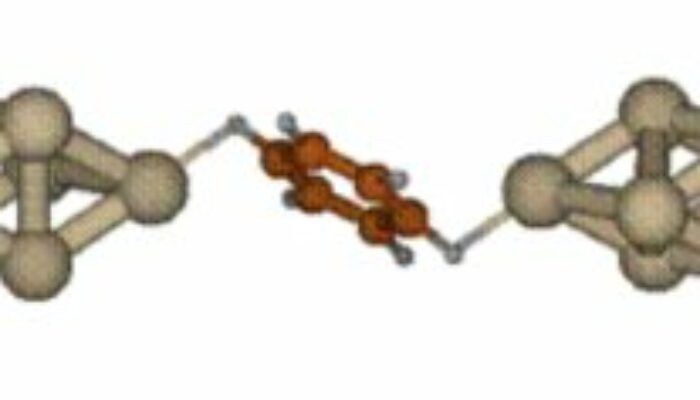
Achieving ballistic transport in molecular devices requires precise molecular design and synthesis. Researchers focus on tailoring molecular orbitals and geometric configurations to facilitate electron delocalization and minimize scattering. For example, oligophenylene molecules with conjugated π-electron systems have been synthesized to promote extended electron mobility. These molecular architectures reduce scattering events within the molecular junction, fostering a ballistic conduction environment.
Role of Advanced Materials
Incorporating novel nanomaterials such as graphene and carbon nanotubes into molecular circuits further enhances ballistic transport. Graphene, a single atomic layer of carbon atoms arranged in a hexagonal lattice, exhibits exceptional electrical conductivity and carrier mobility. When used as substrates or interconnects, graphene and carbon nanotubes provide efficient pathways for electron transfer between molecular components. This integration not only boosts ballistic conduction but also opens possibilities for exploiting quantum coherence effects, which are vital for next-generation information processing technologies.
Implementation of Molecular Logic Gates in Electronic Systems
Recent advancements have demonstrated the feasibility of constructing basic logic functions-such as AND and OR gates-using molecular components. Techniques include fabricating single-molecule transistors and molecular diodes that mimic classical logic operations. The presence of ballistic transport mechanisms significantly enhances the speed and energy efficiency of these molecular circuits, suggesting a transformative potential for future computing architectures.
Applications in Biosensing and Bioinformatics
Molecular logic gates hold promising applications beyond traditional electronics, particularly in biological contexts. Since biological systems inherently rely on molecular signaling, synthetic molecular logic devices can be engineered to respond to specific biochemical inputs, producing outputs that emulate complex biological pathways. This capability could revolutionize diagnostic technologies, enabling highly sensitive biosensors and advancing systems biology. Additionally, molecular logic gates may facilitate targeted drug delivery and novel therapeutic strategies by integrating logical decision-making at the molecular level.
Challenges and Future Directions
Despite the exciting prospects, several obstacles must be overcome before molecular logic gates become widely practical. Reproducibility in molecular synthesis remains a critical challenge, as minor structural variations can drastically alter electronic behavior. Furthermore, scaling up from simple logic functions to complex multi-bit operations demands innovative approaches for integrating molecular components with existing semiconductor platforms.
Ensuring device stability against environmental factors such as humidity and temperature fluctuations is another key concern. Developing robust protective measures and scalable manufacturing techniques that preserve molecular integrity will be essential for commercial viability. Ongoing research aims to address these issues, paving the way for reliable, large-scale molecular electronic systems.
Significance of Ballistic Transport in Molecular Electronics
The exploration of ballistic transport within molecular logic gates marks a pivotal advancement in the quest for ultra-miniaturized, energy-efficient computing devices. By minimizing scattering and energy loss, ballistic conduction enhances device performance and opens new horizons for quantum information processing. The integration of sophisticated molecular designs with advanced nanomaterials could ultimately revolutionize computational technology, enabling faster, smaller, and more sustainable electronic systems.
FAQ
What are the applications of molecular logic gates?
They can be used in biosensing, targeted drug delivery, and enhancing computing technologies.
What challenges do researchers face in developing molecular electronics?
Key challenges include ensuring reproducibility in synthesis and device stability under varying environmental conditions.






Leave a Reply