

Short Answer
Understanding Quantum Computing
Quantum computing represents a groundbreaking domain at the intersection of physics and computer science, promising to transform computational capabilities far beyond what classical computers can achieve. Unlike traditional computers that rely on bits as the smallest unit of data-each bit being either a 0 or a 1-quantum computers utilize quantum bits, or qubits. These qubits leverage the principles of quantum mechanics, such as superposition and entanglement, enabling them to exist in multiple states simultaneously. This unique property allows quantum systems to perform a vast number of calculations in parallel, offering exponential increases in processing power. However, maintaining the delicate quantum states of qubits is a significant challenge due to environmental noise and decoherence.
Key Challenges in Quantum Computing
Several critical obstacles must be addressed to realize the full potential of quantum computers. These include:
- Error Correction:
Quantum information is highly susceptible to errors caused by decoherence and operational imperfections. Developing robust quantum error correction codes, such as the Shor code and surface code, is essential to protect information without negating the advantages of quantum parallelism. Yet, implementing these codes efficiently remains a complex task, raising questions about optimizing error correction to enhance overall computational speed. - Qubit Coherence:
The duration for which a qubit maintains its quantum state-known as coherence time-is crucial for executing complex algorithms. Extending coherence times through advances in materials science and innovative qubit designs, such as topological qubits, is a major research focus. Achieving stable quantum behavior at room temperature could eliminate the need for expensive and cumbersome cryogenic systems. - Gate Operation Efficiency:
Quantum gates manipulate qubits similarly to how classical logic gates operate on bits. For quantum computations to be effective, these gates must function rapidly and reliably. Innovations involving superconducting circuits and photonic systems aim to accelerate gate operations. Additionally, integrating different qubit technologies into a cohesive universal quantum architecture presents both opportunities and challenges.
Mechanisms Driving Quantum Speed and Performance
The acceleration of quantum computing depends on a synergy between hardware improvements and algorithmic innovations. Quantum algorithms like Shor’s algorithm for factoring large numbers and Grover’s algorithm for database searching illustrate the immense potential of quantum computation. However, the discovery and development of new algorithms tailored to emerging quantum hardware remain a fertile area of research. Such algorithms could harness the unique properties of novel qubit systems, complementing hardware advancements.
Role of Artificial Intelligence in Quantum Advancements
Integrating artificial intelligence (AI) and machine learning (ML) into quantum computing research offers promising avenues for progress. AI techniques can optimize quantum circuit designs, simulate quantum systems more effectively, and help reduce error rates by improving coherence times. Machine learning models can analyze extensive datasets to understand qubit behavior under various conditions, guiding the selection of materials and system architectures that maximize speed and reliability. This fusion of AI and quantum computing accelerates innovation by providing deeper insights and optimization strategies.
Commercialization and Ethical Considerations
The rapid growth of the quantum technology sector is driven by significant investments from corporations and research consortia aiming to translate theoretical breakthroughs into practical applications. This competitive environment fosters swift advancements but also demands a careful balance between innovation and ethical responsibility. Ensuring that quantum technology development aligns with societal values and ethical standards is a critical challenge for industry leaders and researchers alike.
Interdisciplinary Collaboration: A Catalyst for Progress
Quantum computing inherently requires the convergence of multiple disciplines, including physics, computer science, and engineering. Collaborative efforts between academic institutions and industry players are vital for generating transformative ideas and accelerating breakthroughs. Interdisciplinary approaches encourage the cross-fertilization of knowledge, enabling innovations that surpass current limitations and redefine computational paradigms.
Why Advancing Quantum Computing Matters
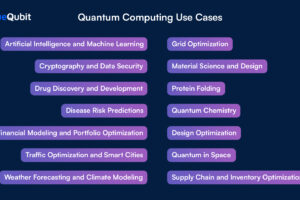
The pursuit of faster and more reliable quantum computers is not solely about increasing computational speed; it represents a profound exploration into the fundamental nature of information processing. Success in this field could revolutionize areas such as cryptography, optimization, drug discovery, and complex system simulations, impacting science, technology, and everyday life. The journey toward enhanced quantum computing demands creativity, collaboration, and steadfast dedication to scientific rigor, promising to reshape our technological future.
FAQ
What is quantum computing?
Quantum computing is a type of computation that takes advantage of quantum mechanics to process information in ways that classical computers cannot.
What are the main challenges in quantum computing?
The key challenges include error correction, maintaining qubit coherence, and ensuring efficient gate operations.
How does AI contribute to quantum computing?
AI can optimize quantum circuit designs, improve coherence times, and help in the development of new quantum algorithms.


Leave a Reply