
Short Answer
Understanding Dark Matter
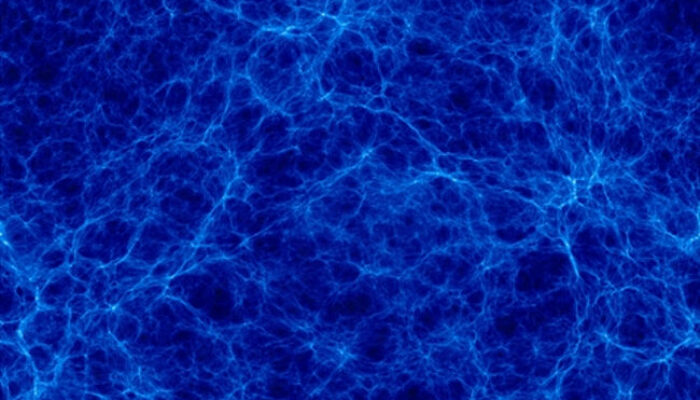
Envision the universe as a vast cosmic stage where luminous entities such as stars, planets, and galaxies perform dazzling acts that captivate our attention. Yet, behind this brilliant display lies an invisible force shaping the universe’s very structure-dark matter. This mysterious substance outweighs ordinary matter by nearly five times, yet remains undetectable through direct observation. Its dominance in the cosmic composition raises profound questions about the fundamental nature of the universe and the forces that govern it.
Definition and Composition of Matter in the Universe
The universe is composed of two primary forms of matter: normal (baryonic) matter and dark matter. Normal matter includes all atoms, molecules, and physical substances familiar to us, made up of protons, neutrons, and electrons. This matter forms the visible structures such as stars, planets, and galaxies. In contrast, dark matter does not emit, absorb, or reflect light, making it invisible to electromagnetic detection. Despite this, it exerts a significant gravitational influence, acting as an unseen framework that shapes cosmic evolution.
- Normal Matter:
Constitutes atoms and molecules, forming all visible objects in the universe. - Dark Matter:
An invisible form of matter that interacts primarily through gravity, not electromagnetic forces.
Origins of Dark Matter: The Early Universe
To comprehend why dark matter surpasses normal matter in abundance, one must look back to the universe’s infancy, shortly after the Big Bang. During this period, the universe was an extremely hot and dense environment filled with a variety of particles. Alongside ordinary matter, theoretical models predict the existence of exotic particles that could make up dark matter. These particles emerged from the primordial particle soup and have persisted through cosmic history due to their unique properties.
Leading Candidates for Dark Matter Particles
Several hypothetical particles have been proposed as constituents of dark matter, each with distinct characteristics:
- Weakly Interacting Massive Particles (WIMPs):
These particles interact very weakly with electromagnetic forces, making them nearly invisible. They decoupled early from the thermal environment of the expanding universe, preserving their numbers while normal matter underwent complex transformations. - Axions:
Proposed to resolve theoretical issues in particle physics, axions are extremely light and elusive particles. Their presence is inferred through subtle astrophysical effects rather than direct detection.
Role of Dark Matter in Cosmic Structure Formation
Dark matter plays a crucial role as the gravitational backbone of the universe. It acts as an invisible scaffold that attracts normal matter, facilitating the formation of stars, galaxies, and larger cosmic structures. Unlike normal matter, which interacts with electromagnetic radiation and can clump or dissipate energy, dark matter remains diffuse but exerts a dominant gravitational pull. Without this unseen framework, the universe would lack the complex structures necessary to support life.
Cosmic Measurements and the Matter Composition
Observations of the cosmic microwave background radiation-the residual glow from the Big Bang-have allowed scientists to precisely estimate the proportions of matter in the universe. These measurements indicate that normal matter accounts for approximately 4.9% of the total energy density, while dark matter comprises about 26.8%. This significant difference arises because normal matter particles frequently annihilated or combined in the early universe, reducing their abundance, whereas dark matter particles, due to their weak interactions, maintained a substantial relic presence.
Why Dark Matter Outweighs Normal Matter
Dark matter’s predominance is linked to its unique physical properties. Unlike normal matter, which experiences collisions, friction, and energy loss, dark matter interacts primarily through gravity, allowing it to form a stable, invisible network that guides the distribution of visible matter. Its detachment from electromagnetic forces means it neither emits nor absorbs light, making it elusive yet fundamentally influential in shaping the cosmos.
Efforts to Detect Dark Matter
Scientists have undertaken extensive experiments to directly observe dark matter particles. These efforts often involve highly sensitive detectors placed deep underground to shield them from cosmic rays and background radiation. Despite decades of searching, direct detection remains elusive, underscoring the enigmatic nature of dark matter and the challenges involved in studying it.
Common Misconceptions About Dark Matter
Dark matter is simply normal matter that is hidden or dark.
Dark matter is fundamentally different from normal matter, as it does not interact with light or electromagnetic forces and cannot be observed directly.
Dark matter emits some form of radiation that we have not yet detected.
By definition, dark matter does not emit, absorb, or reflect electromagnetic radiation, which is why it remains invisible to telescopes.
Significance of Dark Matter in Science and Cosmology
Dark matter is essential for understanding the universe’s large-scale structure and evolution. Its gravitational influence explains the formation and stability of galaxies and galaxy clusters. Moreover, studying dark matter challenges and expands our knowledge of particle physics, cosmology, and the fundamental forces of nature. It represents one of the most profound mysteries in modern science, driving research that could reshape our comprehension of reality.
Conclusion: Embracing the Invisible Universe
The overwhelming presence of dark matter compared to normal matter invites us to appreciate the unseen forces that govern the cosmos. Though invisible, dark matter orchestrates the grand cosmic symphony, holding galaxies together and shaping the universe’s destiny. Its elusive nature not only fuels scientific inquiry but also inspires a deeper wonder about the hidden dimensions of existence that lie beyond our current perception.
FAQ
What is dark matter?
Dark matter is an invisible form of matter that does not emit, absorb, or reflect light, yet exerts gravitational forces that influence the structure of the universe.
Why is there more dark matter than normal matter?
Dark matter's unique properties allow it to persist and dominate over normal matter, which interacts more frequently with other particles and undergoes transformations.


Leave a Reply