
Short Answer
Definition of Spacetime
Spacetime is a four-dimensional continuum that fuses the three dimensions of space with the dimension of time into a single, interwoven fabric. This concept revolutionizes our understanding of the universe by replacing the classical notion of absolute space and time with a dynamic, malleable entity that responds to the presence of mass and energy.
- Space and Time Integration:
Instead of treating space and time as separate, independent entities, spacetime combines them into a unified framework where events are located by four coordinates-three spatial and one temporal. - Dynamic Geometry:
The geometry of spacetime is not fixed but can be curved or warped by mass and energy, influencing the motion of objects and the flow of time.
Historical Background and Theoretical Foundations
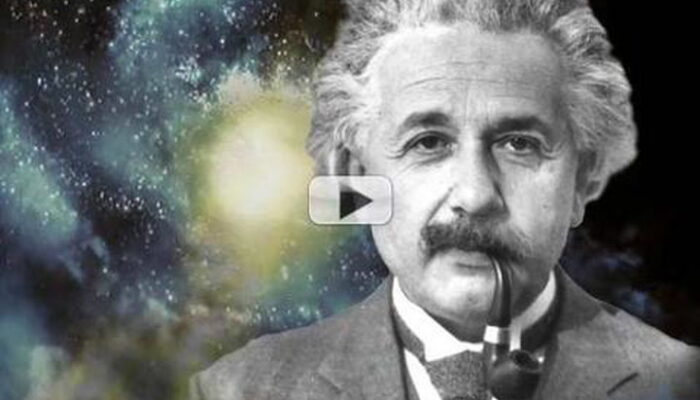
In 1915, Albert Einstein introduced the theory of General Relativity, fundamentally altering the classical Newtonian view of gravity. Rather than a force acting instantaneously at a distance, gravity emerged as a manifestation of curved spacetime geometry caused by mass and energy. This paradigm shift replaced the idea of immutable, absolute space and time with a flexible continuum that shapes and is shaped by matter.
Einstein’s analogy likens spacetime to a stretched trampoline: a heavy object placed on it creates a depression, causing smaller objects to move along curved paths. This visualization helps explain why planets orbit stars and why light bends near massive bodies-not because of a force pulling them directly, but because they follow the contours of curved spacetime.
Empirical Evidence Supporting Spacetime Curvature
Gravitational Light Bending
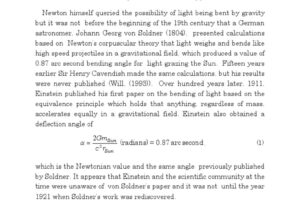
One of the earliest and most compelling validations of Einstein’s theory came during the 1919 solar eclipse. British astronomer Sir Arthur Eddington observed that starlight passing near the sun was deflected from its expected path, precisely matching Einstein’s predictions. This phenomenon, unexplainable by Newtonian physics, demonstrated that the sun’s mass warps the surrounding spacetime, bending the trajectory of light.
Gravitational Time Dilation
Another remarkable consequence of curved spacetime is gravitational time dilation, where time itself flows at different rates depending on the strength of the gravitational field. Experiments using highly accurate atomic clocks have shown that clocks positioned at higher altitudes tick faster than those closer to Earth’s surface. This effect is so critical that satellite-based systems like GPS must incorporate relativistic corrections to maintain precise navigation.
Detection of Gravitational Waves
Gravitational waves are subtle ripples propagating through spacetime, generated by massive cosmic events such as black hole mergers. The first direct observation of these waves in 2015 by the LIGO observatory confirmed a century-old prediction of General Relativity. These waves provide a novel way to observe the universe, revealing phenomena invisible to traditional telescopes and affirming the dynamic nature of spacetime.
Gamma-Ray Observations and Spacetime Smoothness
High-energy gamma-rays traveling across billions of light-years offer insights into the large-scale uniformity of spacetime. Their consistent arrival times suggest that spacetime is remarkably smooth, countering some quantum gravity theories that propose a foamy or granular structure at the smallest scales. This smoothness aligns with Einstein’s depiction of spacetime as a continuous fabric.
Challenges and Open Questions in Spacetime Physics
Despite the overwhelming success of General Relativity on macroscopic scales, integrating gravity with quantum mechanics remains an unresolved challenge. Some theories speculate that at extremely small scales, spacetime might exhibit a discrete or granular nature, deviating from the smooth continuum Einstein described. However, current observations continue to support the macroscopic validity of Einstein’s spacetime model, leaving the quantum structure of spacetime an active area of research.
Spacetime in Extreme Environments: Black Holes
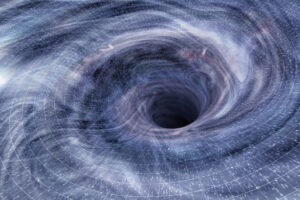
Black holes represent regions where spacetime curvature reaches its most extreme levels. The Event Horizon Telescope’s recent imaging of a black hole’s shadow provided direct visual evidence of intense gravitational bending, perfectly matching predictions from General Relativity. These observations not only confirm the theory’s robustness under extreme conditions but also challenge physicists to reconcile relativistic gravity with quantum effects near black hole singularities.
Why Understanding Spacetime Is Crucial
Spacetime is not merely a theoretical construct but the fundamental stage on which all cosmic phenomena unfold. Its geometry governs the motion of planets, the propagation of light, and the flow of time itself. Understanding spacetime enables technologies like GPS, informs astrophysical research, and deepens our grasp of the universe’s structure and evolution. Einstein’s conception of spacetime continues to inspire scientific inquiry, pushing the boundaries of knowledge and fueling curiosity about the cosmos.
Common Misconceptions About Spacetime
Gravity is a force pulling objects directly.
Gravity arises from the curvature of spacetime caused by mass and energy, guiding objects along curved paths rather than exerting a direct force.
Time flows uniformly everywhere.
Time passes at different rates depending on gravitational strength, a phenomenon known as gravitational time dilation.
Spacetime is a static, unchanging backdrop.
Spacetime is dynamic and can be stretched, compressed, and rippled by mass, energy, and cosmic events.
Conclusion: The Enduring Legacy of Einstein’s Spacetime
Einstein’s revolutionary idea transformed spacetime from an abstract mathematical concept into a tangible, measurable reality. Through bending light, shifting clocks, gravitational waves, and cosmic gamma-rays, the theory has been repeatedly validated, revealing a universe that is elegant, interconnected, and dynamic. As scientific tools advance, the quest to understand the quantum nature of spacetime continues, but the smooth, curved continuum Einstein envisioned remains the cornerstone of modern physics and our comprehension of the cosmos.
FAQ
What is spacetime?
Spacetime is a four-dimensional continuum that combines the three dimensions of space with the dimension of time into a single, interwoven fabric.
How did Einstein's theory change our understanding of gravity?
Einstein’s theory proposed that gravity arises from the curvature of spacetime caused by mass and energy, not as a direct force.
What evidence supports the theory of spacetime?
Evidence includes gravitational light bending, gravitational time dilation, detection of gravitational waves, and observations of gamma rays.

Leave a Reply