Will quantum computers ever be useful for AI tasks?

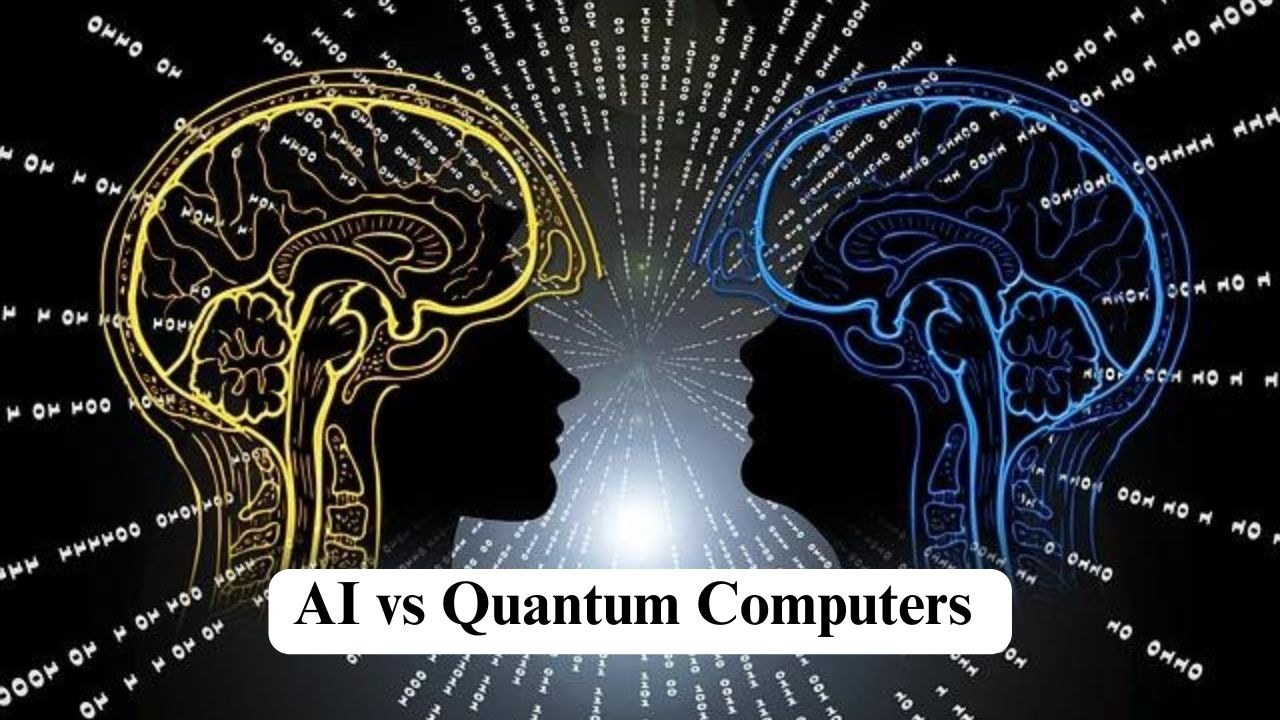
Understanding the Intersection of Quantum Computing and Artificial Intelligence At the crossroads of artificial intelligence (AI) and quantum computing lies a compelling inquiry: can quantum computers become genuinely advantageous for AI applications? This question, while seemingly paradoxical, encourages a deep examination of the strengths and limitations inherent in both fields and their potential integration. The […]

Read More →

How did atoms turn into the first cells?

Definition The transition from atoms to living cells signifies a fundamental milestone in the history of life, representing a profound evolution from basic particles to complex biological systems. This process involves a series of intricate biochemical interactions, environmental factors, and self-organizing mechanisms that collectively gave rise to the earliest forms of life as we recognize […]

Read More →

How can we make our maths calculation best?

Understanding Mathematical Calculations Mathematics is far more than a simple assortment of numbers and formulas; it serves as a fundamental framework for interpreting the world around us. From the precise computations enabling space exploration to the algorithms powering contemporary technology, mathematical skills are indispensable. This article explores effective methods to improve mathematical calculation abilities, offering […]

Read More →

Who made world’s first quantum computer?

Definition of Quantum Computing Quantum computing represents a revolutionary paradigm in computation, leveraging the principles of quantum mechanics to process information in ways unattainable by classical computers. Unlike traditional bits that exist strictly as 0 or 1, quantum bits, or qubits, can exist in multiple states simultaneously due to quantum phenomena such as superposition and […]

Read More →

Will we ever have personal quantum computers?

Understanding Quantum Computing Quantum computing represents a revolutionary approach to processing information, grounded in the principles of quantum mechanics. Unlike classical computers that rely on binary bits-strictly 0s or 1s-quantum computers utilize quantum bits, or qubits, which can exist in multiple states simultaneously due to a phenomenon called superposition. This unique property enables quantum systems […]

Read More →

Is nanotechnology a good discipline to study?

Definition of Nanotechnology Nanotechnology involves the precise control and manipulation of matter at the atomic and molecular scale, typically below 100 nanometers. This scientific domain intersects multiple disciplines such as physics, chemistry, biology, and materials science, creating a rich, interdisciplinary field of study. At this scale, materials exhibit distinct physical and chemical properties that differ […]

Read More →

What’s it like being a Math major or Math undergrad?

Understanding the Journey of a Mathematics Major Pursuing a degree in mathematics is akin to navigating a complex maze, where each theorem and concept stands as a monumental structure reaching toward intellectual heights. This academic path is not simply about acquiring knowledge; it is an immersive expedition that blends rigorous logical reasoning with creative problem-solving. […]

Read More →

Is nuclear force a central force?

Definition of Central Force and Nuclear Force A central force is traditionally defined as a force that acts along the line connecting two interacting particles, with its magnitude depending solely on the distance between them. This results in spherical symmetry in the potential energy, a hallmark of forces such as gravity and electrostatics. In contrast, […]

Read More →

What will quantum supremacy be used for?

Understanding Quantum Supremacy Quantum supremacy marks a critical milestone in the progression of computational technology. Unlike classical computers that operate on binary logic, quantum computers exploit the unique phenomena of superposition and entanglement. These quantum properties enable computations that are either extremely difficult or outright impossible for traditional machines to perform efficiently. As quantum computing […]

Read More →