Is the universe a 3D projection of some higher 2D projector?

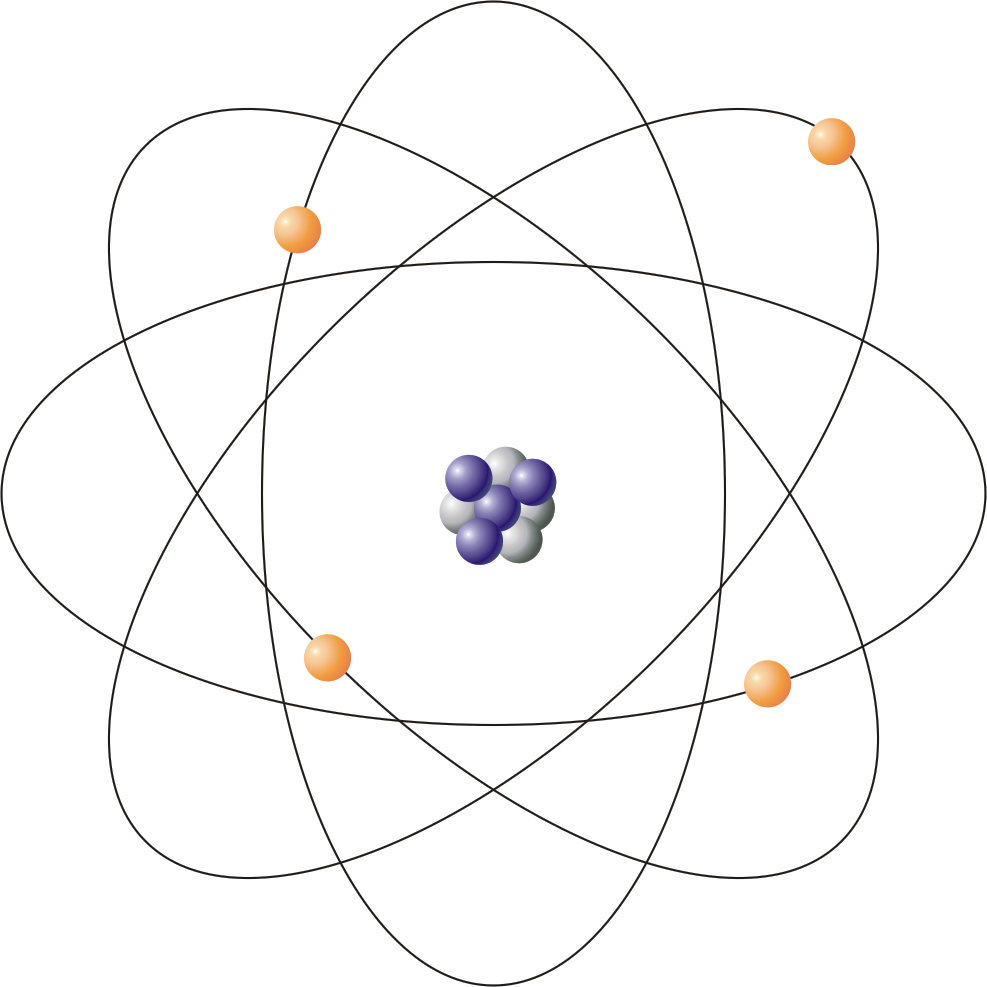
Understanding Dimensionality in the Universe Dimensionality refers to the minimum number of coordinates needed to pinpoint a location within a given space. In everyday life, we navigate a world defined by three spatial dimensions: length, width, and height. However, some theoretical perspectives challenge this familiar framework by proposing that our perceived three-dimensional universe might actually […]

Read More →

Fighting Cancer with Antiprotons: Targeting Tumors with Physics

Definition of Antiproton Therapy in Oncology Antiproton therapy represents an innovative approach in cancer treatment that leverages the unique properties of antiprotons-subatomic particles identical in mass to protons but bearing a negative electric charge. These particles, produced in high-energy proton collisions, have the potential to annihilate protons upon contact, releasing substantial energy. This energy release […]

Read More →

Is the idea of quantum computing excessively idealistic?

Understanding Quantum Computing Quantum computing represents a groundbreaking advancement in computational technology, aiming to surpass the limitations of classical computers in speed and processing power. This innovative field, while brimming with potential, also invites critical examination regarding its feasibility and practical impact. To fully appreciate quantum computing, it is essential to explore its foundational theories, […]

Read More →

How is life at the Saha Institute of Nuclear Physics?

Overview of the Saha Institute of Nuclear Physics The Saha Institute of Nuclear Physics (SINP), located in Kolkata, India, stands as a distinguished center for advanced research in nuclear physics. Named in honor of the renowned physicist Meghnad Saha, the institute combines rigorous scientific investigation with a vibrant cultural environment, fostering a holistic experience for […]

Read More →

What is the Hadron Collider

Definition of the Large Hadron Collider The Large Hadron Collider (LHC) is the world’s most powerful particle accelerator, designed to explore the fundamental components and forces of the universe. Situated near Geneva, Switzerland, this colossal scientific instrument enables physicists to investigate the smallest particles by accelerating them to near-light speeds and colliding them at unprecedented […]

Read More →

Which one must be taken first a PhD or residency?

Definition Choosing between pursuing a PhD or entering a residency program is a significant decision for those advancing in medical and scientific education. Each path serves distinct purposes and leads to different professional outcomes, reflecting the balance between academic research and clinical application. PhD: An advanced academic degree focused on conducting original research to contribute […]

Read More →

Richard Tabassi: Leading Conversations in Clinical Physics

Overview of Richard Tabassi’s Role in Clinical Physics Richard Tabassi stands out as a leading authority in clinical physics, driving pivotal discussions that influence both theoretical frameworks and practical applications within the discipline. His extensive body of work spans diverse topics, including breakthroughs in medical imaging and the advancement of sophisticated radiation therapy methods. This […]

Read More →

Can the Future Affect the Past? Quantum Causality Revisited

Understanding Causality: A Classical Perspective Causality traditionally refers to the principle that causes precede their effects in a linear, chronological sequence. This concept forms the backbone of classical physics, particularly within Newtonian mechanics, where the behavior of objects is governed by predictable cause-and-effect relationships. For example, when one object strikes another, the resulting motion of […]

Read More →

Condensates Under Control: The Road to Atomic Circuits

Definition of Condensates Condensates are intricate, dynamic assemblies that play a crucial role in modern biophysics and materials science. They represent a unique state of matter where biomolecules cluster together, balancing order and disorder at the molecular scale. These structures are essential for understanding how biological and physical principles converge, offering promising avenues for the […]

Read More →

Going Smaller Than Small: Breaking the Sub-Wavelength Limit

Understanding the Sub-Wavelength Limit in Optical Physics In contemporary physics, the exploration and manipulation of materials at microscopic scales confront a fundamental obstacle known as the sub-wavelength limit. This boundary arises from the diffraction limit, which restricts the resolution of optical systems to details no smaller than roughly half the wavelength of the illuminating light. […]

Read More →